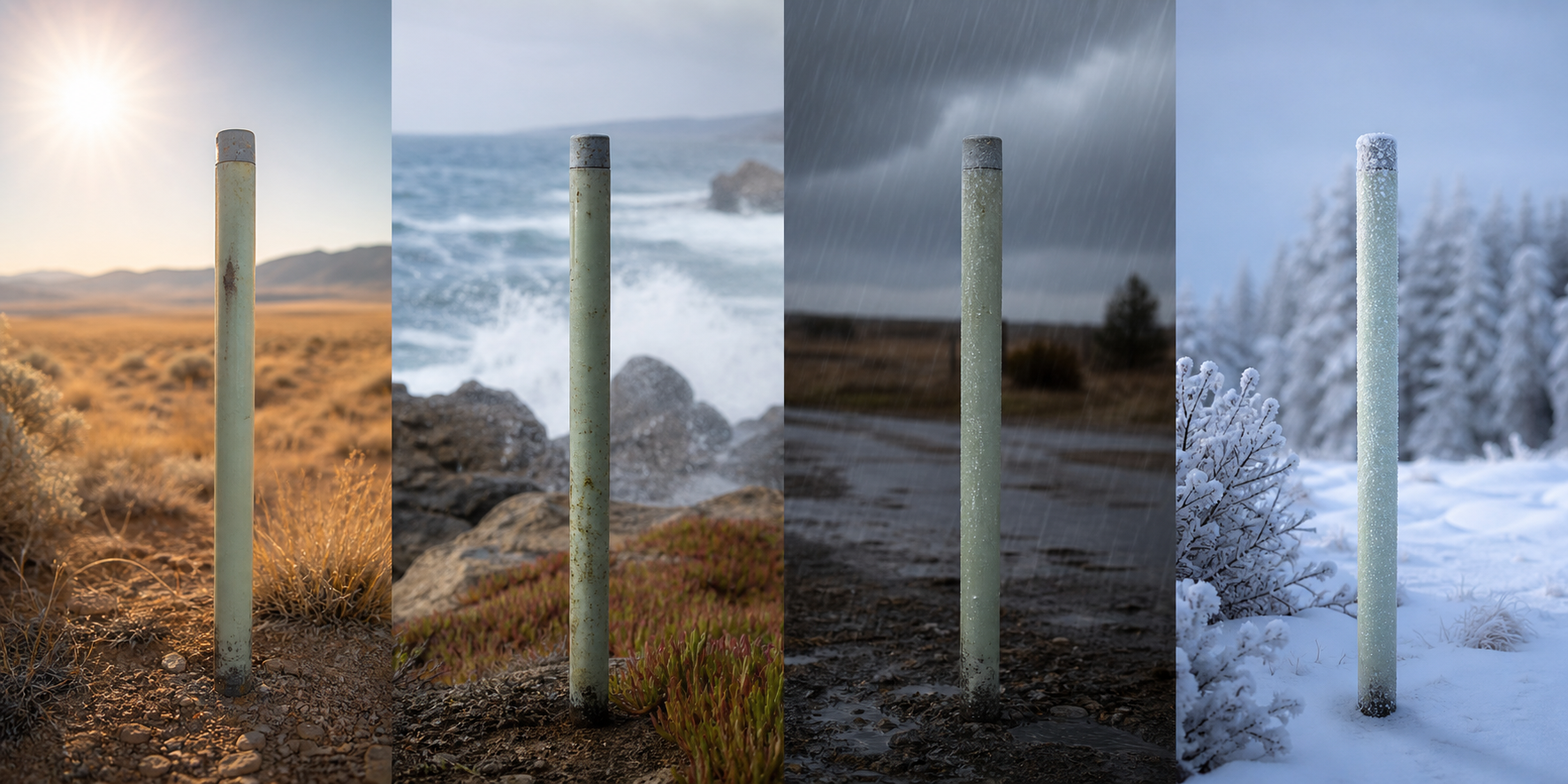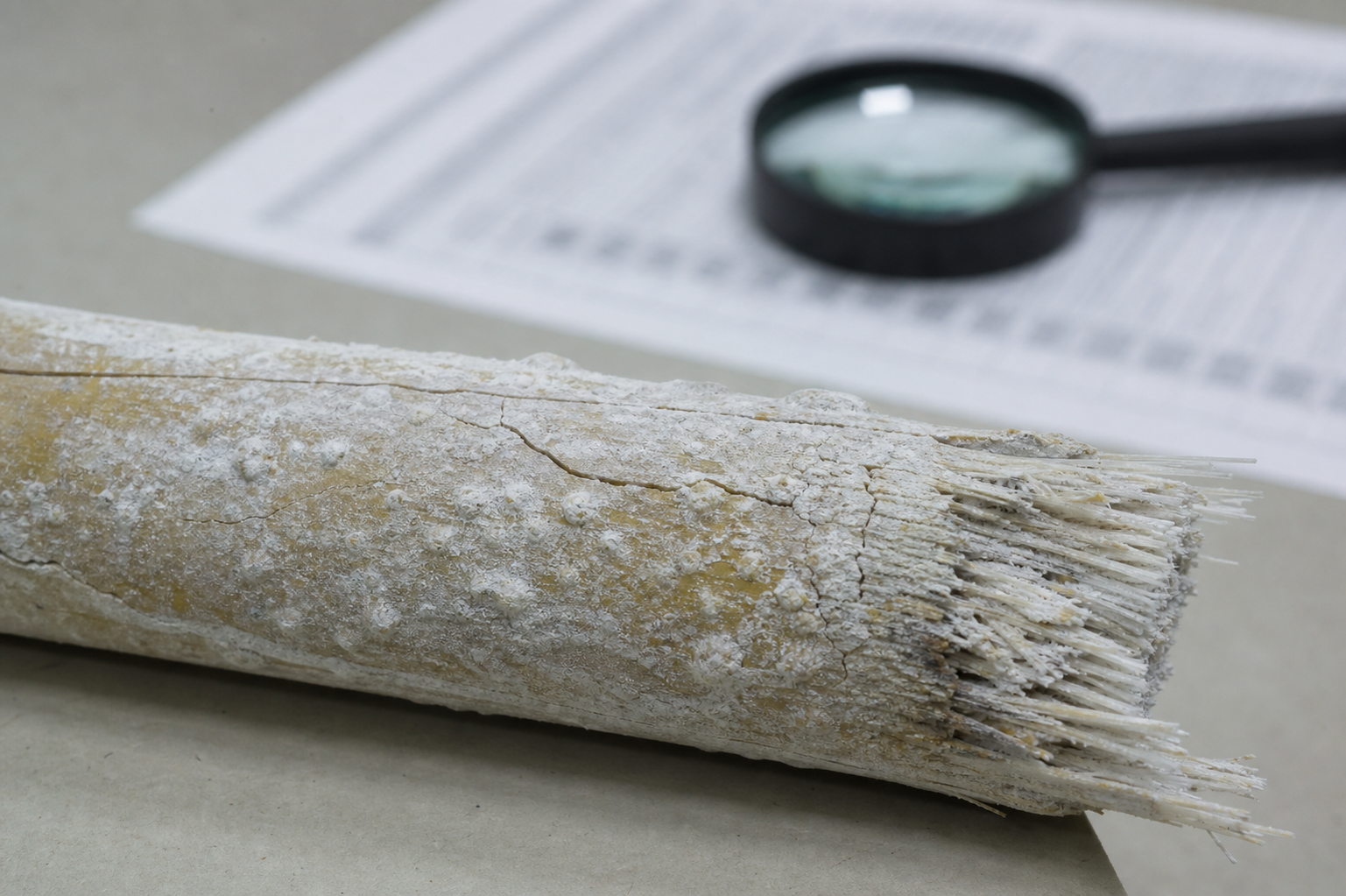
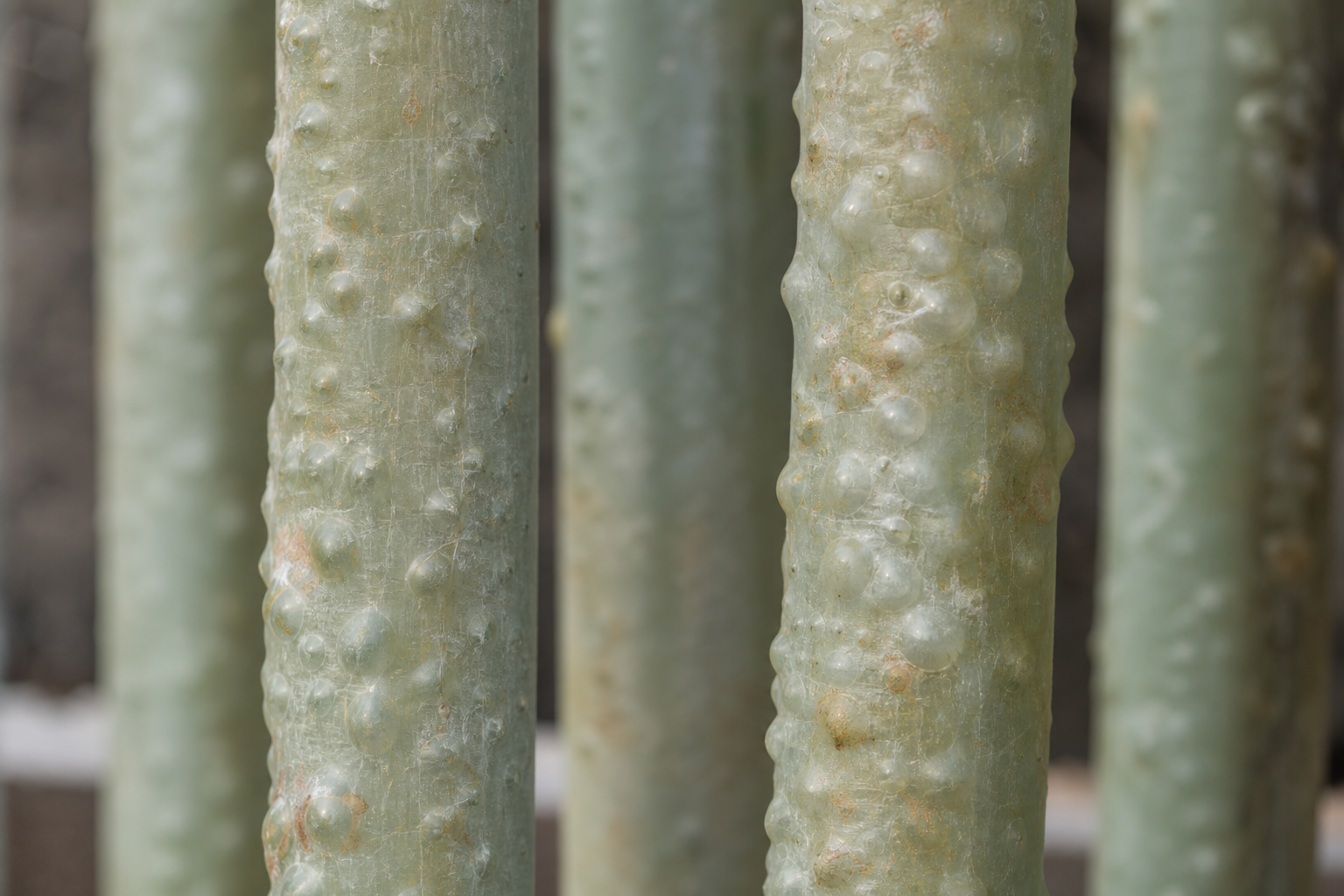
Outdoor fiberglass rods shouldn't develop bubbles and blisters just because they sit in a humid environment. Yet that's exactly what happens when moisture works its way through the resin matrix and triggers a chemical chain reaction beneath the surface.
Osmotic blistering is one of the more misunderstood failure modes in pultruded composites. It looks like a surface defect, but the damage starts deep at the fiber-matrix interface and grows outward. Tencom manufactures custom fiberglass rods engineered to resist this kind of moisture-driven damage, and understanding the mechanism helps you avoid premature replacements.

This article explains what osmotic blistering is, how moisture intrusion causes it, how it differs from UV and stress damage, and what you can do to prevent it when sourcing pultruded fiberglass rods.
Key Takeaways: What Is Osmotic Blistering in Fiberglass Rods
- Osmotic blistering forms when trapped moisture reacts with soluble compounds in the resin, creating internal pressure that delaminates the composite surface.
- Moisture intrusion through micro-voids, cut ends, and surface scratches primarily triggers blister initiation in outdoor fiberglass rods.
- Osmotic blistering differs from UV degradation and stress cracking because it originates below the surface, not at it.
- Tencom engineers custom pultruded fiberglass rods with tailored resin systems and surface veils to resist moisture-driven blistering in outdoor environments.
- Resin selection, manufacturing quality, and proper edge sealing are the three most effective defenses against osmotic blister formation.
What Is Osmotic Blistering in Fiberglass Composites?
Osmotic blistering is a degradation mechanism where water molecules penetrate the resin matrix of a fiberglass composite and react with soluble substances trapped during manufacturing. Those reactions produce byproducts that draw even more water inward through osmotic pressure, forming fluid-filled pockets between the resin and the glass fiber reinforcement.
The process follows a predictable pattern. Water enters through the resin surface, finds a void or a pocket of unreacted material, and initiates a localized chemical reaction. The reaction products are hygroscopic, meaning they attract additional moisture. Pressure builds inside the pocket until the overlying resin layer bulges outward, forming a visible blister.
Over time, these blisters grow and multiply. The structural consequence is a loss of interlaminar bond strength, reduced load transfer between fibers, and accelerated degradation of the surrounding resin. Left unchecked, osmotic blistering can compromise the mechanical performance of an entire fiberglass rod section.
How Does Moisture Intrusion Trigger Osmotic Blistering?
Moisture reaches the interior of a fiberglass rod through several pathways. The resin matrix itself is semi-permeable, allowing water molecules to migrate slowly through the polymer structure over months and years of outdoor exposure. Cut ends, drilled holes, and surface scratches accelerate this process by giving water direct access to the fiber-matrix interface.
Once inside, water molecules encounter micro-voids and pockets of incompletely cured resin. These sites initiate osmotic activity. A 2026 study published in the Journal of Reinforced Plastics and Composites confirmed that moisture absorption in GFRP follows Fickian diffusion behavior, with vinylester laminates reaching roughly half the equilibrium moisture content of epoxy systems.
Temperature plays a significant role. Warm, humid conditions drive moisture deeper into the composite faster. Coastal and tropical installations face the highest risk because both heat and humidity are constantly elevated, giving osmotic reactions more energy and more raw material to work with.
What Happens Inside a Fiberglass Rod During Osmotic Blistering?
At the microscopic level, osmotic blistering follows a three-stage progression. Understanding each stage helps you recognize the warning signs before structural damage becomes irreversible.
Stage 1: Moisture Absorption and Void Saturation
Water molecules diffuse through the resin and accumulate in micro-voids left during manufacturing. At this stage, no visible damage exists. The rod looks and performs normally, but moisture content is rising at the fiber-matrix interface.
Stage 2: Osmotic Pressure Buildup
Water reacts with soluble compounds (often unreacted glycols or acids from the resin cure) to form a concentrated solution. This solution draws more water inward through osmosis, building hydrostatic pressure inside the void. The surrounding resin deforms under this internal load.
Stage 3: Blister Formation and Growth
When internal pressure exceeds the bond strength of the resin layer above the void, the surface bulges outward into a visible blister. The blister fluid is typically acidic, further degrading the surrounding resin and accelerating localized damage. Adjacent areas become vulnerable as the compromised zone spreads.
How Does Osmotic Blistering Differ from UV and Stress Damage?
Fiberglass rods face multiple degradation mechanisms outdoors, and confusing one for another leads to the wrong corrective action. Osmotic blistering, UV degradation, and stress corrosion cracking attack the composite through different pathways.
UV degradation starts at the outer surface. Sunlight breaks polymer chains in the exposed resin, causing chalking, discoloration, and eventually fiber bloom. The damage works from the outside inward. Osmotic blistering works in the opposite direction, originating at internal voids and pushing outward.
Stress corrosion cracking requires sustained mechanical load combined with chemical or moisture exposure. It targets the glass fibers themselves, causing them to fracture under loads well below their rated capacity. Osmotic blistering, by contrast, attacks the resin matrix and the fiber-matrix bond rather than the fibers directly.
Recognizing these differences matters because the prevention strategies differ. Surface veils and UV stabilizers address photodegradation. Load management and proper resin selection address stress cracking. Preventing osmotic blistering requires a focus on manufacturing quality, void reduction, and moisture barrier performance.
Which Resin Systems Resist Osmotic Blistering in Outdoor Rods?
Resin chemistry is the single biggest factor determining a fiberglass rod's resistance to osmotic blistering. The resin type controls how much water can penetrate, how quickly it moves through the matrix, and whether soluble byproducts form to initiate osmotic reactions.
Standard polyester resins contain ester linkages that are vulnerable to hydrolysis. Water molecules break these bonds over time, releasing acids that fuel further osmotic activity. The 2026 diffusion study referenced earlier found that vinylester laminates absorb roughly 2.9% moisture at equilibrium, compared to approximately 5.8% for epoxy systems, making vinylester a strong candidate for moisture-critical applications.
Tencom works with polyester, vinylester, epoxy, and polyurethane resin systems to match materials to your specific exposure conditions. For outdoor rods in high-humidity or water-contact environments, our engineers often recommend vinylester formulations because of their lower moisture uptake and better resistance to hydrolytic breakdown.
How Does Manufacturing Quality Affect Blister Resistance?
Even the right resin system can't protect a fiberglass rod if the manufacturing process introduces defects. Voids, dry spots, and undercured resin all create the internal conditions where osmotic blistering begins.
Voids form when air gets trapped during fiber wet-out or die entry. Each void can initiate moisture accumulation and osmotic reaction. Dry spots, where resin doesn't fully saturate the fiber bundle, leave glass fibers exposed to direct water contact once moisture penetrates the surface.
Incomplete curing leaves unreacted monomers and low-molecular-weight compounds in the finished profile. These soluble materials are exactly what osmotic reactions feed on. Proper temperature control and pull speed during pultrusion ensure full cross-linking, which reduces the concentration of reactive species available to drive blistering.
Because Tencom has been focused on pultrusion for nearly 30 years, our process controls target these specific risk factors. Tight monitoring of die temperature, resin viscosity, and fiber saturation during production minimizes voids and cure defects that enable osmotic blistering.
What Signs Indicate Osmotic Blistering in Fiberglass Rods?
Early detection of osmotic blistering gives you time to act before structural performance drops. The visual indicators progress in a predictable sequence.
Small, dome-shaped bumps on the rod surface are the first visible sign. These blisters may range from pinhead-sized to several millimeters across. They often appear in clusters rather than isolated spots, because the underlying conditions (voids, incomplete cure) tend to be distributed across a production zone.
When punctured, blisters release a fluid that is typically acidic and may have a sharp, vinegar-like odor. This acidic fluid confirms that hydrolysis reactions are active inside the composite. The surrounding resin may appear softened or discolored compared to unaffected areas.
Advanced blistering produces surface delamination, where the outer resin layer separates from the structural core. At this stage, moisture has direct access to the reinforcement fibers, and outdoor degradation accelerates rapidly through multiple mechanisms acting at once.
How Can You Prevent Osmotic Blistering in Outdoor Fiberglass Rods?
Prevention starts at the specification stage, not after installation. Once a fiberglass rod is in service, your options for stopping osmotic blistering narrow significantly. The right decisions up front save you from field failures later.
Select a resin system matched to your moisture exposure level. Vinylester resins reduce both the rate of moisture diffusion and the availability of hydrolyzable bonds. For constant water contact or high-humidity environments, vinylester is worth the incremental investment over standard polyester.
Specify surface veils for outdoor applications. A 2026 study in the Journal of Reinforced Plastics and Composites found that a polyester surface veil reduced the effective diffusion coefficient by about 50% without changing equilibrium moisture content. That means the veil delays moisture from reaching the structural core, buying years of additional service life.
Seal all cut ends and drilled holes immediately after fabrication. Fresh cuts expose the fiber-matrix interface directly to the environment, creating fast pathways for water to bypass the surface barrier entirely. Quick-curing sealants restore the protective layer and block wicking along fiber channels.
Work with a manufacturer that controls void content and cure quality. Fewer voids mean fewer initiation sites. Full cure means fewer soluble compounds available to drive osmotic reactions. Tencom's in-house engineering and testing capabilities let us validate blister resistance before your rods ship.
In Conclusion: Stopping Osmotic Blistering Before It Starts
Osmotic blistering develops when moisture meets manufacturing imperfections inside a fiberglass composite. Resin type, void content, cure quality, and surface protection determine whether a rod resists blistering for decades or develops problems in just a few years of outdoor service.
If you've been dealing with unexplained surface defects or premature performance loss in outdoor fiberglass rods, it's worth looking at osmotic blistering as a root cause. Tencom engineers work backward from your environmental conditions to recommend the right resin system, surface protection, and manufacturing controls.
Ready to specify fiberglass rods that resist moisture-driven degradation? Request a quote or start a conversation with our engineering team. We'll help you figure out whether a custom pultruded solution makes sense for your application.
FAQs About Osmotic Blistering in Outdoor Fiberglass Rods
What causes osmotic blistering in fiberglass rods?
Osmotic blistering occurs when water penetrates the resin matrix and reacts with trapped soluble compounds, creating internal pressure that forms fluid-filled blisters. Manufacturing voids and incomplete resin cure accelerate the process.
Tencom reduces blister risk by controlling void content and cure quality during pultrusion.
Can osmotic blistering be repaired once it appears?
Minor surface blisters can sometimes be ground out, dried, and patched with compatible resin. Extensive blistering that reaches the structural core typically requires rod replacement, because the underlying fiber-matrix bond has already been compromised.
Tencom recommends specifying blister-resistant materials from the start to avoid field repair costs.
Which resin type resists osmotic blistering in fiberglass?
Vinylester resins offer the strongest resistance to osmotic blistering because they absorb less moisture and contain fewer hydrolyzable bonds than polyester. Tencom's resin selection process matches your environmental exposure to the right chemistry.
How long before osmotic blistering appears in outdoor rods?
Blistering can appear anywhere from two years to over a decade after installation, depending on moisture levels, resin type, manufacturing quality, and temperature. High-humidity tropical environments accelerate the timeline.
Tencom engineers help you specify materials that extend blister-free service life in your specific outdoor conditions.
Does osmotic blistering affect fiberglass rod strength?
Yes. Osmotic blistering reduces interlaminar bond strength and disrupts load transfer between glass fibers and the resin matrix. Advanced blistering can cause delamination, exposing fibers to further environmental attack.
Tencom builds moisture resistance into every custom fiberglass rod through careful resin selection and surface protection.