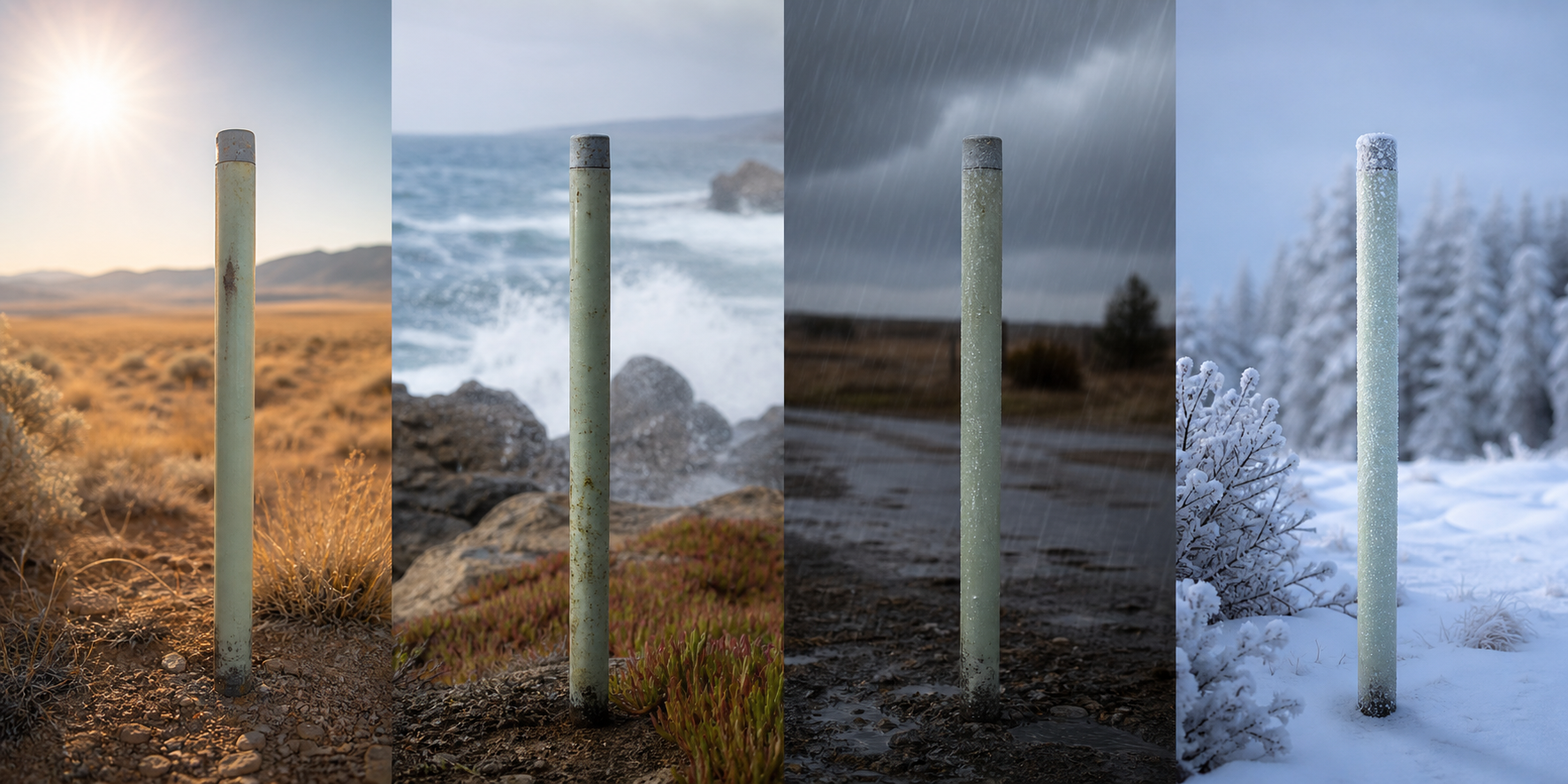
Pultruded fiberglass rods offer exceptional strength-to-weight ratios and resist many challenges that destroy traditional materials. But even fiberglass faces a formidable opponent: outdoor exposure. Ultraviolet radiation, moisture infiltration, and temperature fluctuations can slowly degrade unprotected composites.

This guide walks you through everything you need to know about protecting pultruded fiberglass rods in outdoor applications. Tencom manufactures custom fiberglass rods with UV stabilization and color pigmentation built directly into the production process. You'll learn how degradation happens, which protective strategies work, and how to specify rods that deliver long service life in demanding environments.
By the end, you'll understand how to select the right resin system, apply protective measures, and handle your fiberglass components to maximize their outdoor durability for industrial tool reinforcement and beyond.
Key Takeaways: Prevent UV and Weather Damage in Fiberglass Rods
- UV radiation breaks down the polymer resin matrix in fiberglass, causing surface chalking, fiber bloom, and eventual loss of strength over time.
- Vinyl ester resin systems outperform standard polyester in outdoor applications due to superior moisture and chemical resistance properties.
- Tencom integrates UV stabilizers and color pigments into fiberglass rods during production to protect them from the inside out.
- Protective surface veils and gel coats act as sacrificial barriers, shielding the structural core from environmental attack.
- Proper handling practices, such as sealing cut ends and storing away from direct sunlight, significantly extend the useful service life.
What Causes UV Degradation in Pultruded Fiberglass Rods?
UV degradation occurs when ultraviolet radiation from sunlight attacks the polymer resin matrix that binds glass fibers together. The energy from UV photons breaks molecular chains in the resin, weakening the bond between the matrix and reinforcing fibers.
This process happens gradually over months and years of sun exposure. The resin surface begins to erode, leaving glass fibers exposed—a condition known as "fiber bloom." You'll also notice surface chalking, where a powdery residue forms as the resin breaks down.
Color fading is another visible sign of UV attack. The pigments in the resin absorb UV energy and degrade alongside the polymer matrix. If left unchecked, these surface effects eventually compromise mechanical performance, reducing tensile strength and impact resistance.
How UV Radiation Affects Different Resin Systems
Not all resins respond to UV exposure the same way. Standard polyester resins are most vulnerable to UV degradation and require additional protection for outdoor use. Vinyl ester resins show better inherent resistance due to their molecular structure.
Epoxy resin systems offer excellent mechanical properties but can also yellow and degrade under prolonged UV exposure without proper additives. Polyurethane-based systems can be formulated with aliphatic chemistry that delivers inherent UV stability for outdoor applications.
Understanding how your chosen resin responds to sunlight helps you select the right protective measures for your specific installation environment.
How Does Moisture Damage Pultruded Fiberglass Components?
Moisture infiltration threatens pultruded fiberglass through a different mechanism than UV radiation. Water molecules can penetrate microscopic gaps in the resin matrix, particularly at cut edges, drilled holes, and surface defects where the protective resin layer has been compromised.
Once moisture enters the composite structure, it can cause several problems. The water may reach the fiber-resin interface and weaken the bond between glass reinforcement and polymer matrix. This process, called hydrolysis, gradually reduces the rod's load-carrying capacity.
In freeze-thaw environments, trapped moisture expands as it freezes and contracts when it thaws. This repeated cycle creates internal stresses that can propagate microcracks through the composite structure. Over many seasons, this damage accumulates and affects structural integrity.
Why Vinyl Ester Outperforms Polyester for Moisture Resistance
Vinyl ester resin systems absorb significantly less water than standard polyester formulations. Laboratory testing typically shows water absorption rates below 1% for vinyl ester after extended immersion, compared to higher rates for polyester resins.
This improved moisture resistance comes from the molecular structure of vinyl ester. Fewer reactive sites along the polymer backbone mean fewer locations where water molecules can attack and break chemical bonds. The result is better long-term performance in wet or humid environments.
For applications involving constant moisture exposure—marine environments, wastewater treatment, or outdoor installations in rainy climates—vinyl ester typically offers a longer service life than polyester alternatives.
What Role Does Resin Selection Play in Outdoor Durability?
Your choice of resin system is the foundation of outdoor durability for pultruded fiberglass rods. Each resin type offers different strengths and trade-offs that affect how well the finished product handles environmental challenges.
Polyester resins remain popular due to their lower cost and ease of processing. They perform adequately in many applications but require additional protection for demanding outdoor environments. Adding UV stabilizers and moisture barriers can significantly extend their service life.
Vinyl ester resins cost more than polyester but deliver better performance across multiple environmental factors. Their superior moisture resistance, improved chemical tolerance, and better fatigue properties make them the preferred choice for critical outdoor applications.
Comparing Resin Performance for Outdoor Applications
When evaluating resins for outdoor fiberglass rods, consider these key performance factors: UV resistance, moisture absorption, chemical tolerance, and temperature range. Vinyl ester typically scores higher across most categories, while polyester offers cost advantages for less demanding applications.
Epoxy resins deliver the highest mechanical properties but require UV protection for outdoor use. Polyurethane systems can achieve very high glass loading (up to 80%) for exceptional strength, and aliphatic polyurethane formulations offer inherent UV stability without additional additives.
Tencom works with polyester, vinyl ester, epoxy, and urethane resins to match the right material system to your specific application requirements. This flexibility ensures you get optimal performance without overpaying for unnecessary properties.
How Do UV Stabilizers Protect Fiberglass Rods from Sun Damage?
UV stabilizers are chemical additives mixed directly into the resin during the pultrusion process. They work by absorbing, reflecting, or neutralizing UV radiation before it can damage the polymer matrix. Think of them as sunscreen for your fiberglass components.
These additives typically function through two mechanisms. UV absorbers capture incoming UV photons and convert that energy into harmless heat. Hindered amine light stabilizers (HALS) work differently—they interrupt the chemical degradation process after UV energy has been absorbed.
The advantage of incorporating UV stabilizers into the resin is that they provide protection throughout the rod's entire cross-section. Even if the surface layer erodes over time, fresh stabilizer-containing material becomes exposed, maintaining ongoing protection.
Limitations of UV Stabilizers Alone
While UV stabilizers significantly extend outdoor service life, they have limitations. The stabilizer concentration gradually depletes as it absorbs UV energy and neutralizes free radicals. Over many years of intense sun exposure, this protection diminishes.
UV stabilizers also don't prevent all surface degradation. Some chalking and color fading may still occur over extended periods, even with well-formulated stabilizer packages. For applications requiring pristine appearance over decades, additional surface protection is often warranted.
The most effective approach combines UV stabilizers in the resin matrix with surface-level protection such as gel coats or synthetic veils. This multi-layer defense system delivers the longest service life in demanding outdoor environments.
What Are Surface Veils and How Do They Protect Fiberglass?
Surface veils are thin layers of synthetic or glass fiber material applied to the outer surface of pultruded profiles during manufacturing. They create a resin-rich barrier that shields the structural glass fibers from direct environmental exposure.
The veil absorbs the initial assault from UV radiation, moisture, and mechanical abrasion. By keeping the reinforcing fibers protected beneath this sacrificial layer, the structural integrity of the rod remains intact even as surface conditions evolve over time.
Polyester veils are commonly used for their cost-effectiveness and good performance. Specialty veils made from synthetic fibers can offer enhanced UV resistance and improved surface appearance. The veil selection should match the expected service environment.
Why Does Pigmentation During Production Matter for UV Protection?
Adding pigments directly to the resin during pultrusion does more than create visual appeal—it provides functional UV protection throughout the rod. Pigment particles physically block and scatter UV radiation, reducing the amount that can attack polymer chains.
Darker colors generally offer better UV protection than light colors because they absorb more UV radiation. However, dark colors also absorb more heat from solar radiation, which can be a concern in some applications. The right color choice balances UV protection with thermal management.
Because the pigment is distributed throughout the resin matrix, protection continues even as the surface wears. Tencom offers color pigmentation and UV stabilization during production, building protection into every fiberglass rod from the start rather than relying solely on surface treatments.
Choosing Colors for Maximum Outdoor Performance
When selecting colors for outdoor fiberglass rods, consider both UV protection and heat absorption. Gray and green pigments offer good UV blocking while maintaining moderate heat absorption. White reflects more solar energy but may show dirt more readily.
Avoid specifying unpigmented clear fiberglass for outdoor applications unless you plan to apply protective coatings. The natural translucent appearance of fiberglass allows UV radiation to penetrate deeply into the composite, accelerating degradation throughout the material.
Standard industrial colors like gray, green, and tan have proven track records in outdoor applications spanning decades. For specialized requirements, custom colors can be formulated with UV-protective pigment packages tailored to your specific service environment.
How Should You Handle and Store Fiberglass Rods to Prevent Damage?
Proper handling and storage practices can significantly extend the service life of pultruded fiberglass rods before they're even installed. Damage during this phase often goes unnoticed but creates vulnerabilities that accelerate degradation once the rods are in service.
Store fiberglass rods in covered areas away from direct sunlight whenever possible. While the materials are designed for outdoor use, unnecessary UV exposure during storage depletes protective additives before the product reaches its intended application.
Keep rods elevated off the ground on racks or supports to prevent contact with moisture. Avoid storing them directly on concrete, as it can transfer moisture via capillary action. Good airflow around stored materials helps prevent condensation buildup.
Protecting Cut Ends and Drilled Holes
Cutting and drilling fiberglass rods exposes the inner structure where the protective surface layer doesn't exist. These exposed areas become entry points for moisture and potential sites for accelerated degradation if left unprotected.
Seal all cut ends with an appropriate coating after fabrication. Epoxy or polyurethane sealants work well for this purpose. The goal is to recreate the moisture barrier provided by the original surface treatment, preventing water from wicking into the composite structure.
Drilled holes should receive similar treatment. Apply sealant around the edges of the hole before installing fasteners. If the application allows, consider using gaskets or washers that help seal the interface between fasteners and the fiberglass surface.
What Environmental Factors Accelerate Fiberglass Degradation?
Understanding which environmental factors pose the greatest threat helps you specify appropriate protection levels for your application. While UV radiation and moisture are primary concerns, other factors can accelerate degradation in specific environments.
Chemical exposure presents challenges in industrial settings. Acids, bases, solvents, and industrial chemicals can attack both the resin matrix and the fiber-resin interface. Vinyl ester resins generally offer better chemical resistance than polyester for these demanding applications.
Temperature extremes also stress fiberglass composites. Very high temperatures can soften the resin matrix and reduce mechanical properties. Repeated freeze-thaw cycles can cause microcracking as trapped moisture expands and contracts. Understanding your temperature range helps select appropriate resin systems.
Salt Spray and Marine Environment Considerations
Coastal and marine environments combine multiple aggressive factors: UV radiation, salt spray, high humidity, and often chemical exposure from industrial port operations. Fiberglass rods in these settings need robust protection across all fronts.
Salt deposits on fiberglass surfaces can hold moisture against the material and create localized corrosive conditions. While fiberglass itself doesn't corrode like steel, the concentrated salt-moisture mixture can accelerate resin degradation over time.
Regular cleaning to remove salt buildup extends service life in marine environments. For permanent installations where cleaning isn't practical, specify enhanced surface protection and thoroughly seal all cut ends and penetrations to prevent the infiltration of salt-laden moisture.
How Do You Specify Fiberglass Rods for Industrial Tool Reinforcement?
Industrial tool reinforcement applications often involve both mechanical demands and environmental challenges. Your fiberglass rods must deliver consistent strength while resisting whatever conditions the tools encounter during use and storage.
Start by defining the mechanical requirements: tensile strength, flexural modulus, impact resistance, and dimensional stability under load. Then layer on the environmental factors: UV exposure levels, moisture conditions, chemical contacts, and temperature ranges the tools will experience.
Communicate these requirements clearly to your fiberglass supplier. Tencom offers design and engineering support to help match resin systems, reinforcement configurations, and protective treatments to your specific application needs. This collaboration ensures you receive rods optimized for your exact use case.
Key Specifications to Include in Your Requirements
When requesting quotes for outdoor fiberglass rods, include these key specifications: required diameter and length tolerances; resin system preference (polyester, vinyl ester, or other); UV stabilization requirements; color or pigmentation needs; and surface finish requirements.
Also specify the intended application environment. Describe UV exposure levels (full sun, partial shade, indoor with some outdoor use), moisture conditions (dry, humid, wet, submerged), temperature range, and any chemical exposures. This information helps your supplier recommend optimal configurations.
Request material certifications and test data for critical applications. Mechanical properties, water absorption rates, and UV resistance test results help verify that the delivered products will perform as expected in your service environment.
Which Maintenance Practices Extend the Service Life of Outdoor Fiberglass?
While pultruded fiberglass requires far less maintenance than traditional materials, periodic attention can extend service life and maintain performance. Establishing a simple inspection and care routine pays dividends over the long term.
Visual inspections reveal early signs of degradation before they become serious problems. Look for surface chalking, color changes, fiber bloom, or any visible damage. Catching issues early allows intervention before structural performance is compromised.
Cleaning removes accumulated dirt, salt, and organic materials that can hold moisture against surfaces and accelerate localized degradation. A simple wash with mild detergent and water removes most deposits. Avoid abrasive cleaners or pressure washing, which could damage the surface protection.
When to Consider Protective Coating Reapplication
If your fiberglass rods show signs of surface degradation despite reasonable maintenance, applying a protective coating can restore the UV barrier and extend remaining service life. This approach is often more economical than replacement for otherwise sound components.
Polyurethane and fluoropolymer coatings offer excellent UV protection and moisture resistance when applied over prepared fiberglass surfaces. Surface preparation is critical—the existing surface must be clean, dry, and properly abraded to ensure good coating adhesion.
For critical applications, consult with your fiberglass supplier or a coating specialist to select appropriate products and application methods. The right coating system can add years or even decades to the service life of exposed fiberglass components.
How Does Tencom Build UV Protection Into Custom Fiberglass Rods?
Tencom integrates protective measures directly into the manufacturing process rather than relying solely on post-production treatments. This approach delivers consistent protection across every rod, from the surface to the core.
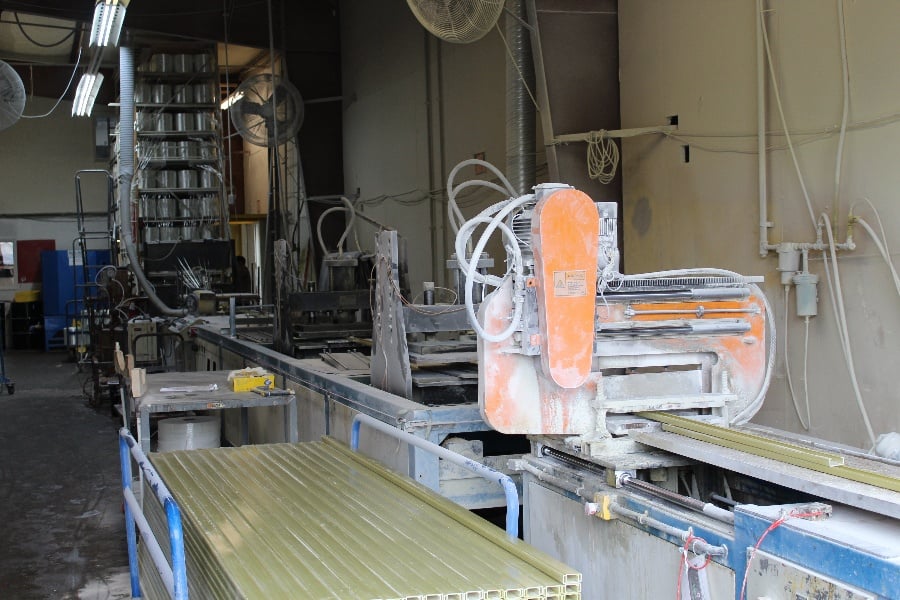
During pultrusion, UV stabilizers and pigments are mixed into the resin bath before the fiberglass reinforcements pass through. This ensures uniform distribution of protective additives throughout the entire cross-section of the finished rod.
Tencom's proprietary pultrusion equipment allows precise control over resin mix formulations. The resin composition can be adjusted to meet specific environmental requirements, whether that means enhanced UV protection, improved chemical resistance, or other performance characteristics.
Custom Solutions for Demanding Outdoor Applications
Tencom specializes in serving smaller customers who need tailored solutions rather than off-the-shelf products. This focus means you get engineering support to develop fiberglass rods optimized for your specific outdoor application.
Available materials include polyester, vinyl ester, epoxy, and urethane resin systems. Finished lengths range from 100 feet to 2,000 feet in coiled form, with diameters available from 1/8 inch through 3/8 inch. Custom configurations accommodate specialized requirements.
The typical turnaround time for custom fiberglass rod orders is 3-4 weeks. This allows Tencom to manufacture products specifically formulated for your application, rather than drawing from generic inventory that may not provide optimal outdoor protection.
In Summary: Protecting Your Fiberglass Investment for the Long Term
Preventing UV and weather damage in pultruded fiberglass rods requires a multi-layered approach. Start with the right resin system—vinyl ester for the most demanding outdoor applications—and add UV stabilizers and pigmentation during production. Surface veils provide additional protection, extending service life.
Proper handling and installation practices preserve the built-in protection these products offer. Seal cut ends and drilled holes, store materials away from unnecessary UV exposure, and establish periodic inspection routines to catch issues early.
For industrial tool reinforcement and other demanding outdoor applications, working with an experienced custom pultruder ensures your fiberglass rods are engineered for your specific environment. Tencom delivers fiberglass products with corrosion resistance, UV stabilization, and the mechanical properties needed for long-lasting performance in challenging conditions.
FAQs about Preventing UV and Weather Damage in Fiberglass Rods
How long do pultruded fiberglass rods last in outdoor applications?
Properly formulated and protected pultruded fiberglass rods can last 20 years or more in outdoor environments. Service life depends on UV exposure intensity, moisture conditions, and whether the rods include UV stabilizers and protective surface treatments from the start.
Tencom manufactures fiberglass rods with UV stabilization built into the resin during production. This integrated protection helps ensure consistent long-term performance even in demanding outdoor applications.
What is fiber bloom and how do you prevent it?
Fiber bloom occurs when UV radiation erodes the surface resin, leaving glass fibers exposed and giving the surface a fuzzy or hairy appearance. You prevent fiber bloom by using UV-stabilized resin systems, adding pigmentation, and applying surface veils or gel coats.
Tencom incorporates UV stabilizers and color pigments during the pultrusion process to protect against fiber bloom from the inside out.
Can you repair fiberglass rods that show UV damage?
Yes, fiberglass rods showing early UV damage can often be restored with protective coatings. Clean the surface thoroughly, lightly abrade to promote adhesion, and apply a UV-protective polyurethane or fluoropolymer coating. This approach works for surface degradation that hasn't compromised structural integrity.
For severe damage affecting mechanical properties, replacement is typically the better option. Regular inspection catches degradation early when repair is still feasible.
Which resin system offers the best outdoor durability?
Vinyl ester resin systems typically offer the best balance of UV resistance, moisture protection, and mechanical properties for outdoor applications. They outperform standard polyester in most environmental challenges while costing less than high-performance epoxy systems.
Tencom works with vinyl ester, polyester, epoxy, and urethane resins to match the right system to your specific requirements and budget.
Do darker colored fiberglass rods last longer outdoors?
Darker pigments generally offer better UV blocking than lighter colors because they absorb more of the UV spectrum. However, dark colors also absorb more solar heat, which can affect resin properties in very hot environments. Gray and green offer good UV protection with moderate heat absorption.
How should you store fiberglass rods before installation?
Store fiberglass rods in covered areas, away from direct sunlight, to preserve their UV-protective additives. Keep them elevated off concrete floors on racks to prevent contact with moisture. Good airflow around stored materials helps prevent condensation buildup that could affect surface quality.
Tencom designs fiberglass rods for outdoor use, but minimizing pre-installation UV exposure helps maximize service life in your final application.
What maintenance do outdoor fiberglass rods require?
Outdoor fiberglass rods require minimal maintenance compared to traditional materials. Periodic visual inspection identifies early signs of degradation. Annual cleaning with mild detergent removes dirt and salt deposits that can accelerate localized degradation. Avoid abrasive cleaners that could damage surface protection.
Tencom's UV-stabilized fiberglass rods deliver low-maintenance performance in demanding outdoor environments.