

Stress corrosion cracking (SCC) is one of the most destructive failure modes affecting pultruded fiberglass rods in outdoor environments. Unlike sudden impact damage, SCC develops gradually as moisture, chemicals, and sustained mechanical loads work together to attack the glass fibers and the resin matrix from within. Tencom engineers custom fiberglass rods with resin systems and protective measures designed to resist the combined forces of degradation.

This article explains how stress corrosion cracking happens in FRP composites, what early warning signs to look for, and which material and design choices help you avoid premature failures in demanding outdoor applications.
Key Takeaways: How Stress Corrosion Cracking Causes FRP Rod Failure
- Stress corrosion cracking occurs when sustained mechanical loads, moisture, and chemical exposure attack glass fibers simultaneously over time.
- The fiber-matrix interface is the primary point of vulnerability where environmental agents initiate degradation and crack propagation.
- Early warning signs include surface chalking, discoloration, fiber bloom, and visible hairline cracks at high-stress locations.
- Tencom delivers custom pultruded fiberglass rods with tailored resin systems and protective features to resist outdoor degradation forces.
- Proper resin selection, UV stabilization, and edge sealing significantly extend the service life of FRP components in harsh environments.
What Is Stress Corrosion Cracking in Fiberglass Composites?
Stress corrosion cracking is a failure mechanism where glass fibers degrade and crack under the combined action of mechanical stress and a corrosive environment. The process requires three simultaneous conditions: sustained tensile load, an aggressive chemical agent (often just moisture), and susceptible glass fibers.
According to research published in the Journal of Hazardous Materials, FRP components can fail at loads well below their design capacity when exposed to this combination of factors. The glass fibers that give pultruded rods their strength become the weak link when corrosive agents reach them through gaps in the protective resin barrier.
This mechanism differs from other degradation modes because it specifically targets the fiber reinforcement. While UV radiation and general weathering attack the resin surface, stress corrosion cracking penetrates deeper, compromising the composite's structural core.
How Do Moisture and Chemicals Attack Pultruded Fiberglass Rods?
Water molecules penetrate the composite structure through microscopic pathways in the resin matrix. Cut ends, drilled holes, surface scratches, and manufacturing voids all create entry points. Once inside, moisture migrates along the fiber-matrix interface where adhesion may be weakest.
The real damage begins through a process called hydrolysis. Water molecules break chemical bonds in both the resin matrix and the silane coupling agents that connect glass fibers to the surrounding polymer. A comprehensive review by Thomason and Xypolias found that hydrolysis can significantly reduce stress transfer at the composite interface, affecting all matrix-dominated properties.
Alkaline and acidic environments accelerate this process dramatically. Industrial chemicals, concrete pore solutions, and even certain soil conditions can create hostile environments for unprotected fiberglass. The combination of chemical exposure and sustained mechanical loads creates conditions in which crack initiation occurs at much lower stress levels than expected.
Why Does Sustained Load Make Outdoor FRP Degradation Worse?
Mechanical stress amplifies moisture-induced damage through several mechanisms. Sustained loads induce microstrain in the polymer matrix, thereby opening pathways for water and chemical infiltration. Tiny cracks form at stress concentration points and then propagate as corrosive agents weaken the material ahead of the crack tip.
The interaction between stress and environment creates a dangerous feedback loop. As damage accumulates, local stresses increase in the remaining intact material. This accelerates further degradation until the component can no longer carry its design load. The FRP damage mechanisms described by UTComp show that polymer damage typically occurs faster than fiber damage, stopping the matrix's ability to protect fibers and transfer loads.
Temperature cycling compounds these effects. Repeated heating and cooling generate internal stresses as different composite components expand and contract at different rates. In cold climates, water trapped in voids can freeze and expand, creating additional pathways for damage.
What Early Warning Signs Indicate Stress Corrosion Cracking?
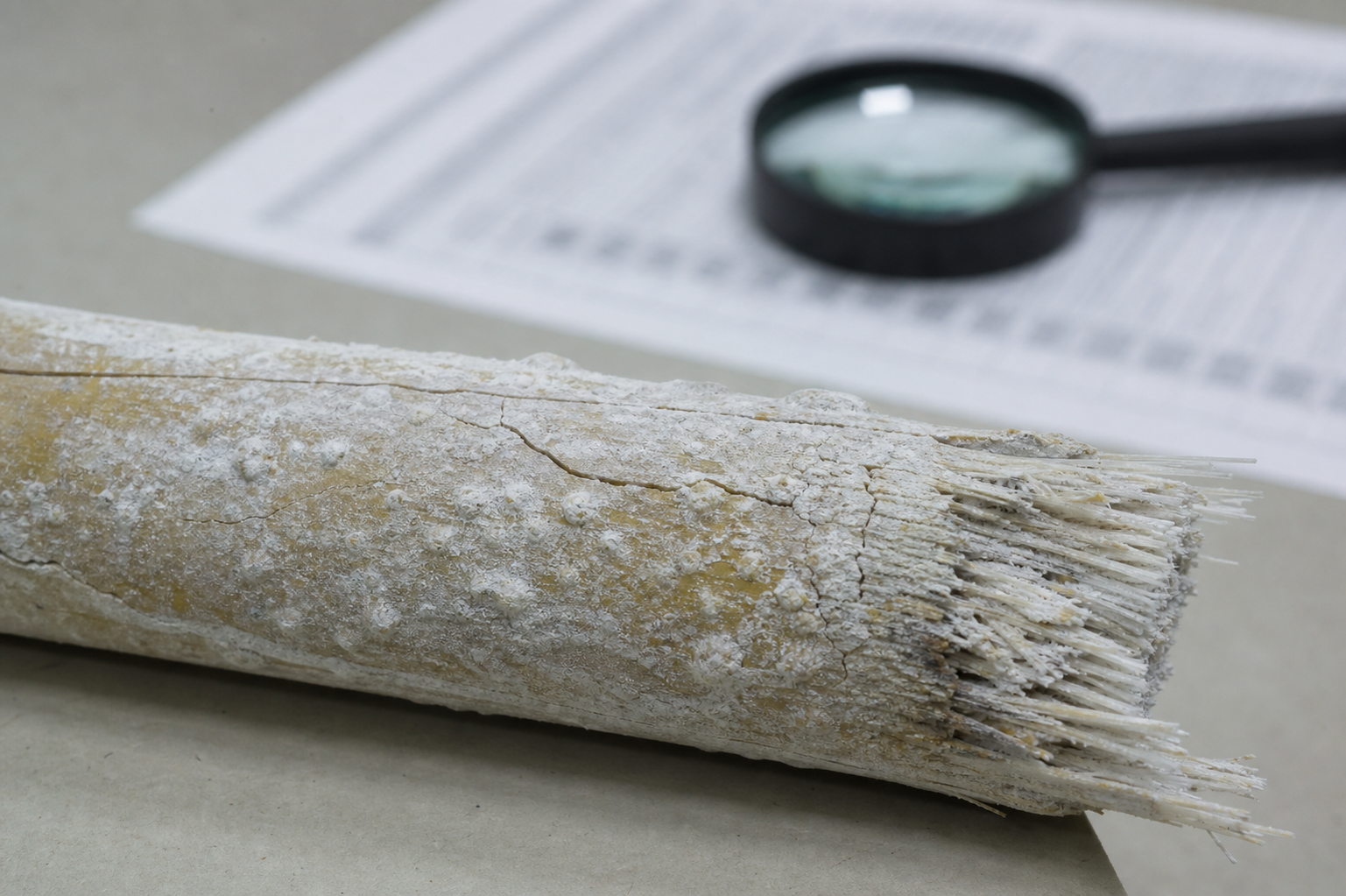
Visual inspection catches many indicators before structural failure occurs. Surface chalking appears as a powdery white residue when UV radiation breaks down the outer resin layer. While chalking alone indicates UV damage, it also signals that the protective barrier is compromised and deeper degradation may follow.
Fiber bloom refers to the fuzzy or hairy appearance that develops when glass fibers are exposed at the surface. This condition means the resin barrier has eroded enough to leave reinforcement fibers unprotected. Any exposed fibers become direct targets for environmental attack.
How to Distinguish Field Damage from Manufacturing Defects
Stress corrosion cracking produces characteristic patterns that differ from those caused by manufacturing issues. SCC typically starts at high-stress locations, cut edges, or areas with visible surface damage. The cracks often follow fiber directions and may show evidence of chemical staining or discoloration.
Manufacturing defects, such as voids or dry spots, appear uniformly distributed or follow production patterns. They're present from day one rather than developing progressively during service. When you see localized damage at stress points that worsens over time, environmental factors are likely contributing.
Document the location and progression of any damage you observe. Patterns that align with stress concentrations, environmental exposure gradients, or moisture entry points indicate SCC rather than inherent material defects.
Which Material Choices Reduce FRP Stress Corrosion Risk?
Resin selection forms the foundation of outdoor durability. Vinyl ester resins absorb significantly less water than standard polyester formulations. Their molecular structure features fewer reactive sites where water molecules can attack chemical bonds. For applications involving constant moisture exposure, vinyl ester typically offers longer service life.
Tencom works with polyester, vinyl ester, epoxy, and polyurethane resin systems to match materials to your specific operating environment. Tencom's guide to preventing UV and weather damage explains how different resin chemistries respond to environmental challenges and which protective measures complement each system.
Glass fiber type also matters. E-glass fibers, the most common reinforcement, show moderate resistance to chemical attack. ECR-glass (corrosion-resistant glass) offers improved performance in acidic and alkaline environments. Specifying the right fiber-resin combination for your application conditions prevents unexpected failures.
How Do Protective Barriers Extend FRP Service Life?
UV stabilizers mixed into the resin during production absorb and neutralize ultraviolet radiation before it can damage polymer chains. Because these additives distribute throughout the material, fresh protection becomes available even as the surface erodes. This internal protection complements surface treatments for maximum durability.
Surface veils create a resin-rich outer layer that shields structural fibers from direct environmental contact. The veil acts as a sacrificial barrier, accepting initial damage while preserving the load-bearing core. Polyester and synthetic veils offer different balances of protection and cost for various applications.
Color pigmentation does more than improve appearance. Pigment particles physically block and scatter UV radiation, reducing the energy available to break polymer bonds. Darker colors generally offer better UV protection, though they also absorb more heat. Tencom integrates UV stabilizers and color pigmentation during the pultrusion process, building protection into every fiberglass rod from the start.
What Installation Practices Prevent Stress Corrosion Cracking?
Seal all cut ends immediately after field fabrication. Fresh cuts expose the fiber-matrix interface directly to the environment, creating entry points for moisture. Quick-curing epoxy or polyurethane sealants restore the protective barrier established by the original surface treatment.
Drilled holes require the same attention. Apply sealant around the hole edges before installing fasteners. Gaskets or washers that compress against the fiberglass surface help maintain the moisture barrier at connection points.
Avoid over-tightening fasteners, which can crush the composite and create stress concentrations. Follow torque specifications for your specific material system. The combination of fastener-induced stress and moisture access at bolt holes creates ideal conditions for localized stress corrosion cracking.
In Conclusion: Protecting FRP Rods from Stress Corrosion Cracking
Stress corrosion cracking develops when sustained loads, moisture, and chemical exposure work together against glass fiber composites. Understanding this three-factor mechanism helps you specify materials and protective measures that resist premature failure in outdoor applications.
The right approach combines proper resin selection, UV stabilization, surface protection, and careful installation practices. Each layer of defense addresses a different attack pathway, creating comprehensive protection for demanding environments.
Tencom specializes in custom pultruded fiberglass products engineered for challenging conditions. With design and engineering support, custom resin formulations, and in-house testing capabilities, Tencom helps you specify fiberglass rods that deliver reliable long-term performance in environments where outdoor exposure and sustained loads are a fact of life.
FAQs about How Stress Corrosion Cracking Causes FRP Rod Failure
What causes stress corrosion cracking in fiberglass rods?
Stress corrosion cracking occurs when three factors combine: sustained mechanical load, moisture or chemical exposure, and susceptible glass fibers. The corrosive environment attacks glass fibers through gaps in the protective resin matrix, leading to progressive loss of strength and eventual failure under design loads.
Tencom engineers fiberglass rods with resin systems selected to resist the specific environmental conditions you face.
How can you identify stress corrosion cracking before failure?
Early signs include surface chalking, fiber bloom (exposed fibers at the surface), discoloration, and hairline cracks at high-stress locations. These indicators typically appear at cut edges, connection points, or areas with visible surface damage. Patterns that worsen progressively and align with stress concentrations suggest environmental degradation.
Which resin system resists stress corrosion cracking in FRP?
Vinyl ester resins offer superior moisture and chemical resistance compared to standard polyester. Their molecular structure contains fewer sites where water can break chemical bonds. For demanding outdoor applications, Tencom recommends vinyl ester or specialty resin systems matched to your specific exposure conditions.
Does hydrolysis contribute to fiberglass rod failure?
Yes. Hydrolysis is a key mechanism in stress corrosion cracking. Water molecules break chemical bonds in both the resin matrix and fiber-matrix interface, reducing the composite's ability to transfer loads. Warm, humid environments significantly accelerate hydrolysis rates.
Tencom builds moisture resistance into fiberglass rods through careful resin selection and protective features.
How do you prevent stress corrosion cracking in outdoor FRP?
Prevention requires multiple layers of defense: select appropriate resin systems for your environment, specify UV stabilizers and protective surface treatments, seal all cut ends and drilled holes, and avoid creating unnecessary stress concentrations during installation. Tencom offers design support to help you specify the right materials and protective measures for your application.