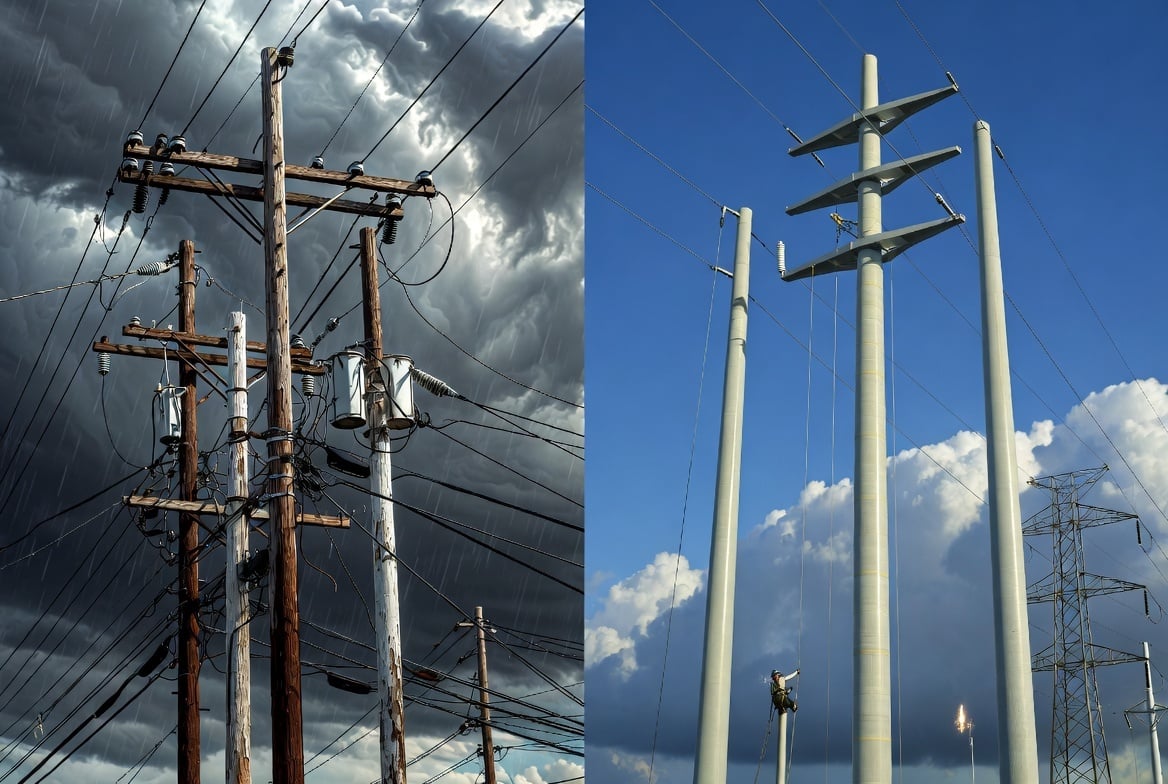


Engineers and utility specifiers used to treat pultruded fiberglass profiles as specialty items—great in theory, but risky without rock-solid design data. That hesitation is fading fast.
Mature standards like EN 13706 in Europe and updated North American guidelines for composite utility structures are turning FRP from “alternative” to preferred material for everything from grid hardening to bridges and buildings.

At Tencom, we’ve engineered custom pultruded composites for 28+ years. These evolving codes aren’t just paperwork—they’re the green light our customers need to specify lighter, corrosion-proof solutions with full engineering confidence.
What EN 13706 Actually Means for Structural Pultrusions
Published in 2002 and still the gold standard across Europe (with ongoing refinements), BS EN 13706 sets minimum requirements for pultruded fiber-reinforced plastic profiles used in load-bearing applications. It breaks down into three parts:
- Part 1: Designation system—how profiles are labeled for materials, reinforcement, and surface treatment.
- Part 2: Test methods and general requirements for quality, tolerances, and workmanship.
- Part 3: Specific performance levels, including two main grades—E23 and E17—based on full-section flexural modulus (23 GPa or 17 GPa minimum).
Profiles meeting E23 deliver higher stiffness and strength, making them ideal for demanding structural uses. The standard covers everything from dimensional tolerances and surface quality to mechanical properties that engineers actually design with. Recent focus includes expanded guidance on chemical durability and fire performance, aligning with updates like the UK’s shift to EN 13501-1 fire classification in March 2025.
Manufacturers who comply provide specifiers with clear, testable data rather than vague promises. That traceability is game-changing for approvals.
North American Momentum: Utility Poles, Crossarms, and Beyond
On this side of the Atlantic, standards are catching up quickly:
- ANSI/ACMA UCSC-FRP Composite Utility Poles (2018 standard now under active revision in 2025) covers design, materials, manufacturing, and installation for direct-embedded FRP poles.
- ASTM D4923 and related specs for reinforced thermoset poles.
- NESC load cases, RUS guidelines, and utility-specific standards (like PECO’s new fiberglass pole spec released in 2025).
Crossarm development and strength vs. deflection task groups are also advancing. These updates reduce the risk of utilities replacing aging wood and steel infrastructure.
The result? Faster permitting, broader acceptance in bids, and easier integration into smart-grid and resilience projects.
Why These Standards Are Accelerating Adoption
- Engineer Confidence: Clear property tables and test protocols mean designers can model pultruded profiles as they would steel or concrete—no more conservative overdesign or hesitation.
- Regulatory Green Light: Compliance with EN 13706 or ANSI/ACMA opens doors in Europe, the UK, and North America for public infrastructure funding and approvals.
- Lifecycle Credibility: Standardized durability, fire, and environmental data support lower total ownership costs and sustainability goals.
- Supply Chain Clarity: Specifiers can demand (and verify) E23-grade profiles, proper fiber content, and resin systems instead of gambling on untraceable imports.
Real-world impact shows in renewables, utilities, and transportation. High-performance pultruded profiles meeting EN 13706 are now standard in European wind, solar, and chemical plants—while U.S. grid-hardening projects increasingly call out composite poles and arms by reference to updated codes.
How Tencom Helps You Navigate and Leverage the Standards
We don’t just meet the minimums—we build beyond them for your exact application. Our team:
- Selects resin and fiber architectures to hit or exceed E23 performance while optimizing cost.
- Provides full test reports, material datasheets, and traceability aligned with EN 13706, ASTM, and utility specs.
- Offers custom profiles with value-added machining, chamfers, slots, and assembly that simplify field installation.
- Collaborates early in design to ensure compliance from day one—whether you need utility poles, crossarms, structural shapes, or complex hybrid sections.
This engineering-first approach turns standards into competitive advantages: lighter structures, faster installs, zero maintenance, and decades of service life.
Key Takeaways
- EN 13706 delivers consistent, testable performance data that structural engineers trust for load-bearing pultruded profiles.
- North American revisions (ANSI/ACMA, utility-specific standards) are smoothing the path for composite poles and crossarms in grid modernization.
- Standards reduce risk, speed approvals, and unlock funding for infrastructure projects.
- Compliance separates premium custom solutions from commodity products.
- Early partnership with an experienced pultruder like Tencom ensures you maximize performance while hitting every code requirement.
The days of “composites are too new” are over. Mature standards have opened the floodgates—and the projects going to companies that understand them will only grow.
Ready to spec pultruded FRP with total confidence? Our engineers at Tencom can review your drawings, recommend compliant materials, and deliver custom profiles that check every box. Reach out for a consultation or quote—we’ll help you turn these new codes into faster, stronger, lower-maintenance wins.