

You’ve seen the numbers: pultruded fiberglass is lighter, stronger per pound, and rust-free. But does the higher initial price actually pay off?
At Tencom, we get this question every week from engineers, procurement teams, and OEMs evaluating custom FRP profiles for utilities, fenestration, infrastructure, marine, and industrial applications. The short answer is yes — often dramatically so — but only when you look at the full picture beyond the first invoice.

Here’s a clear, data-backed breakdown of what custom fiberglass pultrusion really costs versus traditional materials, and why the investment typically delivers strong returns within 2–5 years.
Upfront Costs: What You Actually Pay for Custom Pultrusion
Custom pultrusion involves several cost components. Here’s how they typically stack up in 2026:
1. Tooling / Custom Die Investment
- Standard structural shapes (angles, channels, I-beams) often use existing dies — minimal or zero tooling cost.
- Custom profiles: $7,000–$50,000 per die, depending on complexity, size, tolerances, and multi-cavity requirements. This is a one-time fixed cost amortized over the entire production run. For medium-to-high volumes, it becomes negligible per piece.
2. Material and Production Cost
- Typical range: $5 – $15 per linear foot (or $2 – $10 per pound), varying with resin type, fiber content, customization, and order volume.
- Polyester systems sit at the lower end; vinyl ester or polyurethane with added UV/fire retardants push toward the higher end.
- Volume discounts kick in quickly — larger runs spread setup and resin-batch costs more effectively.
3. Secondary Fabrication Cutting to length, drilling, chamfering, machining, and assembly add value but remain far less expensive than fabricating steel or aluminum equivalents.
Compared to alternatives:
- Steel — often cheaper per pound initially, but heavier and requires coatings.
- Aluminum — similar or higher material cost with thermal/conductivity drawbacks.
- Wood — lowest upfront but shortest lifespan.
Installation Savings That Show Up Immediately
Lightweight pultruded profiles (up to 75% lighter than steel) deliver big wins here:
- Smaller crews and lighter equipment are needed
- Faster handling and erection — often 40–60% quicker installation
- Reduced transportation costs (more profiles per truckload)
- No heavy lifting equipment or welding in many cases
These factors frequently offset much of the material premium on day one.
Maintenance and Lifecycle Costs: Where Pultrusion Shines
This is where the economics flip in favor of fiberglass.
Typical 30–50 Year Comparison (based on infrastructure and civil engineering data):
| Cost Category | Pultruded FRP | Painted/Galvanized Steel | Wood |
|---|---|---|---|
| Initial Material + Install | Higher (baseline) | Lower | Lowest |
| Maintenance (painting, repairs) | Near zero | High (every 5–10 yrs) | High (rot, replacement) |
| Replacement Frequency | 50+ years | 15–25 years | 10–20 years |
| Total Lifecycle Cost | 30–52% lower | Baseline | Higher |
FRP profiles eliminate rust, rot, and degradation in harsh environments — coastal, chemical, de-icing salt, or high-moisture settings. No repainting, no cathodic protection, minimal inspections.
Real-World Payback Examples:
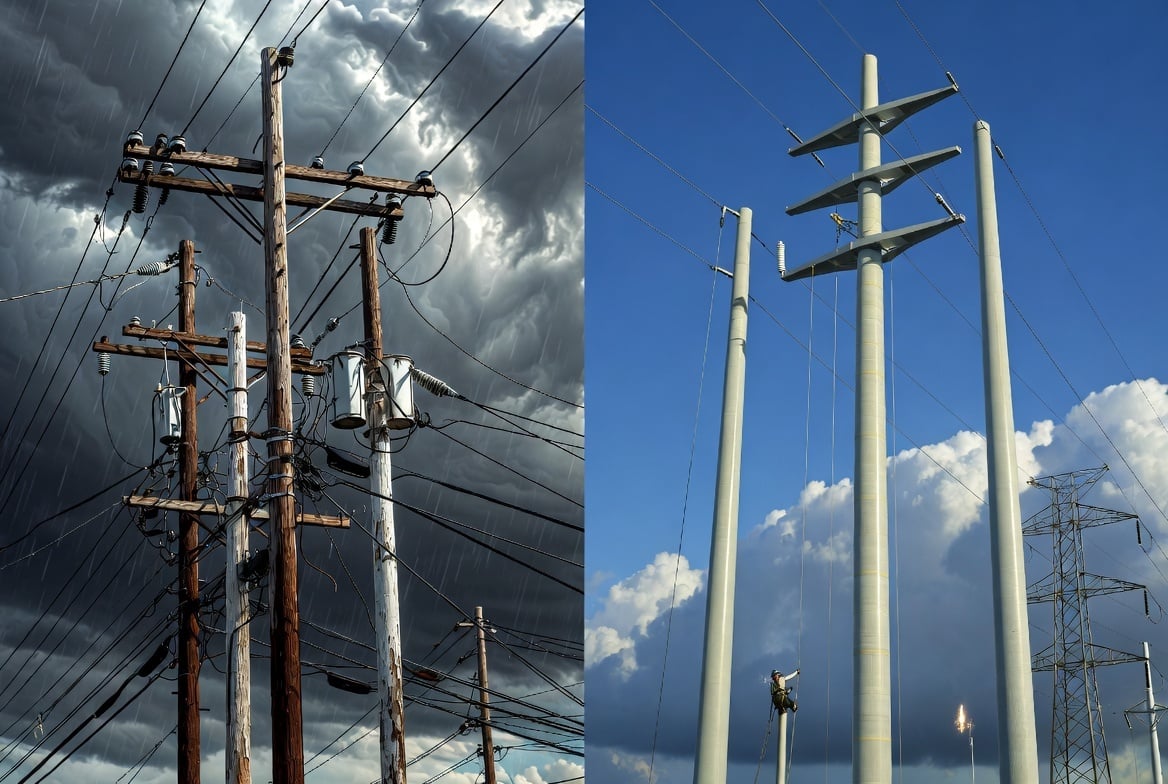
- Utility structures and bridges: 30–40% lower total ownership cost over decades.
- Fenestration reinforcements: ENERGY STAR compliance plus lower HVAC loads from better thermal performance.
- Marine and outdoor applications: Decades of service with zero corrosion-related downtime.
When Custom Pultrusion Delivers the Best ROI
Strong candidates include:
- Projects with high maintenance budgets (infrastructure rehab, utilities)
- Weight-sensitive applications (aerospace, transportation, solar trackers)
- Corrosive or electrical environments
- Long service-life requirements (25+ years)
- Mid-to-high volume production where tooling amortizes quickly
Lower-ROI scenarios:
- Very low-volume, one-off prototypes (consider standard profiles first)
- Non-structural, indoor cosmetic uses where steel/wood suffice
How Tencom Helps Control and Optimize Costs
We don’t just sell profiles — we engineer value:
- Early design collaboration to minimize material use and simplify the die
- In-house secondary fabrication that reduces your downstream labor
- Transparent quoting with clear tooling amortization
- Profile Awareness Questionnaire that speeds accurate recommendations
- Hybrid reinforcement options (glass + carbon) only where they make economic sense
Many customers find that a modest upfront premium returns multiples through performance and longevity.
Key Takeaways
- Upfront investment in custom dies and materials is real, but is often quickly offset by installation and performance advantages.
- Lifecycle savings of 30–50% versus steel or wood are common in demanding applications.
- Volume and design optimization dramatically improve economics — the more you produce, the lower the per-piece cost.
- Total cost of ownership almost always favors pultruded fiberglass for infrastructure, utilities, construction, and marine projects.
- Partnering with an experienced custom pultruder like Tencom minimizes risks and maximizes savings through engineering support and fabrication services.
Custom fiberglass pultrusion isn’t the cheapest option on the first quote — but it’s frequently the smartest investment over the life of the project.
Ready to run the numbers for your specific application? Fill out our Profile Awareness Questionnaire or contact the Tencom engineering team today. We’ll provide a clear cost comparison, tooling estimate, and projected lifecycle savings tailored to your needs.
Let’s build solutions that save money for decades, not just look good on paper.