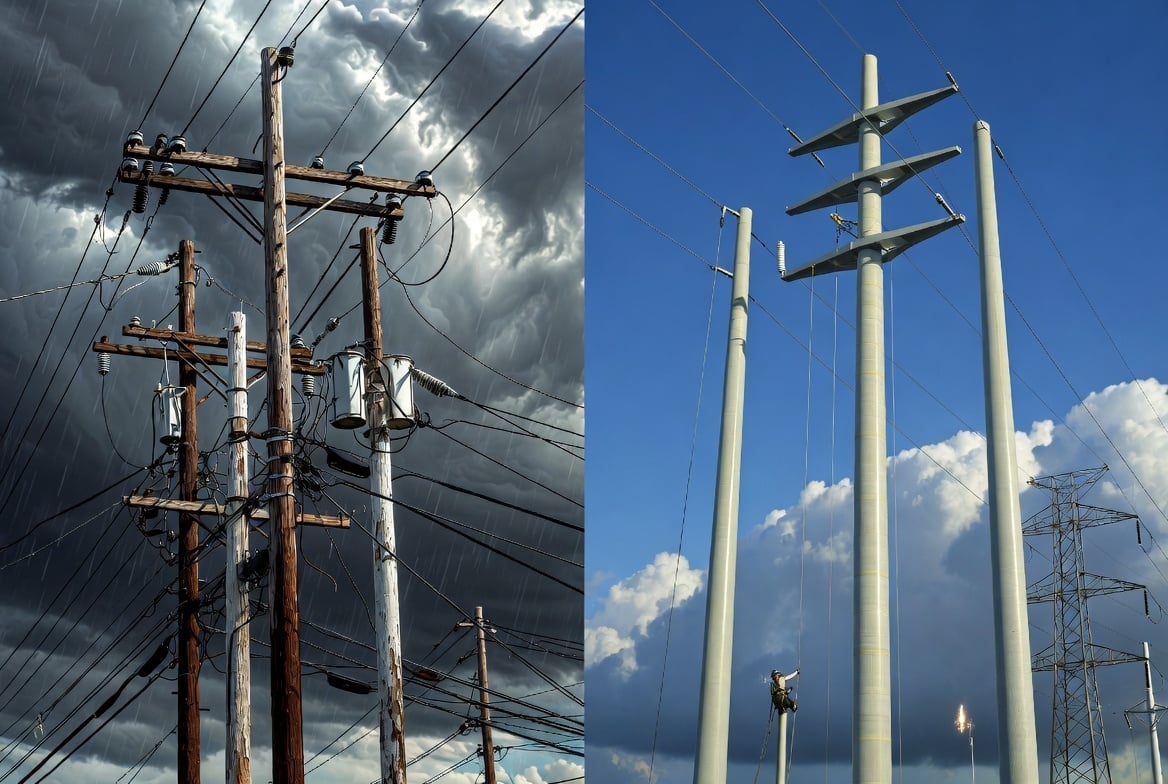
Utilities across North America are staring down aging infrastructure, intensifying storms, wildfire risks, and ballooning replacement costs. Traditional wood poles—still the backbone of distribution lines—are failing faster than crews can replace them. Enter pultruded fiberglass composite poles and crossarms: lighter, tougher, and built for the long haul. These FRP solutions are no longer niche—they’re strategic assets in grid-hardening programs from Texas to California.
At Tencom, we’ve spent over 28 years engineering custom pultruded fiberglass profiles that utilities trust in high-stakes environments. Our custom rods, tubes, channels, tool handles, and structural shapes deliver the performance edge that modern grids demand.
The Grid’s Wake-Up Call
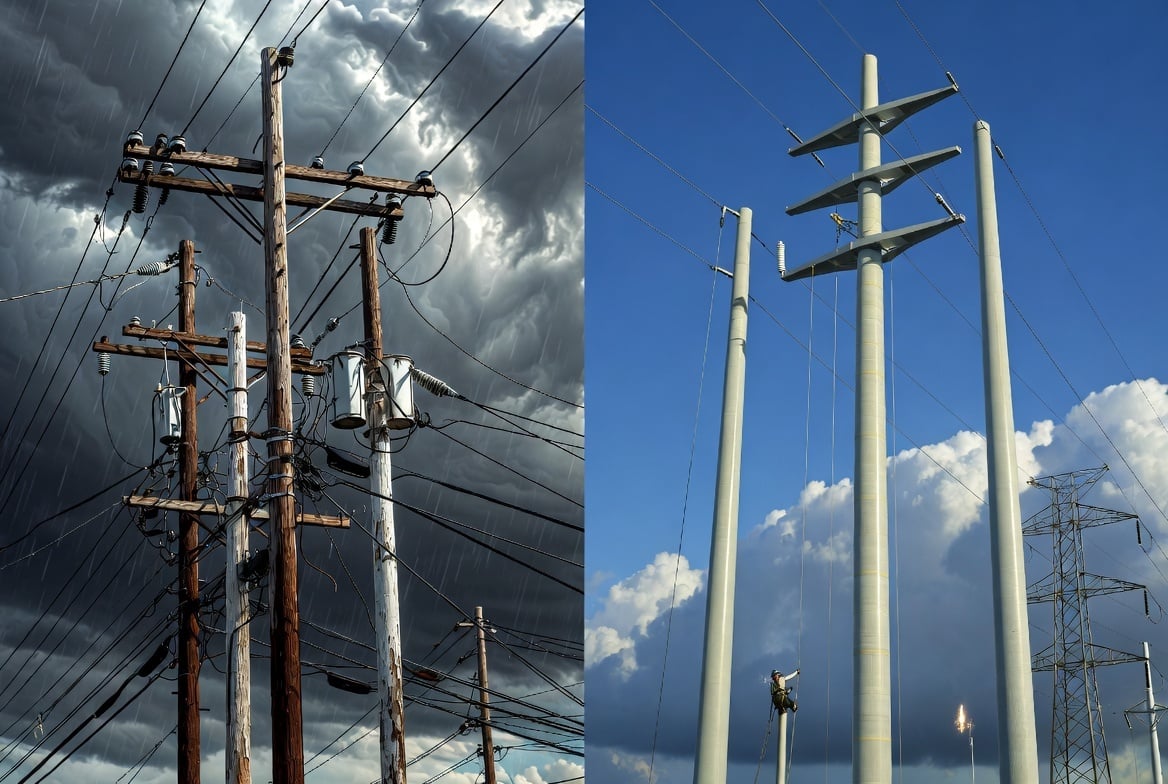
Over 40% of U.S. utility poles are past their prime. Wood rots, steel corrodes, and both struggle when hurricanes, ice storms, or wildfires hit. Utilities replaced tens of thousands of poles in 2025 alone, yet demand continues to rise. Grid modernization funding, wildfire mitigation mandates, and surging electricity needs from data centers and EVs are accelerating the shift.
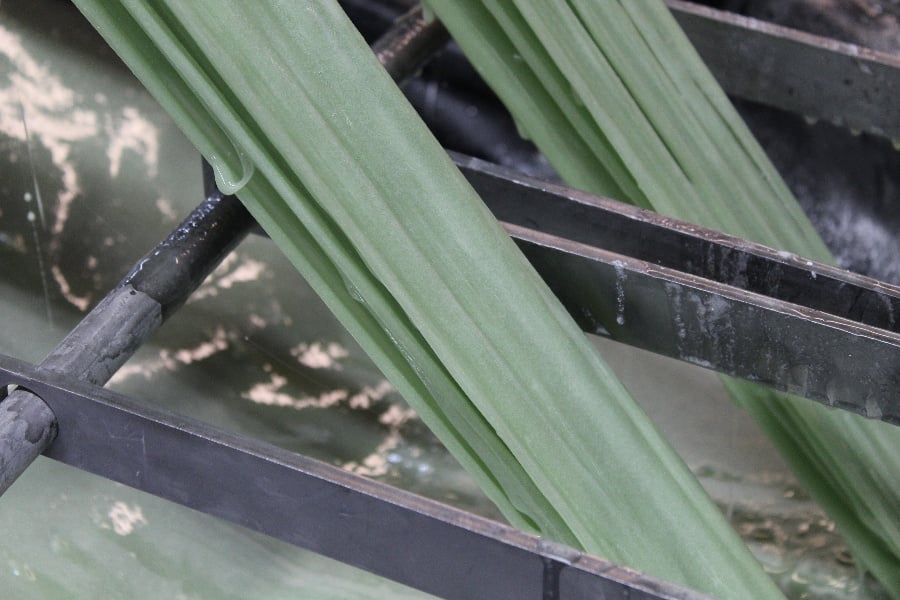
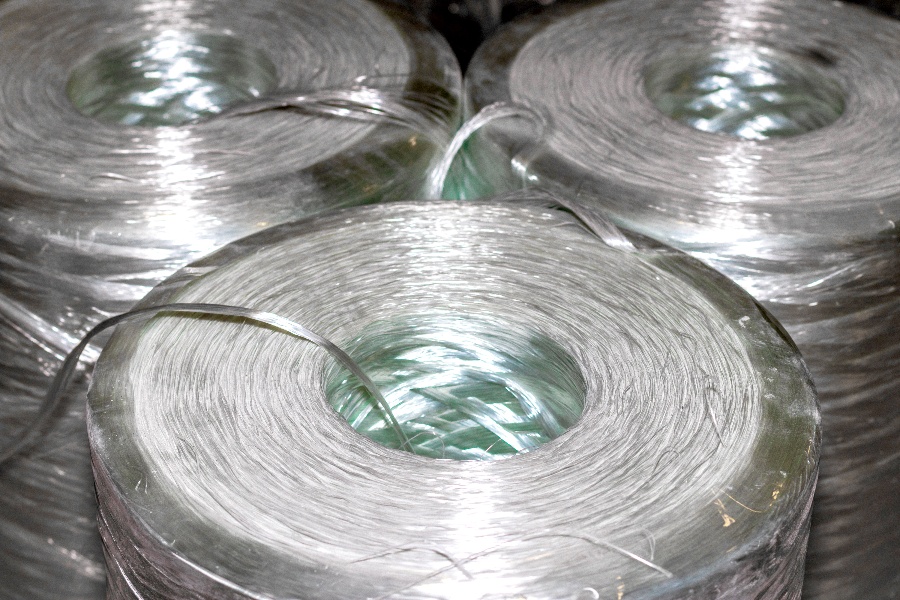
Composite utility poles solve these headaches head-on. Manufactured via continuous pultrusion, they offer consistent quality, superior strength-to-weight ratios, and near-zero maintenance.
Why Fiberglass Wins: Head-to-Head Comparison
Here’s how pultruded composites stack up against traditional materials:
- Weight: 50-70% lighter than wood or steel. Crews install them faster with smaller equipment—often by hand in tight access areas—cutting labor and crane costs dramatically.
- Durability: Immune to rot, insects, woodpeckers, and corrosion. Expect 50-80+ year service life with modern UV inhibitors. Wood poles often need replacement in under 30-40 years in harsh conditions.
- Storm & Fire Resilience: Flexible yet strong—they bend under extreme wind and ice loads without snapping. Non-conductive and fire-resistant formulations reduce the risk of wildfire ignition.
- Maintenance: No chemical treatments, painting, or frequent inspections. Lower total lifecycle costs offset higher upfront price.
- Electrical Performance: Excellent insulation properties reduce the risk of flashover. Co-pultruded conductor rods (fiberglass over copper) add specialized options.
Real-world proof keeps piling up. Utilities like Ameren install FRP poles every fifth position on high-risk lines for staggered reinforcement—delivering outsized resiliency gains. In hurricane zones, composite lines stood tall while wood failed.
Fiberglass crossarms follow the same logic. Lighter and stronger than wood, they support heavier conductor loads with less sag and better dielectric performance. Many utilities now standardize on them for new builds and upgrades.
Real Applications Driving Adoption
- Distribution Hardening: Targeted replacement in coastal, wildfire, or high-wind corridors.
- Transmission Supports: Custom pultruded profiles for crossarms and guy insulators.
- Smart Grid Integration: Non-metallic construction minimizes RF interference for sensors and comms equipment.
- Remote & Difficult Sites: Helicopter or manual installs shine where heavy equipment can’t go.
Tencom’s custom capabilities shine here. We tailor resin systems (polyester, vinyl ester, or polyurethane), fiber architectures, and profiles to exact voltage, loading, and environmental specs—plus value-added machining like slots, chamfers, and precision cuts.
The Business Case: Lifecycle Savings Win
Yes, composite poles cost more initially. But factor in installation speed, zero rot treatment, fewer outages, and decades of service—and the math flips. Utilities report lower total ownership costs, especially in aggressive environments. With grid resilience grants flowing, the ROI timeline shrinks even further.
Key Takeaways
- Grid modernization demands better materials—pultruded fiberglass poles and crossarms deliver unmatched durability and resilience.
- Lighter weight slashes installation costs and speeds deployment in challenging terrain.
- Corrosion and rot resistance means lower maintenance and longer service life (50-80+ years).
- Targeted deployment (e.g., every fifth pole) maximizes impact on high-risk lines without breaking the budget.
- Custom engineering from partners like Tencom ensures the perfect profile, resin, and fabrication for your exact needs.
The shift to composites isn’t hype—it’s happening on lines across the country right now. Utilities that embrace pultruded FRP today will enjoy fewer outages, safer crews, and a more reliable grid tomorrow.
Ready to explore custom fiberglass solutions for your next hardening project? Our team at Tencom works hand in hand with engineers to design and deliver profiles that perform. Drop us a note or request a quote—we’ll help you build a grid that stands the test of time.