You need a pultruded fiberglass profile that performs reliably for years—not one that fails after a single harsh winter or corrodes after exposure to chemicals. Yet too many industrial buyers accept compromises that lead to premature replacements and unexpected downtime. Tencom helps you understand exactly what factors determine whether a custom pultruded profile will hold up in your specific application.

This article breaks down the material selection decisions and manufacturing process tradeoffs that separate reliable FRP profiles from those that underperform. You'll learn what questions to ask, which factors matter most, and how to evaluate whether a profile will meet your long-term performance requirements.
Key Takeaways: What Makes Custom Pultruded Profiles Reliable
- Resin selection directly affects corrosion resistance, temperature tolerance, and long-term dimensional stability in pultruded fiberglass profiles.
- Fiber architecture—including type, orientation, and volume fraction—determines mechanical strength, stiffness, and fatigue resistance.
- Pultrusion process controls, such as cure temperature and pull speed, influence internal defects that weaken profiles over time.
- Tencom engineers work backward from your application requirements to recommend the right resin matrix and reinforcement package.
- Surface treatments and veils add UV protection, abrasion resistance, and chemical barrier properties to custom profiles.
What Defines Reliability in Custom Pultruded Profiles?
Reliability means the profile performs as specified throughout its intended service life—without cracking, delaminating, or losing dimensional accuracy. For industrial applications, this translates into maintaining mechanical properties under load, resisting environmental degradation, and consistently meeting safety factors.
A reliable custom pultruded profile also fits correctly during installation and remains stable through temperature cycles. Poor dimensional tolerance creates assembly problems in the field. Inconsistent cure can leave resin-starved areas that crack under stress.
The difference between a reliable profile and one that fails prematurely often comes down to decisions made during material selection and process setup—not the basic manufacturing method itself.
How Does Resin Selection Affect Profile Performance?
The resin matrix determines how your pultruded fiberglass profile responds to chemicals, heat, moisture, and UV exposure. Different resin systems offer distinct advantages depending on your operating environment.
Polyester Resins for General Industrial Use
Polyester resins work well for many standard industrial applications where cost matters and chemical exposure is moderate. They resist water absorption and handle outdoor weathering when combined with proper surface veils.
However, polyester has limitations in highly corrosive environments or where sustained high temperatures exceed 180°F. If your application involves strong acids, solvents, or elevated heat, you may need a different resin system.
Vinyl Ester for Corrosive Environments
Vinyl ester resins deliver superior chemical resistance compared to standard polyester. They handle acids, alkalis, and many solvents that would degrade polyester over time. This makes vinyl ester the go-to choice for chemical processing, wastewater treatment, and marine applications.
The tradeoff is higher material cost. But when a profile failure results in equipment downtime or safety risks, the investment in vinyl ester often pays back quickly.
Specialty Resins for Extreme Conditions
Epoxy and phenolic resins address specialized requirements. Epoxy offers excellent mechanical properties and adhesion, but costs more than vinyl ester. Phenolic resins meet fire-retardant specifications for applications where flame spread is a concern.
Tencom helps you match the resin system to your actual operating conditions rather than defaulting to "what we usually run." This targeted approach avoids over-specifying expensive resins where they're unnecessary—and prevents under-specifying where failure would be costly.
Why Does Fiber Architecture Matter for Reliability?
The reinforcement package—fiber type, orientation, and volume fraction—determines your profile's mechanical properties. Getting this wrong creates profiles that are either overbuilt and expensive or underbuilt and prone to failure.
Fiber Type and Orientation
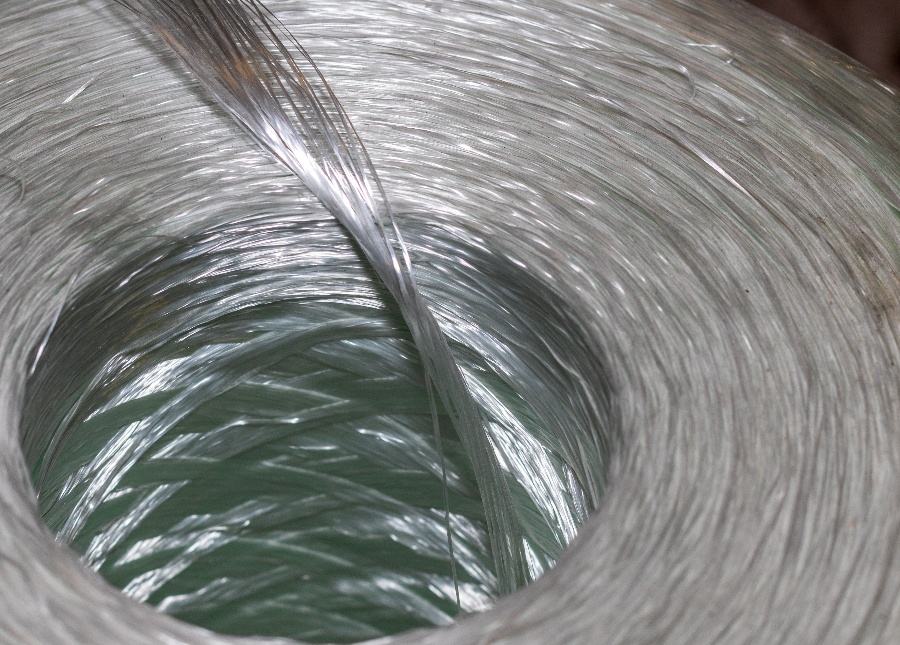
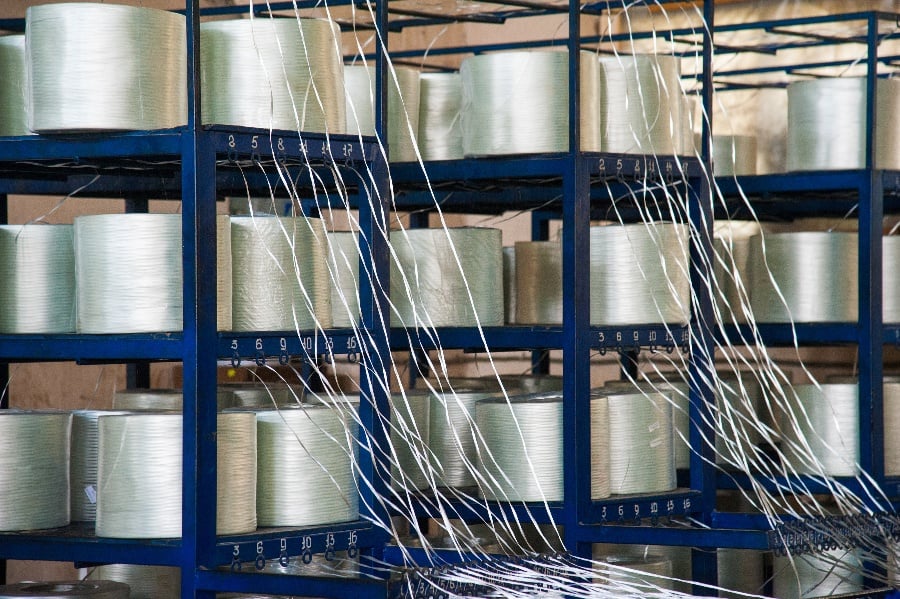
E-glass remains the standard reinforcement for most pultruded FRP profiles, offering a strong balance of strength, stiffness, and cost. For higher stiffness or strength requirements, carbon fiber or aramid fibers may be added—typically at significantly higher cost.
Fiber orientation affects how the profile handles different loading conditions. Continuous rovings aligned with the profile's length deliver maximum tensile and flexural strength in that direction. Adding mat layers or off-axis reinforcement improves transverse strength and impact resistance.
Fiber Volume Fraction
Higher fiber content generally means higher strength and stiffness—up to a point. Too much fiber without adequate resin wet-out creates dry spots that act as stress concentrators. Too little fiber means you're paying for resin that adds weight without structural benefit.
Typical pultruded profiles run 50-70% fiber by volume. The optimal ratio depends on the specific property requirements and profile geometry. Tencom's engineers evaluate your load cases and environmental conditions to recommend the reinforcement package that most efficiently meets your performance targets.
How Do Pultrusion Process Controls Impact Quality?
Even the right materials can produce unreliable profiles if the manufacturing process introduces defects. Several process variables directly affect the finished product's integrity.
Cure Temperature and Die Design
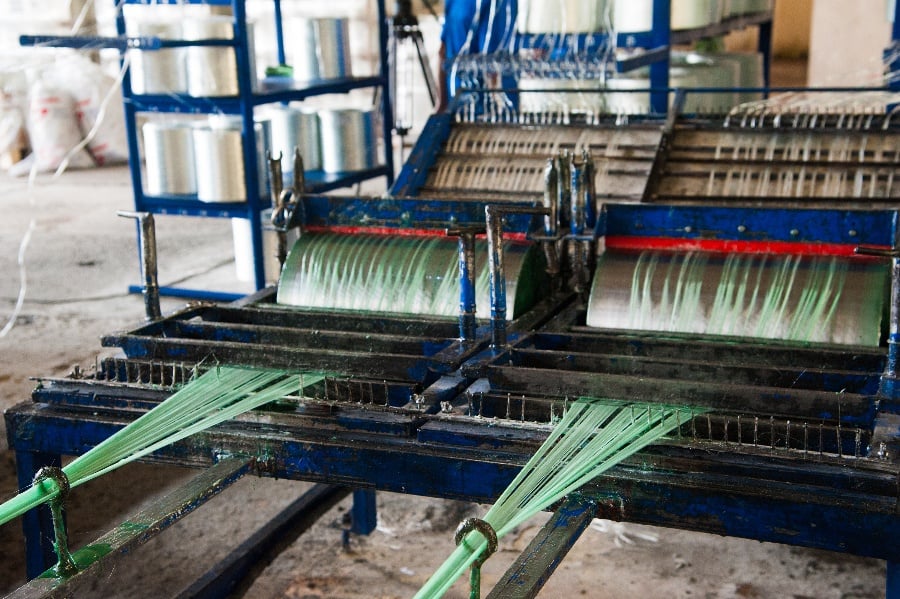
The heated die cures the resin as the profile is pulled through. Temperature profiles must be calibrated so the resin cures completely—but not so aggressively that thermal stresses crack the profile or create surface defects.
Undercured profiles have lower mechanical properties and reduced chemical resistance. The resin hasn't fully cross-linked, leaving the profile vulnerable to degradation under service conditions.
Pull Speed and Wet-Out
Pull speed determines how long the reinforcement spends in the resin bath and die. Faster speeds improve production rates but increase the risk of incomplete fiber wet-out. When fibers don't fully saturate with resin, the resulting dry spots become weak points.
Quality pultrusion requires balancing throughput against process consistency. Experienced operators monitor multiple variables—resin viscosity, bath temperature, fiber tension—to maintain reliable output.
Common Defects and Their Causes
Voids, cracks, and surface blisters trace back to process issues. Voids often result from air entrapment during wet-out or from volatile components in the resin. Cracks can form due to thermal shock, improper curing, or excessive pull force.
Dimensional inconsistency typically indicates die wear, thermal expansion issues, or fiber guidance problems. A reliable supplier tracks these variables and maintains dies to specified tolerances. Meeting industry standards requires documented process controls and regular quality verification.
What Role Do Surface Treatments Play in Long-Term Durability?
The outer surface of your pultruded profile faces the harshest conditions—UV radiation, abrasion, chemical splash, and moisture cycling. Surface treatments and veils create a protective barrier that extends service life.
Surface Veils for Environmental Protection
Polyester or synthetic fiber veils applied during pultrusion create a resin-rich outer layer. This layer shields the structural reinforcement from UV degradation and offers better chemical resistance at the surface.
For outdoor applications, surface veils significantly reduce fiber blooming—where glass fibers become exposed as resin erodes from UV and weather exposure. Tencom can recommend veil materials matched to your specific exposure conditions.
UV Stabilizers and Pigmentation
UV stabilizers added to the resin system slow photodegradation. Integral pigmentation during production eliminates the need for post-applied coatings that can chip or peel.
These treatments add modest cost compared to the expense of premature replacement or field repairs. For applications with extended service life requirements, they represent a sound investment.
How Should You Evaluate Profile Reliability Before Ordering?
Smart specification starts with clearly defining your requirements—then verifying that the proposed solution actually meets them.
Define Your Operating Environment
Document the conditions your profiles will face: temperature ranges, chemical exposures, UV intensity, mechanical loads, and expected service life. Be specific. "Outdoor industrial" isn't enough—an Arizona desert installation differs dramatically from a Gulf Coast marine environment.
Include installation requirements too. Will field crews need to cut or drill the profiles? Will they experience handling during transport? These factors influence both material selection and dimensional tolerances.
Request Material and Process Documentation
Ask for material certifications, process parameters, and test data for the specific profile you're ordering. Reliable suppliers maintain documentation and can demonstrate that their profiles meet specified properties.
Tencom's engineers sit down with your team to look at the whole picture—mechanical loads, environmental exposure, installation constraints—and then recommend the right combination of resin, reinforcement, and process parameters to meet your targets.
FAQs About What Makes Custom Pultruded Profiles Reliable
What causes pultruded fiberglass profiles to fail prematurely?
Premature failures typically result from mismatched materials for the operating environment, manufacturing defects like voids or undercure, or inadequate surface protection against UV and chemicals. Tencom addresses each factor during the design phase to prevent field failures.
How do I choose between polyester and vinyl ester resin?
Choose vinyl ester when your application involves exposure to strong acids, alkalis, or solvents—or where the consequences of corrosion failure are severe. Polyester works well for general industrial applications with moderate chemical exposure. Tencom engineers can evaluate your specific environment and recommend the most cost-effective option.
Does higher fiber content always mean a stronger profile?
Not always. Fiber content must balance against proper resin wet-out. Exceeding 70% fiber volume typically creates dry spots that weaken the profile. The optimal fiber content depends on your specific strength, stiffness, and weight requirements.
What testing verifies pultruded profile reliability?
Mechanical testing (tensile, flexural, compressive strength), physical property testing (density, fiber content), and accelerated weathering tests verify that profiles meet specifications. Tencom maintains testing protocols aligned with ASTM and industry standards to document profile performance.
How does die quality affect profile consistency?
Worn or poorly maintained dies produce profiles with dimensional variation, surface defects, and inconsistent mechanical properties. Quality pultruders track die wear and replace dies before tolerances drift outside specification limits.
Can surface veils be added to any pultruded profile?
Yes, surface veils can be incorporated during the pultrusion process on most profile geometries. The key is selecting the right veil material for your exposure conditions. Tencom's team recommends veil options based on whether you need UV protection, chemical resistance, improved appearance, or a combination.