

Standard polyester and vinyl ester pultrusions burn. In a data hall, a transit station, or an occupied building, that is not acceptable. Codes and owner specifications increasingly require controlled flame spread and limited smoke, and the resin system is what determines whether a custom FRP profile can meet those requirements.
Fire performance is not a single number. It combines flame-spread index, smoke development, heat release, and—depending on the application—toxicity and drip behavior. Resin chemistry, fillers, and sometimes fiber architecture all affect the result. Specifying the wrong system, or simply writing “fire retardant,” leaves both performance and cost on the table.
What “Fire Retardant” Actually Means in Pultrusion
Most commercial fire-retardant pultrusions use one or more of these approaches:
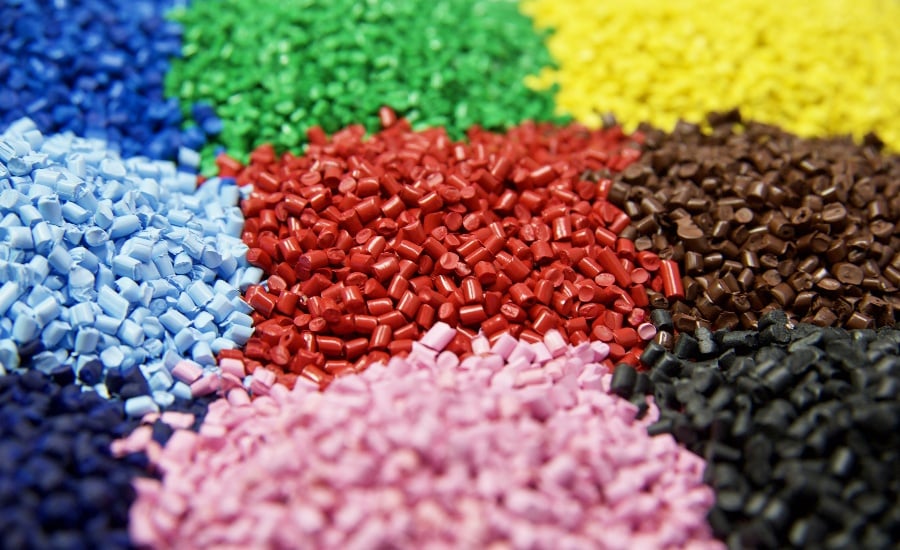
- Filled systems — Alumina trihydrate (ATH) or similar mineral fillers are added to polyester or vinyl ester. ATH releases water when heated, cooling the surface and diluting flammable gases. High loadings (often 100–150 phr) can achieve UL94-
ratings uo to UL94V0 and ASTM E84 Class A, but they reduce glass content and can affect mechanical properties and line speed. - Brominated or halogenated resins — These interrupt the combustion chemistry. They can deliver strong flame-spread performance but raise questions about smoke corrosivity and evolving restrictions on certain halogenated compounds. Because of this, other additives for fire retardancy are now being used more promantly.
- Intumescent char forming additives — These additives to resins will form a protective char for shielding from heat and flame to provide a flame retardant product to match other methods.
- Phenolic resins — Phenolics char rather than melt and drip. They typically produce lower smoke and are specified where low smoke toxicity is required (transit interiors, tunnels, offshore). They are more process-sensitive than polyester or vinyl ester.
- Hybrid and low-filler systems — Modified vinyl esters, urethane-acrylate, and some phenolic-urethane systems aim for Class A or better with less filler, preserving higher glass content and better mechanical properties.
Tencom works with fire-retardant polyester, vinyl ester, phenolic, and polyurethane systems. The right choice depends on the required flame-spread and smoke numbers, the mechanical demands, the process window, and the environment. Details on resin options appear on the specialty resin systems page.
Key Standards for the Environments That Matter
UL 94 ratings cover the range of fire and flame protection with 94V0 fitting the more severe needs.
ASTM E84 (Steiner Tunnel) is the applicable baseline surface-burning test used in North American building codes for some assembly's and suitable components. Class A requires Flame Spread Index ≤ 25 and Smoke Developed Index ≤ 450. Many data-center, telecom, and occupied-building specifications call for Class A on walls, ceilings, cable management, and structural elements.
NFPA 130 governs fixed-guideway transit and passenger rail. It references ASTM E84 along with ASTM E162 (radiant panel flame spread) and ASTM E662 (smoke density). Low smoke and limited toxicity are often the binding constraints.
NFPA 75 addresses fire protection for IT equipment. While it does not directly rate every structural profile, data-center owners and AHJs frequently require Class A materials in raised floors, cable trays, containment, and support structures so that smoke and flame do not compromise detection or suppression systems.
European projects commonly reference EN 13501-1. Ratings such as B-s1,d0 or B-s2,d0 indicate limited flame contribution, low smoke, and no flaming droplets.
Meeting one test does not automatically satisfy another. A profile that passes ASTM E84 Class A may still fail smoke-density limits under NFPA 130 or a European classification. The specification should name the required test method and the acceptance criteria.
Where Fire-Retardant Pultrusions Are Specified
- Data centers and telecom facilities — Cable trays, ladder racks, supports, containment framing, and non-conductive structural members. Owners want Class A surface burning and materials that do not generate dense, corrosive smoke that can damage equipment or trip early-warning detectors.
- Transit stations, platforms, and tunnels — Handrails, grating, cladding, third-rail covers, and architectural elements. NFPA 130 or equivalent low-smoke requirements usually drive the resin choice toward phenolic or carefully formulated low-smoke systems.
- Occupied buildings — Interior structural shapes, balcony supports, façade elements, and equipment enclosures where the International Building Code or local amendments require Class A.
- Industrial and utility buildings — Cooling-tower walkways, electrical enclosures, and process structures where ignition sources exist, and metal corrosion is also a concern.
In each case, the profile is still valued for corrosion resistance, light weight, and electrical insulation. Fire performance is an added requirement, not a replacement for those properties.
What to Put on the Drawing and in the RFQ
Vague language (“fire retardant FRP” or “Class A”) is not enough. Useful specifications include:
- Required test method and rating (e.g.,UL94HB, UL94V0 or ASTM E84 Class A, FSI ≤ 25, SDI ≤ 450; or NFPA 130 smoke limits)
- Whether low-smoke or low-toxicity performance is required
- Acceptable resin families (phenolic, filled vinyl ester, etc.) or a performance-based requirement
- Minimum mechanical properties after the fire-retardant formulation is applied
- Secondary operations (cutting, drilling, chamfering) and whether the fire rating must be maintained on finished edges
- Documentation: test reports from an accredited lab on the actual profile or a representative section of the same resin and fiber architecture
High ATH loadings can lower glass content and stiffness. Phenolics can be more brittle and slower to process. Both trade-offs are manageable when they are identified early. Tencom’s custom fiberglass pultrusion services include phenolic and other fire-retardant options, with profiles up to 15" wide by 6" high and typical tolerances of ±0.005" on critical features. Secondary operations (cutting, drilling, chamfering) are performed in-house so finished parts can be checked against the original fire-performance intent.
Trade-offs Worth Discussing
Fire-retardant formulations are not free. Fillers add weight and can reduce mechanical properties. Phenolics cost more and require tighter process control. Halogenated systems may face future restrictions even if they currently meet the test. The lowest-cost Class A polyester with heavy ATH may be perfectly adequate for a cable tray; it may not be the right choice for a low-smoke transit handrail or a high-stiffness structural member. Other currently available additives can provide both higher strength and fire protection
A short conversation about the actual environment, the governing code, and the mechanical loads usually narrows the options quickly. It also prevents the common mistake of specifying a fire rating that forces an expensive resin when a simpler filled system would have passed.
Key Takeaways
- Standard polyester and vinyl ester burn; data centers, transit, and occupied buildings require fire-retardant formulations or phenolic resins.
- UL94 and ASTM E84 Class A (FSI ≤ 25, SDI ≤ 450) is the most common North American surface-burning requirement; NFPA 130 adds smoke-density constraints for transit.
- ATH-filled systems, brominated resins, phenolics and intumescent additives each achieve fire performance differently and carry different mechanical and process trade-offs.
- Specify the exact test method, rating, and any smoke or toxicity limits; “fire retardant” alone is not sufficient.
- Fire-retardant resin systems can be pultruded into custom profiles with normal secondary operations when the requirements are defined up front.
If a project needs Class A or low-smoke performance in a custom rod, tube, or profile, send the governing standard and the mechanical requirements. That is enough to determine whether a filled vinyl ester, a phenolic, or another system is the practical answer.

FAQ Section
What fire rating is typically required for pultruded FRP in data centers?
Many data-center and telecom specifications require UL94 or ASTM E84 Class A (Flame Spread Index ≤ 25 and Smoke Developed Index ≤ 450) for cable management, supports, and structural elements so that materials do not contribute significantly to flame spread or smoke.
What is the difference between a filled fire-retardant resin and a phenolic resin?
Filled systems (often polyester or vinyl ester with alumina trihydrate) achieve Class A flame spread by cooling and diluting combustion gases. Phenolic resins char and generally produce lower smoke; they are preferred where smoke density or toxicity limits are strict, such as transit interiors.
Does adding fire-retardant filler reduce the strength of a pultruded profile?
High loadings of mineral filler reduce the glass-fiber percentage and can lower stiffness and strength. Precipitated fillers and lower-filler hybrid systems can mitigate the loss. Verify mechanical properties on the actual fire-retardant formulation.
Can custom pultruded profiles meet NFPA 130 requirements?
Yes, when the resin system is chosen for low smoke, and the profile is tested to the relevant methods (UL94, ASTM E84, E162, E662). Phenolic or carefully formulated low-smoke systems are commonly used for transit applications.
What should a specification include for fire-retardant pultrusion?
Name the required test method and numerical limits (for example, UL94HB, ASTM E84 Class A), any smoke or toxicity constraints, acceptable resin families or a performance requirement, and the need for test documentation on a representative profile.