

A federally funded infrastructure bid can stall on one line item: Is this composite part produced in the United States?
That question used to sit mostly on steel and iron. Under the Build America, Buy America Act (BABA), it now covers plastic and polymer-based products — including composite building materials. Custom pultruded fiberglass falls squarely in that conversation. For OEMs, utilities, window manufacturers, and contractors selling into public work, the profile's origin is no longer a marketing line. It is a bid requirement.

This is not legal advice. Project rules still vary by agency and award. The practical job is to know how OMB classifies the part, what “all manufacturing processes” means for composites, and what a U.S. pultrusion plant can document.
What BABA Covers — and Why Composites Are in Scope
BABA requires that iron, steel, manufactured products, and construction materials used in covered federal infrastructure awards be produced in the United States. Infrastructure is broad: roads, bridges, water systems, electrical transmission, utilities, broadband, public buildings, and related structures.
OMB’s government-wide rule lives in 2 CFR Part 184. Construction materials include plastic and polymer-based products, and the definition expressly lists composite building materials.
That is the hook for pultruded FRP. A fiberglass window reinforcement, utility isolation rod, structural channel, or custom profile used in a covered project is not “just plastic.” It is a polymer-based composite that agencies now treat as a domestic-content item.
Construction Material vs. Manufactured Product
Classification changes the test you have to pass.
USDA’s manufacturer FAQ is a useful plain-language summary of the same OMB rule: a product is a construction material if it consists of only one listed category (for example, polymer-based / composite building material). If it combines more than one listed construction material, or mixes a listed material with other materials, it is generally treated as a manufactured product. See USDA’s Build America, Buy America FAQs for Manufacturers.
For many standalone pultruded profiles — a solid rod, a reinforcement insert, a simple channel — buyers and agencies will look first at the construction-material standard. Assemblies that combine FRP with metals, hardware, or other listed materials may shift into the manufactured-product test.
Do not assume the label. Ask the awarding agency or prime how this part is categorized on this project.
The Standard That Matters for Pultrusion
For plastic and polymer-based products, 2 CFR 184.6 is specific:
All manufacturing processes, from the initial combination of constituent plastic- or polymer-based inputs, or, where applicable, constituent composite materials, until the item is in its final form, must occur in the United States.
Read that as process, not warehouse.
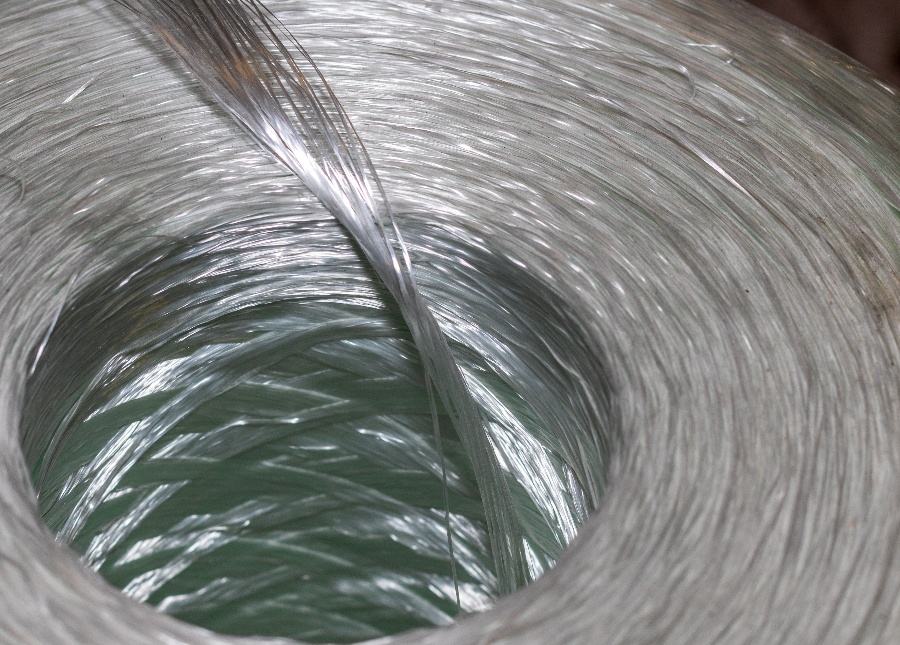
Combining glass fiber and resin, pulling the profile through a heated die, curing it, cutting it, and finishing it into the delivered part are the manufacturing steps that have to happen here. Storing imported bar stock in an Ohio warehouse and shipping it to a jobsite is different.
Raw inputs can still be global. Glass fiber and some resins are traded internationally. BABA’s polymer/composite standard focuses on where those constituents are combined and converted into the finished profile, not on whether every molecule of glass was melted in the United States.
That is why plant location and process control matter more than a “Made in USA” badge on a catalog page.
Why a Holland, Ohio Pultrusion Line Changes Bid Risk
Tencom pultrudes custom profiles in Holland, Ohio. Conversion, cut-to-length, and many secondary operations stay in one domestic plant. For a covered infrastructure package, that shortens the story you have to tell purchasing and compliance:
- The fiber and resin are combined and cured in the United States.
- The profile leaves the die as a U.S.-manufactured composite.
- Cutting, drilling, slots, chamfers, and other finishing can stay in-house instead of going offshore and back.
That last point is easy to miss. If the “final form” on the drawing includes holes, precise lengths, or end treatments, those steps belong in the domestic process story. Tencom’s secondary operations — cutting, machining, chamfering, pointing — are done at the same Ohio facility that pultrudes the profile. One plant, one quality system, simpler documentation.
Typical custom lead times remain in the 3-to-4-week production range after tooling, which also helps public-project schedules that cannot absorb an ocean transit plus a customs delay.
What Buyers Should Put in the RFQ
A vague “must be Buy America compliant” note creates change orders later. Better language asks for process, not slogans:
- Where is the profile pultruded?
- Where are secondary operations performed?
- Will the manufacturer provide written origin/BABA self-certification for the supplied part numbers?
- Does the quote cover the part in its final delivered form, or only the raw profile?
- What resin, fiber, and finish are specified so the part can be re-ordered without changing origin?
USDA notes that manufacturers typically demonstrate compliance with a self-certification letter attesting that the supplied products meet BABA requirements. Keep that letter tied to specific part numbers and revision levels. A generic company brochure will not survive an audit.
Where This Shows Up in Tencom Work
Covered projects pull in more than structural steel. Custom FRP shows up as:
- Window and door reinforcements in public and institutional buildings
- Utility and electrical components that must stay non-conductive
- Corrosion-resistant profiles in water, wastewater, and industrial sites
- Lightweight structural shapes that replace rusting metal
Tencom’s custom fiberglass pultrusion services cover profiles up to 15" wide and 6" high, with tolerances to .005" on many features. For fenestration packages in publicly funded buildings, thermal fiberglass window reinforcements are a common domestic alternative to imported aluminum inserts.
Domestic conversion does not automatically win every bid. It does remove a common disqualifier: an imported composite that cannot be certified under the polymer-based construction-material standard.
Key Takeaways
- BABA applies domestic-content rules to polymer-based and composite building materials used in covered federal infrastructure work.
- For pultruded FRP, the test is where constituents are combined, and the part is brought to final form — not where the crate is labeled.
- Classification as construction material vs. manufactured product depends on the part, not the marketing category.
- In-house U.S. pultrusion plus U.S. secondary operations makes certification cleaner.
- Ask for plant location, process steps, and a part-specific certification letter in the RFQ.
If a project is bid under BABA or another domestic-preference clause, review the drawing and the award language before the die is cut. Tencom can confirm where the profile will be pultruded and finished in Holland, Ohio, and what documentation can travel with the shipment.

FAQ
Does Buy America apply to pultruded fiberglass profiles?
On covered federal infrastructure awards, yes. OMB’s BABA rule includes plastic and polymer-based products and composite building materials as construction materials. Confirm the specific award language for each project.
What does “produced in the United States” mean for pultruded FRP?
For polymer-based / composite products, all manufacturing processes from the initial combination of constituent materials until the item is in its final form must occur in the United States.
Is a pultruded profile a construction material or a manufactured product?
A standalone composite profile is often treated as a construction material. If it is combined with other listed materials or becomes part of a multi-material assembly, it may be classified as a manufactured product. Classification should be confirmed with the agency or prime.
Do raw glass fiber and resin have to be melted or made in the U.S.?
The polymer/composite standard focuses on combining those constituents and converting them into the finished part in the United States. Input origin and part origin are not the same question.
How should a manufacturer document BABA compliance?
Typical practice is a written self-certification tied to the supplied part numbers, plus a clear statement of where pultrusion and finishing occur. Keep documentation with the shipment and the project file.