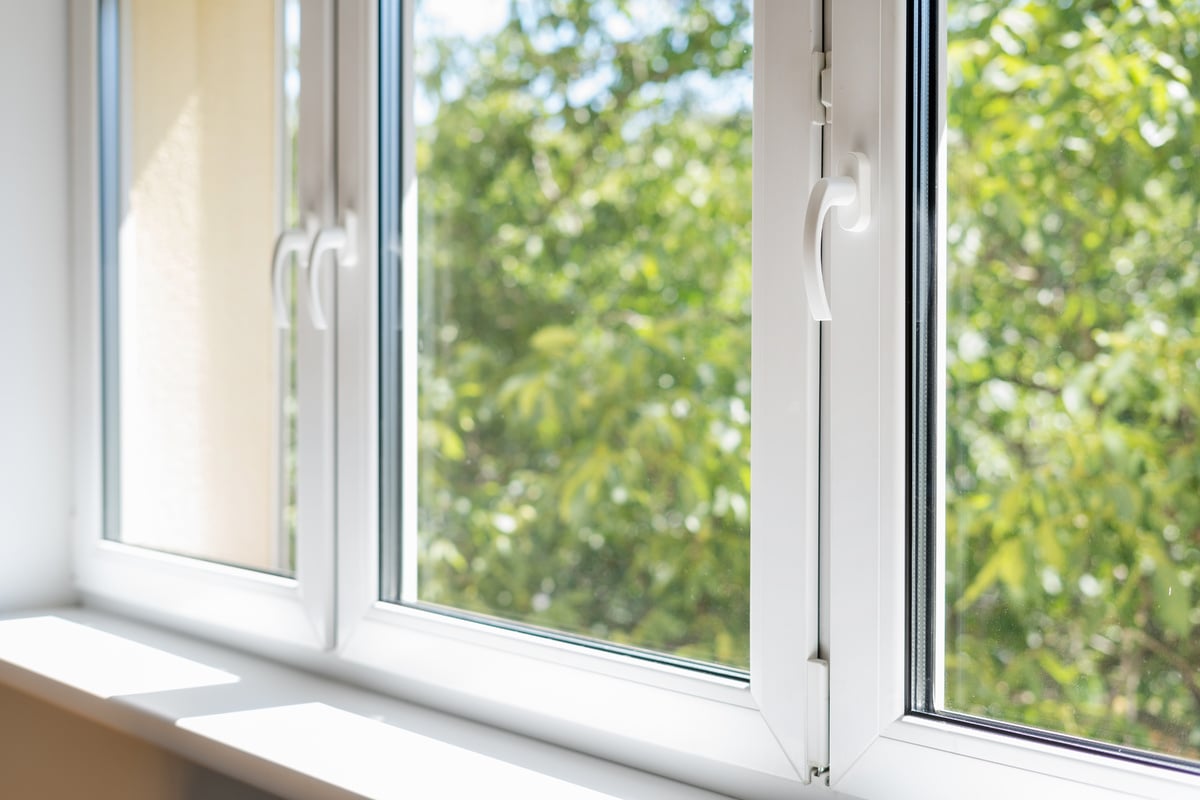
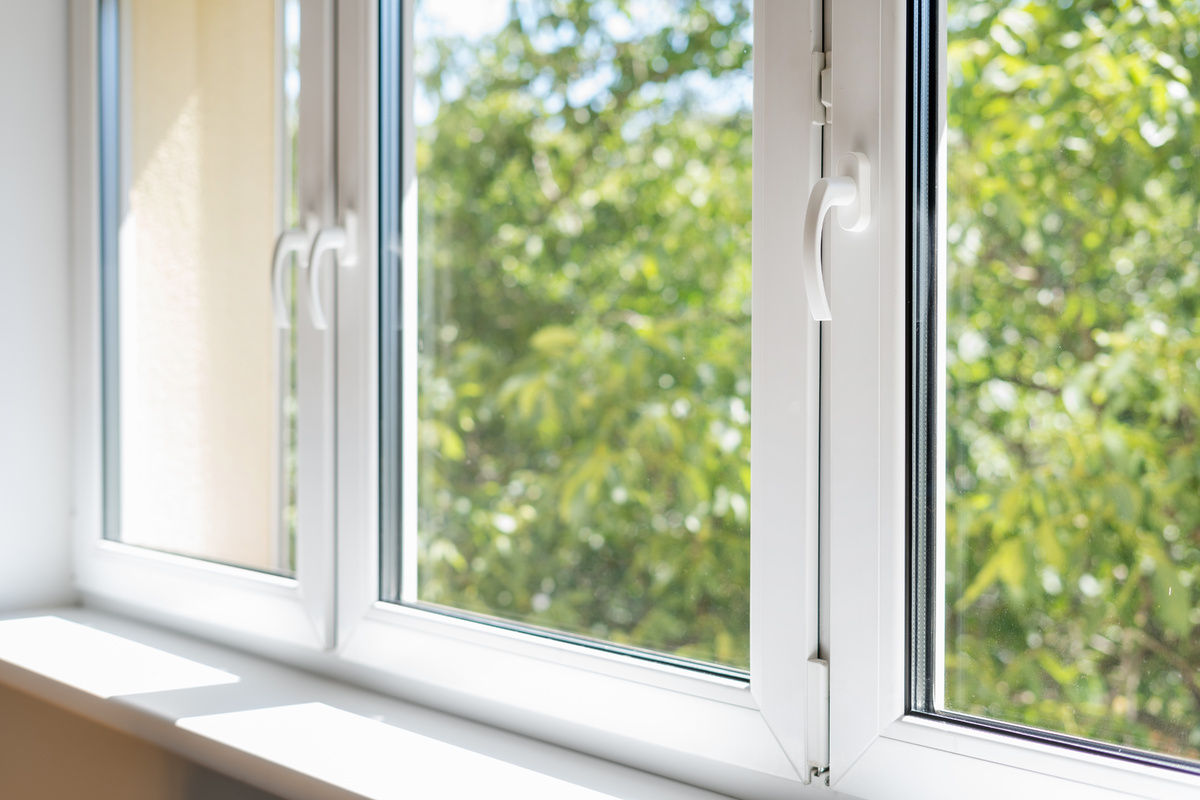
Frame distortion occurs when the reinforcement material within a window profile expands or contracts at a rate that differs from that of the surrounding components. Picture a cold winter morning followed by direct afternoon sun. The frame heats up rapidly, and each material responds differently.
Traditional reinforcement options can pull away from the surrounding profile or push against it. Over time, this repeated movement loosens seals, misaligns hardware, and creates visible bowing in the frame.
According to research published in Scientific Reports (2025), windows with pultruded fiberglass reinforcement exhibited 12–13% lower thermal transmittance than those with traditional reinforcement in hot-box testing.
Key Takeaways: How Fiberglass Window Reinforcements Limit Distortion
- Fiberglass window reinforcements maintain frame stability across extreme temperature swings because the material expands and contracts at nearly the same rate as glass.
- Pultruded fiberglass has a thermal conductivity 500–800 times lower than that of traditional materials, reducing energy loss through window frames.
- Custom fiberglass profiles from Tencom allow window manufacturers to match specific load, stiffness, and environmental exposure requirements.
- Window frames reinforced with fiberglass resist warping, bowing, and seal failure over 30- to 50-year lifespans.
- Dimensional stability in fiberglass reinforcements keeps seals tight and hardware aligned, reducing long-term maintenance costs.

What Is Thermal Stability in Window Frames?
Thermal stability describes how well a window frame holds its shape when exposed to temperature changes. When outdoor temperatures swing from freezing winters to hot summers, frame materials expand and contract at different rates. This movement puts stress on seals, glazing units, and hardware.
Window frames with poor thermal stability warp over time. Gaps form between the sash and frame, allowing air and water infiltration. The result is higher energy bills and more frequent repairs.
Fiberglass window reinforcements address this problem directly. Their coefficient of thermal expansion closely matches that of glass itself—roughly 500–800 times lower than that of traditional reinforcement options.
Key Takeaways: How Fiberglass Window Reinforcements Limit Distortion
- Fiberglass window reinforcements maintain frame stability across extreme temperature swings because the material expands and contracts at nearly the same rate as glass.
- Pultruded fiberglass has a thermal conductivity 500–800 times lower than that of traditional materials, reducing energy loss through window frames.
- Custom fiberglass profiles from Tencom allow window manufacturers to match specific load, stiffness, and environmental exposure requirements.
- Window frames reinforced with fiberglass resist warping, bowing, and seal failure over 30- to 50-year lifespans.
- Dimensional stability in fiberglass reinforcements keeps seals tight and hardware aligned, reducing long-term maintenance costs.
How Do Fiberglass Reinforcements Improve Thermal Stability?
Fiberglass reinforcements work by matching the thermal behavior of glass while adding structural strength. When temperatures change, both the glazing unit and the fiberglass reinforcement move together rather than fighting each other.
This matched expansion reduces stress on sealant joints and gaskets. The result is longer seal life and fewer air leaks over the window's service span.
The pultrusion process creates reinforcement profiles with consistent fiber orientation and resin distribution. This manufacturing method produces materials with predictable, repeatable thermal properties—something difficult to achieve with other approaches.
What Role Does the Pultrusion Process Play?
Pultrusion involves pulling continuous glass fibers through a resin bath and then through a heated die that shapes and cures the material. The process creates profiles with fibers aligned along the length, delivering high tensile strength in the direction where window frames need it most.
Because the process is continuous, pultruded fiberglass profiles maintain tight dimensional tolerances. Each section of material has the same fiber-to-resin ratio and the same mechanical properties as the next.
Tencom engineers work directly with window manufacturers to design reinforcement profiles that match specific performance targets. Whether the application calls for increased UV resistance, a modified fiber architecture to improve flexural strength, or specialized resin systems for demanding environments, the pultrusion process can accommodate these requirements.
How Long Do Fiberglass-Reinforced Windows Last?
Properly specified fiberglass-reinforced windows can deliver 30 to 50 years of service or more. This extended lifespan comes from the material's resistance to the factors that typically degrade window systems.
Fiberglass does not absorb moisture, so it won't swell or rot. It resists UV degradation when manufactured with appropriate surface treatments. And because it maintains dimensional stability across temperature cycles, the seals and hardware stay aligned year after year.
The U.S. Department of Energy notes that fiberglass window frames are dimensionally stable and can be filled with insulation, giving them superior thermal performance compared to many alternatives.
What Performance Factors Should Window Manufacturers Consider?
When evaluating fiberglass reinforcements for residential window systems, several factors influence long-term performance:
- Mechanical loads and safety factors specific to the window size and configuration
- Environmental exposure including UV radiation, humidity, and temperature extremes
- Compatibility with the surrounding profile material
- Secondary operations needed before installation
Tencom's engineering team collaborates with window manufacturers to evaluate these requirements and recommend appropriate resin systems, fiber reinforcements, and profile geometries. This partnership approach ensures the reinforcement performs as expected in the field.
How Does Fiberglass Compare to Other Reinforcement Materials?
Window manufacturers have traditionally used several reinforcement approaches. Each comes with trade-offs in thermal performance, weight, and long-term durability.
Traditional options offer strength but conduct heat readily, creating thermal bridging that reduces overall window efficiency. Lighter-weight alternatives may not provide adequate structural support for larger window openings.
Fiberglass occupies a middle ground. It delivers the structural strength needed for demanding applications while insulating rather than conducting heat. As noted by Cascadia Windows, fiberglass frames are nearly 10 times stiffer than vinyl, allowing for larger window spans without additional reinforcement.
What Makes Custom Reinforcement Profiles Worth Considering?
Off-the-shelf profiles work for many applications. But when your window design requires a specific combination of strength, stiffness, and thermal performance, custom reinforcement profiles eliminate the compromises inherent in standard options.
Tencom specializes in custom pultruded fiberglass profiles for applications where standard shapes fall short. The engineering team works backward from your requirements—starting with the performance targets and environmental conditions, then recommending the right resin matrix, reinforcement package, and profile geometry to hit those targets.
Sometimes that means a slight modification to an existing die. Other times it means designing a completely new profile optimized for your specific window system.
How Do Fiberglass Reinforcements Support Energy Efficiency Goals?
Energy-efficient window systems depend on more than just the glazing. The frame and reinforcement contribute significantly to overall thermal performance. A window with excellent glass but poor frame insulation still loses heat around the perimeter.
Fiberglass reinforcements help window systems meet increasingly stringent energy codes. Research indicates that reducing the window U-value from 1.2 to 0.8 W/(m²·K) can decrease heating and cooling energy consumption by 5–15%.
For window manufacturers targeting Energy Star certification, Passive House standards, or net-zero building projects, fiberglass reinforcement provides a path to meeting these requirements without sacrificing frame strength or longevity.
FAQs About Fiberglass Window Reinforcements and Thermal Stability
What causes window frame distortion over time?
Window frame distortion results from repeated thermal expansion and contraction cycles. When reinforcement materials expand at different rates than the surrounding frame and glazing, they create internal stresses. These stresses accumulate over years, leading to warping, seal failure, and misaligned hardware.
How does fiberglass prevent frame warping?
Fiberglass prevents frame warping because its coefficient of thermal expansion closely matches that of glass. When temperatures change, both materials move together rather than against each other. This reduces stress on the frame structure and keeps components properly aligned throughout the window's service life.
Can Tencom produce custom fiberglass reinforcement profiles?
Tencom engineers custom pultruded fiberglass reinforcement profiles to meet specific mechanical and environmental requirements. The team works with window manufacturers to identify performance targets, then designs profiles with the appropriate resin systems, fiber architecture, and cross-sectional geometry to achieve those goals.
How long do fiberglass-reinforced windows typically last?
Fiberglass-reinforced windows typically last 30 to 50 years or more when properly specified and installed. The material's resistance to moisture absorption, UV degradation, and thermal cycling contributes to this extended service life. Tencom's pultruded profiles maintain consistent properties throughout this lifespan.
What thermal performance improvements can manufacturers expect?
Manufacturers can expect thermal transmittance improvements of 12% or more in frame and sash components when using pultruded fiberglass reinforcement. The material's low thermal conductivity—500 to 800 times lower than conductive alternatives—significantly reduces heat transfer through the frame assembly.
Are fiberglass reinforcements suitable for cold climates?
Fiberglass reinforcements perform well in cold climates due to their low thermal conductivity and minimal thermal expansion. They resist becoming brittle at low temperatures and maintain structural integrity across extreme temperature ranges. Tencom's profiles help window systems meet energy standards for northern climate zones.