Specifying window reinforcements shouldn't force you to choose between structural integrity and thermal performance. Yet that's exactly what happens far too often when window manufacturers default to conventional materials. You need reinforcements that deliver strength, dimensional stability, and low thermal conductivity—all without adding bulk or compromising your energy efficiency targets. Fiberglass pultruded profiles change that equation.

This guide walks you through everything you need to know about selecting fiberglass window reinforcements for residential window systems. From understanding material properties to evaluating performance requirements and choosing the right fiber architecture, you'll find the technical detail and selection criteria that matter when specifying reinforcements for energy-efficient fenestration.
Key Takeaways: Choosing Fiberglass Window Reinforcements in 2026
- Fiberglass reinforcements deliver structural strength comparable to steel while reducing thermal bridging by over 90%.
- Tencom engineers custom pultruded profiles designed specifically to integrate into existing vinyl window systems.
- Material selection should consider resin systems, fiber architecture, and dimensional tolerances for your specific application.
- Low thermal conductivity directly supports achieving ENERGY STAR 7.0 and Most Efficient certification requirements.
- Total cost of ownership often favors fiberglass when factoring in reduced warranty claims and longer service life.
What Are Fiberglass Window Reinforcements?
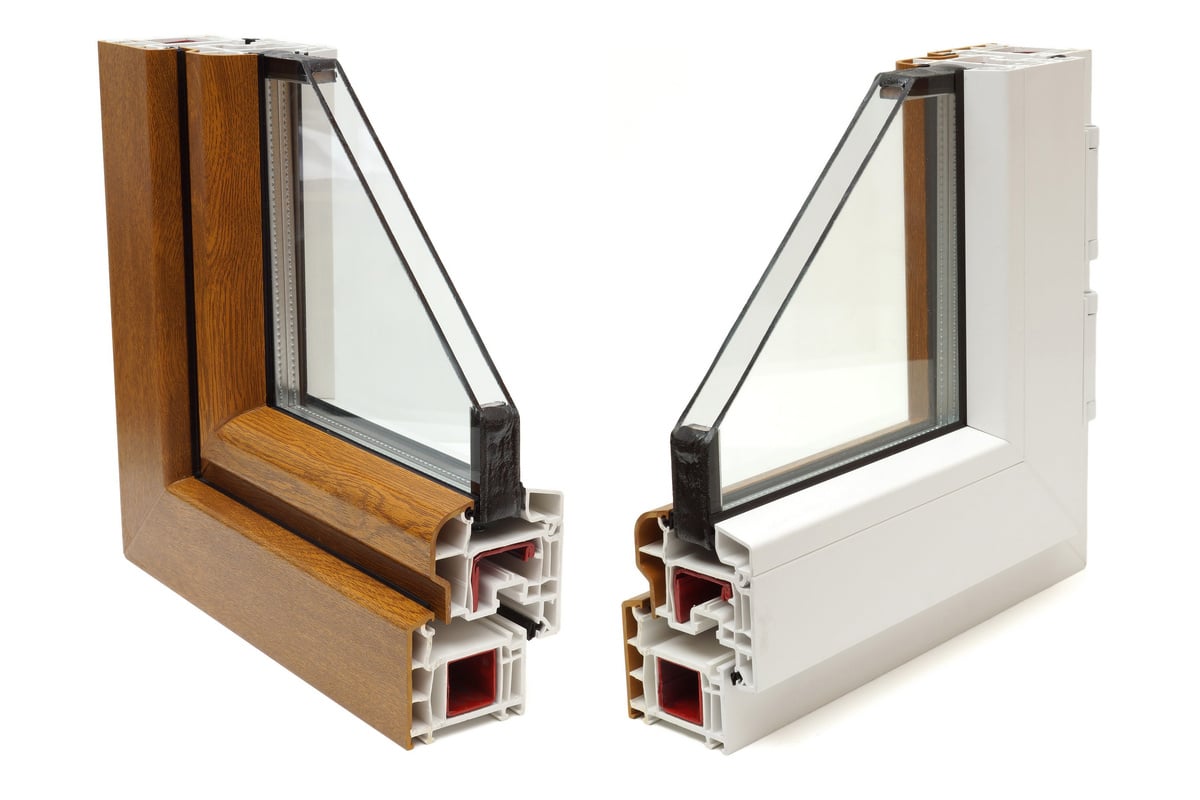
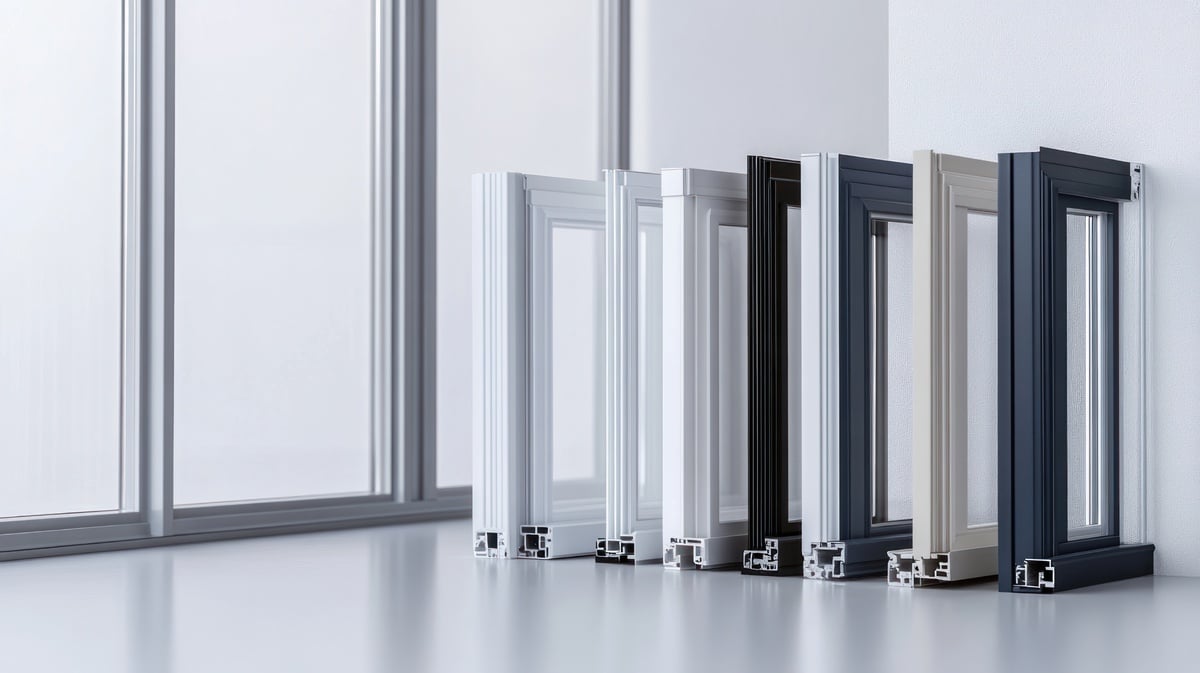
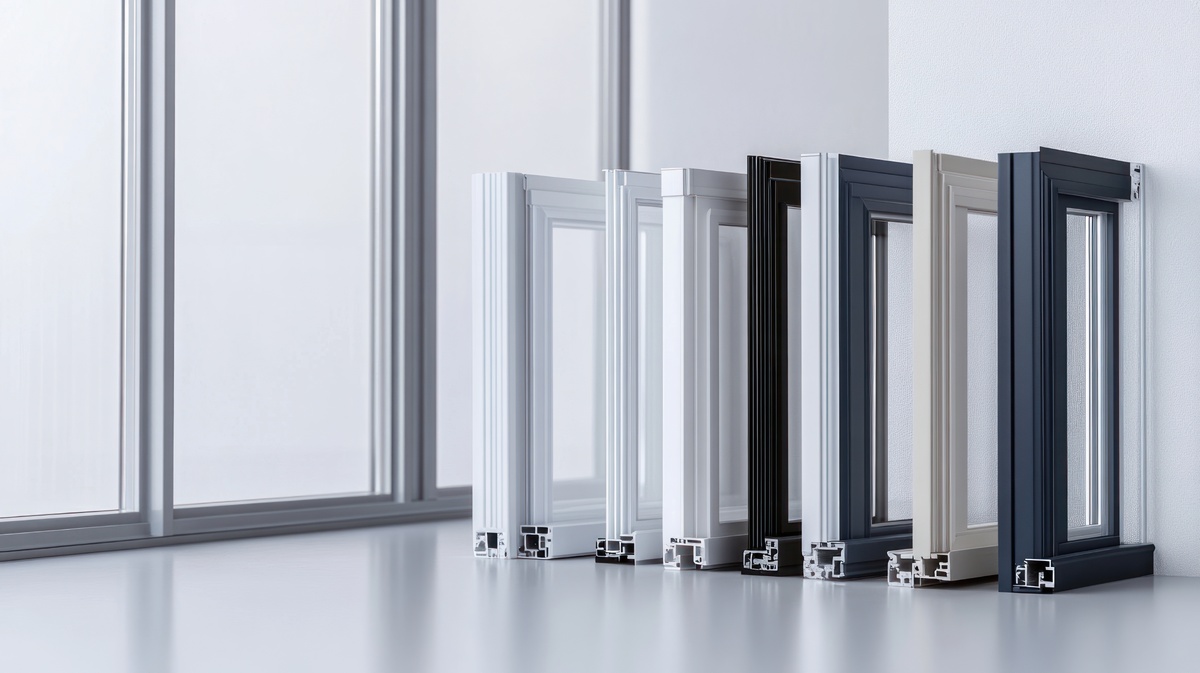
Fiberglass window reinforcements are structural profiles installed inside vinyl or PVC window frames to prevent warping, sagging, and deflection under load. These profiles are manufactured through pultrusion, a process that pulls continuous glass fibers through a resin bath and a heated die to create profiles with consistent cross-sections and predictable mechanical properties.
Unlike extruded thermoplastics, pultruded fiberglass profiles maintain dimensional stability across wide temperature ranges. The glass fiber orientation runs parallel to the profile length, delivering high tensile and flexural strength exactly where window frames need it most—along the span.
Why Reinforcement Matters for Residential Windows
Vinyl window frames offer excellent thermal performance and low maintenance. However, PVC alone lacks the stiffness needed for larger window openings or multi-pane configurations. Without proper reinforcement, frames can deflect under wind loads, lose seal integrity, and ultimately fail prematurely.
Reinforcements serve three critical functions: they resist deflection from wind pressure, maintain frame geometry during thermal cycling, and support hardware mounting points for locks and hinges. The choice of reinforcement material directly affects how well your windows perform throughout their service life.
Comparing Reinforcement Materials: Fiberglass vs. Steel vs. Other Options
Window manufacturers have historically used galvanized steel as the default reinforcement material. Steel delivers high stiffness at relatively low cost. But steel creates a thermal bridge that undermines the energy efficiency of the entire window assembly—and that problem only gets worse as U-Factor requirements tighten.
Steel Reinforcements: The Trade-Off You Accept
Steel gives you strength but has thermal conductivity roughly 1,000 times higher than that of fiberglass. Even when encased in vinyl chambers, steel reinforcements conduct heat and cold directly through the frame. According to research published in Scientific Reports, replacing steel reinforcements with composite alternatives can reduce frame U-values by 12% or more.
Steel also brings weight. Heavier frames mean higher shipping costs, more difficult installation, and increased stress on mounting hardware. Over time, moisture infiltration can lead to surface degradation even when galvanized coatings are applied.
Fiberglass Reinforcements: Performance Without Compromise
Fiberglass reinforcements match or exceed steel's structural performance while virtually eliminating thermal bridging. The material's thermal conductivity runs between 0.2 and 0.4 W/m·K—compared to steel at around 50 W/m·K. This means the reinforcement essentially disappears from the thermal equation.
Fiberglass also expands and contracts at a rate similar to that of glass. This dimensional compatibility reduces stress on sealant joints and gaskets over thousands of thermal cycles, extending seal life and reducing air leakage over time.
How Other Materials Compare
Wood reinforcements offer good thermal properties but lack moisture resistance and dimensional consistency. Hollow vinyl chambers provide some stiffening but cannot match the load-bearing capacity needed for larger residential windows.
Hybrid approaches—using foam-filled chambers or segmented thermal breaks—add complexity without fully solving the thermal bridging problem. Fiberglass pultrusions address structural and thermal requirements in a single material.
Understanding Thermal Performance in Window Reinforcements
Thermal bridging accounts for a significant portion of heat loss through window frames. When you specify reinforcements, you're making a decision that directly affects the whole-window U-Factor your products can achieve.
What Is Thermal Conductivity and Why Does It Matter?
Thermal conductivity measures how readily heat flows through a material. Lower values mean better insulation. Fiberglass reinforced polymers typically measure between 0.2 and 0.4 W/m·K, while steel ranges from 45 to 55 W/m·K depending on composition.
In a window frame, the reinforcement creates a direct thermal path from inside to outside. High-conductivity materials act like heat highways, allowing energy to bypass the insulating vinyl chambers entirely. Low-conductivity fiberglass essentially blocks this pathway.
Meeting ENERGY STAR 7.0 Requirements
ENERGY STAR Version 7.0 established stricter U-Factor thresholds across all climate zones. For the Northern Zone, windows must achieve U-Factor ≤ 0.22. The Most Efficient certification requires a U-Factor ≤ 0.20. These targets become increasingly difficult to meet when steel reinforcements create thermal bridges through the frame.
Window manufacturers serving northern markets find that switching to fiberglass reinforcements delivers measurable U-Factor improvements. At Tencom, we work directly with fenestration producers to engineer reinforcement profiles that help achieve these demanding thermal targets without sacrificing structural performance.
Calculating the Real Impact on Frame U-Value
Frame U-Value calculations account for material conductivity, profile geometry, and surrounding air films. The National Fenestration Rating Council (NFRC) procedures require thermal modeling of the complete window assembly. Substituting fiberglass for steel in these models typically shows a 10-15% improvement in frame U-Value alone.
This improvement compounds across the whole window. Better frame performance means you can achieve target U-Factors with less expensive glass packages—or meet higher certification tiers with the same glazing.
Structural Requirements for Residential Window Reinforcements
Thermal performance means nothing if the window fails structurally. Reinforcements must withstand wind loads, support operational hardware, and maintain frame geometry across decades of service. Understanding mechanical requirements helps you specify reinforcements that perform.
Wind Load Resistance and Deflection Limits
Building codes specify design wind pressures based on geographic location, building height, and exposure category. Reinforcements must limit frame deflection to acceptable ratios—typically L/175 or L/200 depending on local requirements. Deflection beyond these limits can break seals, bind sashes, and damage glass.
Fiberglass delivers flexural strength between 250 and 450 MPa depending on fiber content and orientation. This matches or exceeds steel performance while providing a much greater stiffness-to-weight ratio. The result: reinforcements that handle design wind loads without adding unnecessary bulk.
Hardware Support and Mounting Requirements
Window locks, hinges, and operators mount into the frame—often directly into the reinforcement. These mounting points experience concentrated loads during operation and security events. Reinforcements must resist pullout, shear, and moment forces at hardware locations.
Pultruded fiberglass profiles accept screws and fasteners effectively. The material doesn't split like wood or require special fastener designs like hollow profiles. Custom profiles can include thickened sections or mounting bosses at hardware locations for added pullout resistance.
Dimensional Stability Across Temperature Ranges
Window frames experience temperature swings from well below freezing to over 140°F when exposed to direct sunlight. Reinforcements must maintain dimensional stability across this range without causing frame distortion or seal damage.
Fiberglass has a coefficient of thermal expansion (CTE) close to glass—around 5-8 ppm/°C. This similarity means the reinforcement, frame, and glazing expand together, reducing stress concentrations at interfaces. Materials with mismatched CTEs create cumulative strain that eventually degrades seals and gaskets.
How Pultruded Fiberglass Profiles Are Made
Understanding the pultrusion process helps you evaluate suppliers and specify reinforcements that meet your performance requirements. Not all fiberglass profiles are created equal—process parameters directly affect mechanical properties and consistency of quality.
The Pultrusion Process Explained
Pultrusion pulls continuous glass fiber rovings through a resin bath, then through a heated die that cures the resin into a solid profile. The process runs continuously, producing profiles with consistent cross-sections at relatively high speeds.
The die shape determines the profile geometry. Once tooling is created, the same profile can be produced repeatedly with tight dimensional tolerances. This consistency matters for window reinforcements that must integrate precisely into frame extrusions.
Resin Systems and Their Impact on Performance
The resin matrix binds glass fibers together and transfers loads between them. Different resin systems offer distinct performance characteristics:
- Polyester resins deliver good general-purpose performance at moderate cost
- Vinyl ester resins add chemical resistance and improved toughness
- Polyurethane resins provide enhanced impact resistance and fatigue performance
Resin selection should match your application environment. Standard residential applications typically perform well with polyester systems. Coastal or industrial environments may warrant the use of vinyl ester for enhanced durability.
Fiber Architecture and Mechanical Properties
Fiber content and orientation determine mechanical properties. Most pultruded profiles contain 60-70% glass by weight, with fibers oriented primarily along the profile length. This unidirectional arrangement maximizes tensile and flexural strength in the pull direction.
Adding surface veils or mat layers improves transverse properties and surface quality. Tencom can adjust fiber architecture to optimize profiles for specific load cases—adding cross-directional reinforcement where needed or adjusting fiber content to balance stiffness and toughness.
Design Considerations for Custom Fiberglass Reinforcements
Off-the-shelf profiles rarely match the requirements of existing window systems. Custom reinforcement design ensures proper fit, optimal performance, and efficient manufacturing.
Profile Geometry and Integration
Reinforcement profiles must fit precisely inside vinyl frame chambers. Profile dimensions should match chamber geometry while maintaining adequate wall thickness for structural performance. Typical profiles range from 0.060" to 0.250" wall thickness depending on load requirements.
Profile length considerations include standard vinyl extrusion lengths, shipping constraints, and secondary operation requirements. Tencom manufactures profiles from 5" to 15' in length, with most window applications falling in the 3' to 6' range.
Tolerance Requirements for Window Applications
Tight dimensional tolerances ensure consistent assembly and performance. Window reinforcements typically require tolerances of ±0.005" or better on critical dimensions. This precision prevents fit problems during assembly and ensures consistent structural behavior.
At Tencom, we maintain these tight tolerances throughout our fabrication process. Consistent profiles mean consistent window performance—reducing warranty claims and field problems for manufacturers.
Secondary Operations and Value-Added Processing
Window reinforcements often require additional processing before installation: cutting to length, drilling mounting holes, machining notches for hardware clearance, or applying surface treatments to improve adhesion. In-house secondary operations reduce lead times and eliminate the need for coordination among multiple vendors.
Our facility handles cutting, drilling, machining, and finishing operations. You receive parts ready for assembly, rather than raw profiles that require additional processing.
Evaluating Suppliers for Fiberglass Window Reinforcements
Supplier selection affects quality, cost, and delivery reliability. Understanding what to look for helps you build partnerships that support your manufacturing operations.
Engineering Support and Design Collaboration
The difference between a parts supplier and an engineering partner shows up fast—usually around the first design review or when integration problems emerge. Look for suppliers who can work from your drawings, suggest improvements, and solve problems before they reach production.
At Tencom, our engineers sit down with your team (or your drawings) and look at the whole picture: mechanical requirements, thermal targets, manufacturing constraints, and integration details. Sometimes that means a slight tweak to an existing die. Other times it means designing a completely new profile.
Quality Systems and Consistency
Dimensional consistency and mechanical property repeatability matter for window manufacturers running high-volume operations. Ask potential suppliers about statistical process control, incoming material verification, and testing protocols.
Key quality indicators include dimensional capability studies, the frequency of mechanical property testing, and traceability systems. Suppliers should provide test certificates and maintain records that support your quality requirements.
Lead Times and Supply Chain Reliability
Tooling lead times for custom profiles typically run 6-8 weeks, with production runs requiring 3-4 weeks after tooling completion. Established suppliers maintain die inventories for repeat customers, reducing lead times for reorders.
Supply chain disruptions affect everyone differently. Suppliers with domestic manufacturing, local material sources, and inventory programs offer more resilience than those dependent on long international supply chains.
Cost Analysis: Fiberglass vs. Steel Reinforcements
Upfront material cost tells only part of the story. Total cost of ownership includes installation labor, warranty exposure, shipping, and the value of energy performance improvements.
Material and Tooling Costs
Fiberglass reinforcements typically cost more per lineal foot than galvanized steel. Custom tooling adds front-end investment, though dies are reusable for ongoing production. Steel requires minimal tooling but offers less design flexibility.
The cost differential narrows when considering that fiberglass profiles can be designed to be lighter and more efficient. You're paying for performance, not excess material.
Installation and Labor Savings
Lighter reinforcements reduce handling time on assembly lines. Fiberglass weighs roughly one-quarter of steel at equivalent stiffness, meaning faster cycle times and reduced worker fatigue. These savings accumulate across high-volume production runs.
Dimensional consistency reduces fit problems and rework. When every profile matches the specification, assembly proceeds smoothly without time-consuming adjustments or rejections.
Long-Term Performance and Warranty Implications
Window manufacturers bear warranty costs when products fail in the field. Seal failures, frame distortion, and hardware problems trace back to material choices made during design.
Fiberglass reinforcements maintain dimensional stability over decades of thermal cycling. Seals last longer. Hardware stays aligned. Air leakage remains within specification. These performance advantages translate to fewer warranty claims and a stronger brand reputation.
Applications Where Fiberglass Reinforcements Make the Biggest Difference
Some applications benefit more from fiberglass reinforcement than others. Understanding where the material delivers maximum value helps prioritize conversion efforts.
Large Window Openings and Picture Windows
Larger windows face higher wind loads and deflection challenges. Fiberglass reinforcements handle these loads while maintaining slim profiles that maximize glass area. Architects and homeowners increasingly demand larger window openings—fiberglass makes them structurally practical.
Multi-Pane and Triple-Glazed Configurations
Triple-pane windows deliver superior thermal performance but add weight to the frame. Lightweight fiberglass reinforcements offset glazing weight, reducing stress on hinges and operators while maintaining smooth operation.
Triple glazing also demands better frame thermal performance to realize its full efficiency potential. Fiberglass reinforcements ensure the frame doesn't become the weak link in the thermal envelope.
Passive House and Net Zero Projects
High-performance building standards such as Passive House require windows with extremely low U-factors. These projects cannot tolerate thermal bridging from steel reinforcements. Fiberglass-reinforced windows have become the default specification for projects pursuing Passive House certification.
Coastal and Humid Environments
Moisture and salt air accelerate the degradation of steel reinforcements even with protective coatings. Fiberglass resists moisture absorption and shows no galvanic response to salt exposure. For coastal applications, fiberglass offers maintenance-free durability that steel cannot match.
How to Specify Fiberglass Window Reinforcements
Clear specifications reduce confusion and ensure you receive profiles that meet your requirements. Include these elements in reinforcement specifications:
Mechanical Property Requirements
Specify minimum tensile strength, flexural strength, and flexural modulus. Include deflection limits for design load cases. These values should derive from a structural analysis of your window system under applicable building code requirements.
Typical specification ranges:
- Tensile strength: 250-400 MPa minimum
- Flexural strength: 300-450 MPa minimum
- Flexural modulus: 15-25 GPa minimum
Thermal Property Requirements
Specify maximum thermal conductivity to ensure thermal bridge reduction. Most specifications call for thermal conductivity below 0.5 W/m·K, though lower values may be required for demanding applications.
Dimensional Tolerances and Finish
Call out tolerance requirements on critical dimensions. Specify surface finish expectations if reinforcements will be visible or if surface quality affects adhesion of foam inserts or gaskets.
Testing and Certification
Reference applicable ASTM test methods for mechanical property verification. Consider requiring material certification with each shipment, documenting key properties.
Future Trends in Window Reinforcement Technology
The fenestration industry continues evolving toward higher performance. Understanding emerging trends helps you position your products for future market requirements.
Tightening Energy Codes
Building energy codes ratchet upward with each cycle. The 2026 IECC adoption cycle brings stricter fenestration requirements to many jurisdictions. Windows that meet today's codes may fall short tomorrow. Fiberglass reinforcements future-proof designs against foreseeable regulatory changes.
Embodied Carbon Considerations
Beyond operational energy efficiency, building standards increasingly consider embodied carbon—the emissions associated with manufacturing materials. Fiberglass profiles require less energy to manufacture than equivalent steel sections and can incorporate recycled glass content.
Integration with Smart Building Systems
Future windows may incorporate sensors, actuators, and communications capabilities. Non-conductive fiberglass reinforcements won't interfere with electromagnetic signals or create grounding issues for embedded electronics.
In Conclusion: Selecting Fiberglass Reinforcements for Your Window Products
If you've been accepting thermal bridging from steel reinforcements or struggling to meet energy efficiency targets with conventional materials, it's worth exploring what fiberglass pultruded profiles can unlock. The combination of structural performance, thermal efficiency, and dimensional stability addresses the core challenges facing residential window manufacturers.
Tencom brings nearly 30 years of focused pultrusion experience to fenestration applications. We work backward from your requirements—considering the full picture of mechanical loads, thermal targets, and manufacturing constraints—to engineer reinforcement profiles tailored to your specific window systems.
Ready to evaluate fiberglass reinforcements for your products? Request a quote or start a conversation with our engineering team. We'll help you figure out whether a custom pultruded solution makes sense for your application—and exactly what that would look like.
FAQs About Fiberglass Window Reinforcements
What makes fiberglass better than steel for window reinforcements?
Fiberglass delivers structural strength comparable to steel while reducing thermal conductivity by over 99%. This means your windows maintain frame stiffness without creating thermal bridges that undermine energy efficiency. Tencom's pultruded fiberglass reinforcements help manufacturers achieve demanding U-Factor targets for ENERGY STAR and Passive House certification.
How much does fiberglass reinforcement improve window U-Factor?
Switching from steel to fiberglass reinforcements typically improves frame U-Value by 10-15%. This improvement translates directly to whole-window performance, often making the difference between meeting certification requirements or falling short. Your actual improvement depends on profile design and overall window construction.
Can fiberglass reinforcements fit existing vinyl frame designs?
Yes. Tencom engineers custom pultruded profiles designed specifically to integrate into your existing vinyl window systems. We work from your drawings to develop reinforcements that match chamber geometry precisely, typically holding tolerances of ±0.005" on critical dimensions.
What resin system should I specify for fiberglass reinforcements?
Standard residential applications perform well with polyester resin systems, which offer good mechanical properties at moderate cost. Coastal or demanding environments may benefit from vinyl ester resins for enhanced resistance to moisture and chemicals. Tencom helps you select the right resin system for your specific application requirements.
How long do fiberglass window reinforcements last?
Pultruded fiberglass profiles typically deliver 50+ years of service life in window applications. The material resists moisture absorption, UV degradation, and thermal cycling damage that shorten the life of other reinforcement options. Tencom's fiberglass reinforcements maintain dimensional stability and mechanical properties throughout the window's service life.
What are the lead times for custom fiberglass reinforcements?
Custom profile tooling typically requires 6-8 weeks, with production runs following in 3-4 weeks. Tencom maintains die inventories for established customers, which can reduce lead times for repeat orders. We also stock common profiles for faster delivery on standard dimensions.