

Fiberglass pultrusion offers a wide range of compelling advantages not available in any other product.
Besides being a strong and lightweight material, there are other attributes to fiberglass pultrusion products.

Fiber-reinforced polymer (FRP) composites comprise a designated polymer that has been reinforced with fibers.
FRP composite profiles are typically glass, carbon, or aramid-based, while the polymer is typically an epoxy, vinyl ester, polyurethane, or polyester thermoset.
FRP employs fiber reinforcement to enhance the properties of the original resin (the matrix). The strength of the FRP depends on the mechanical properties of both the fiber and the matrix. So, in this case, it depends on:
- their concentrations relative to one another,
- the fiber length and orientation/direction within the matrix.
The Manufacturing Technique
Pultrusion has become the manufacturing process method of choice for FRP composites here at Tencom.
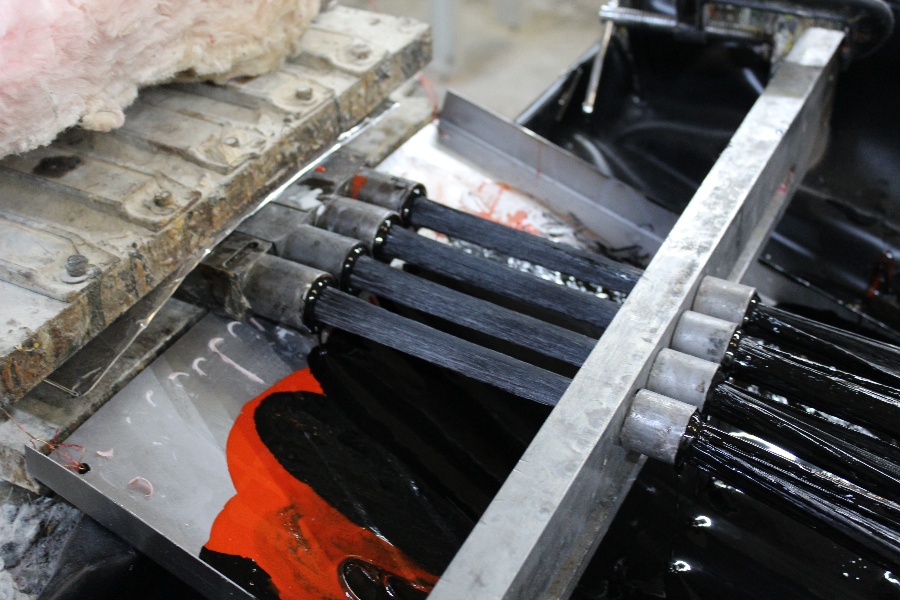
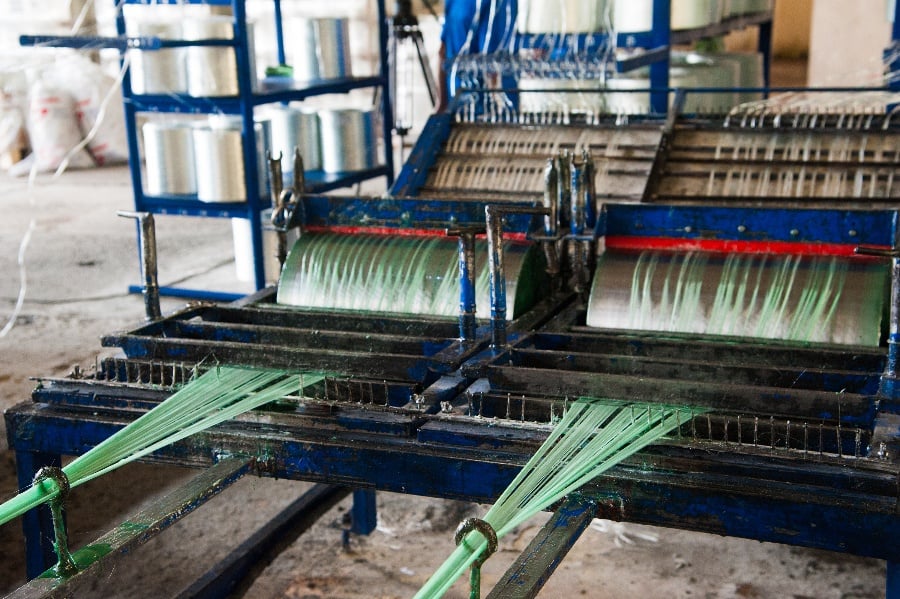
Pultrusion is a manufacturing process in which reinforcing fiber material, such as fiberglass roving, mat, or cloth, is drawn through a wet bath of resin (polyurethane, polyester, or other thermosetting resin matrices) that thoroughly impregnates the material.
The resulting wet-out fiber is formed to the shape of the mold and “pulled” through a heated steel die. Inside the die, the curing process begins by precisely controlling elevated temperatures. The laminate solidifies in the shape of the die employed as it is continuously “pulled” through the pultrusion machine.
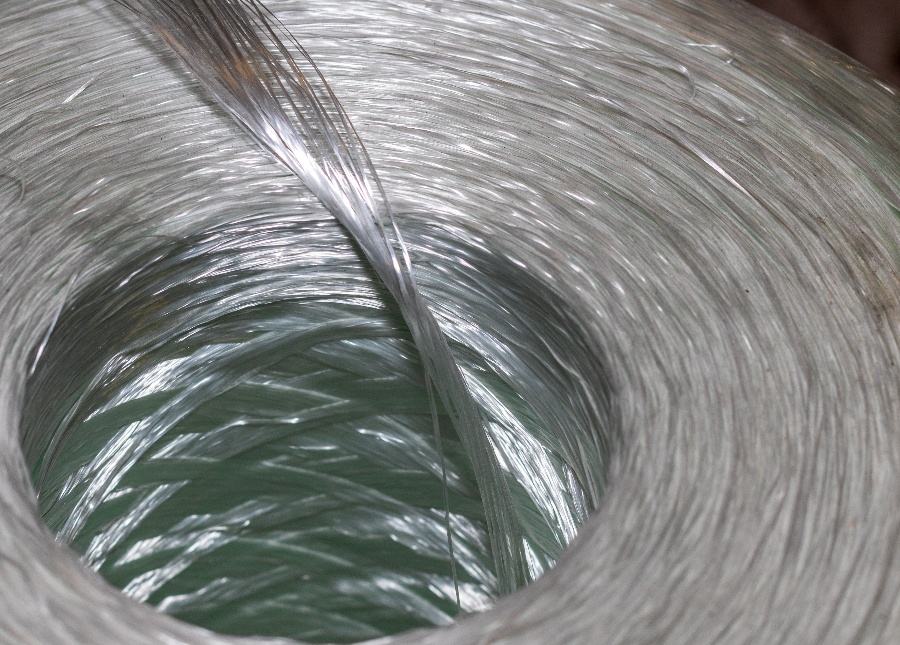
Fiberglass rovings provide the high longitudinal strength of pultruded profiles. Additionally, the roving provides the tensile strength required to pull the other reinforcements (such as the mat) through the die.
Fiberglass
Here's a rundown of the many features fiberglass has to offer:
- Corrosion Resistance ─ If your project involves installation in a harsh environment, fiberglass pultrusion delivers superior corrosion resistance when exposed to a wide range of materials, both acidic and alkaline.
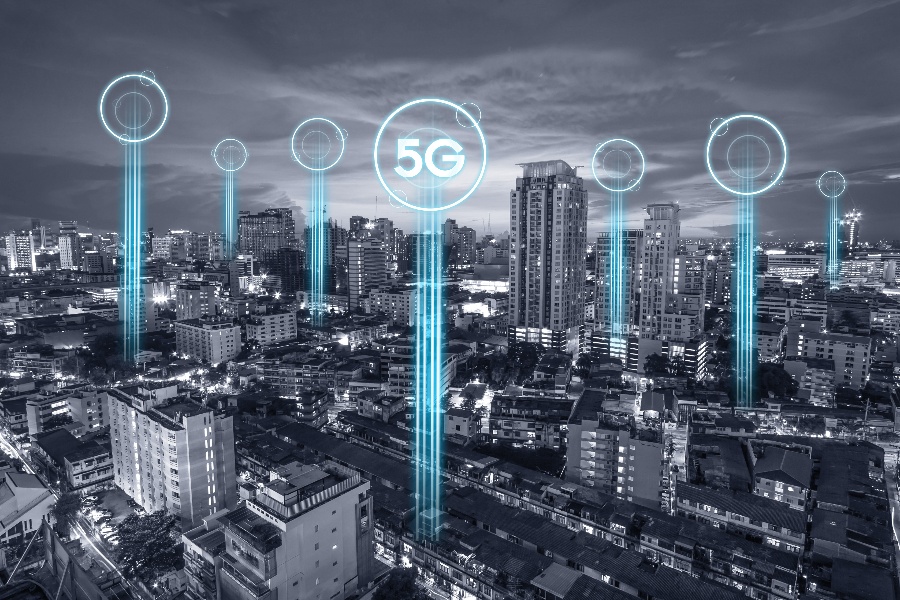
Compared with many materials in this environment, it offers sustainability while improving worker safety and reducing maintenance labor and costs for the facility. Because of this, it doesn't have to be replaced or repaired as often as other materials, lowering the total cost of ownership. It also provides options for outdoor storage, allowing you to keep it in acid rain conditions where other materials would not do as well. - Electromagnetic Transparency ─ Today's connected world is all about wireless connectivity, and being able to use your communication tools in your work environment is essential to a modern, digitized enterprise.
Fiberglass pultrusion has exceptional electromagnetic transparency. Radio waves, whether in the form of traditional two-way radios, cell phones, Wi-Fi, or Bluetooth, can easily penetrate fiberglass products, delivering superior connectivity compared with steel, aluminum, concrete, and a wide range of other materials. - Consistent Cross Section ─ The fiberglass pultrusion process allows for ultra-fine tolerances for your project. Pultrusion draws the fiberglass material through a heated, fixed-dimension forming die, which maintains dimensional accuracy to extremely precise levels.
Combined with the superior dimensional stability of pultruded fiberglass products, this material won't bind up, catch, or rub against other parts of your assembly. This also reduces or eliminates the need for on-site milling to bring a product that is close to tolerances, but not close enough, into use.
- High Strength ─ If your project demands solid structural design, fiberglass pultrusion outperforms many materials on the market. It has exceptional impact resistance, making it a great option for protecting other surfaces that may be less durable, such as ramps, decks, barns, porches, medical facilities, and gymnasiums.
- Electrical Insulation ─ Electricians and first responders use tools with fiberglass handles and fiberglass ladders to get the job done. In environments where insulation from electrical shock is critical, fiberglass pultrusion products can meet the requirement.
Fiberglass is a non-conductive material that delivers superior strength, rigidity, and performance. It's also non-magnetic and has a predictable insulation value against electrical shock, making it a strong fit for your project specifications.
- Superior Dimensional Stability ─ Pultruded fiberglass profiles provide superior dimensional stability and don't warp, stretch, or swell.
If your project requires tight tolerances or minimal damage to structural components, fiberglass delivers solid results. Even when it's under high stress, it never forms a permanent set point; the pultruded fiberglass profile maintains its integrity.
- Thermal Insulation ─ When the feature you're installing must maintain thermal performance through a wall cavity or on a surface, fiberglass pultrusion delivers strong performance.
It has 1/250 the thermal conductivity of aluminum and 1/60 that of steel, thereby drastically reducing thermal transmittance in a project. For this reason, it also reduces condensation buildup, which can be problematic in some situations, while reducing overall insulation needs.
FRP composites can be used for infrastructure, aerospace, and transportation. Additionally, these can also be used to enhance home interiors and exteriors.
This is because one of the most desirable properties of pultruded products is water resistance. Issues such as rust, rot, corrosion, and warping do not occur with pultruded profiles. That is why today, project engineers, developers, builders, and architects increasingly use fiberglass in home applications for new construction and renovation.
The Takeaway
Tencom is continually seeking to enhance our value-added services and develop new ways to innovate the fiberglass industry. Drawing from extensive knowledge and experience, we have formulated specialty resin systems to manufacture reinforced fiberglass for certain results, such as enhanced fire retarding, or super strength.
Raw materials used in our formulations include epoxy, high-temperature vinyl ester, fire-retardant polyester, fire-retardant vinyl ester, polyurethanes, and bonding resins. The materials are then pultruded using our exclusive process and equipment.
Our unique reinforced fiberglass is available in lengths of 5" to continuous spools, in thicknesses of 0.060" to 2", in variable widths, and a tolerable temperature range of -50°F to 450°F. The turnaround time for products made with specialty resins is 6 to 8 weeks for tooling and 3 to 4 weeks for production.
The applications for this type of reinforced fiberglass are virtually unlimited. For more information about our manufactured reinforced fiberglass or other offerings, please visit here or contact us directly.