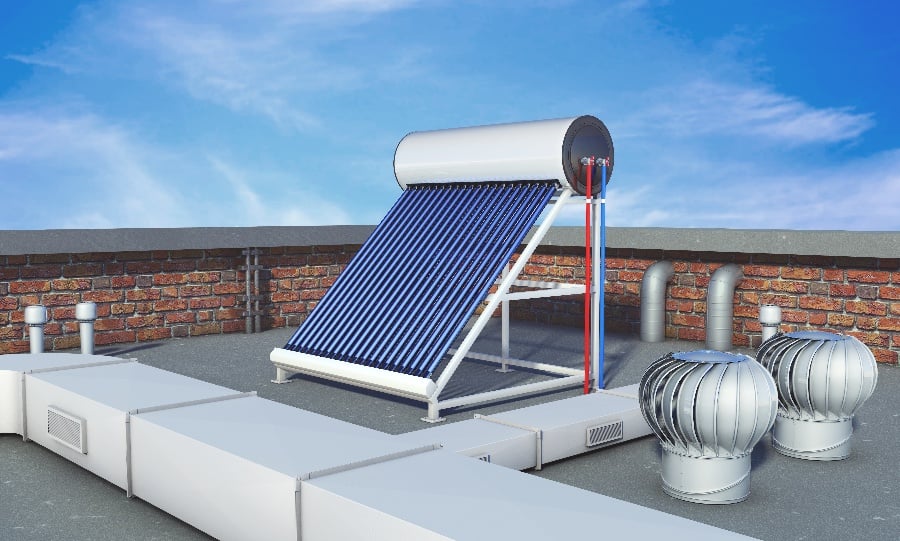
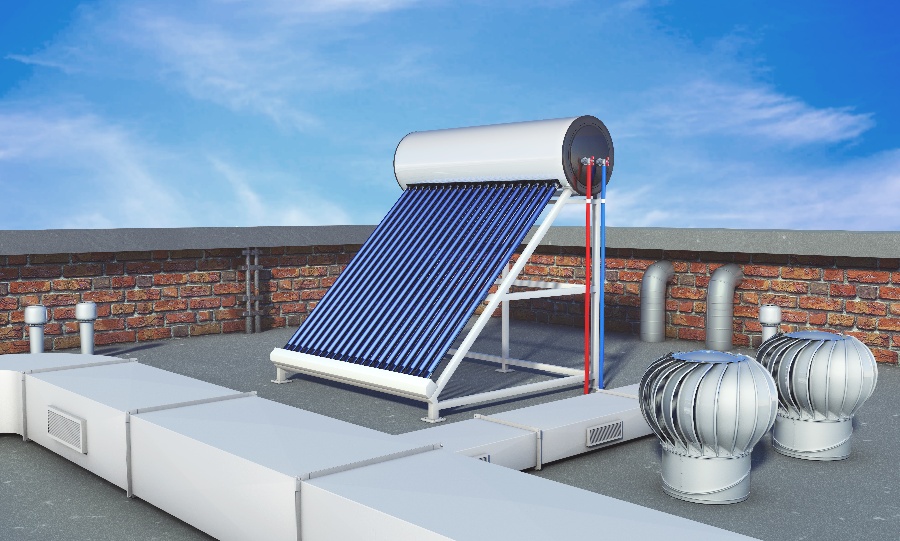
Solar water heaters are a great alternative to traditional water heating systems that rely on non-renewable energy sources such as electricity or natural gas. They use the sun's energy to heat water, which can be used for various domestic purposes such as bathing, cooking, and washing.
Solar water heaters are an important way to reduce your energy bills and your carbon footprint. Solar hot water systems are cost-effective and efficient, using a renewable energy source to heat water year-round. According to the Department of Energy, you can expect to save 50-80% on your water heating bills when you install a solar water heater. This is because solar water heaters use solar energy instead of burning fossil fuels, which account for 25% of residential energy use worldwide.

Not only will you be saving money on your monthly utility bills, but you can also rest assured that your investment will last for many years. Solar water heaters have an average life expectancy of 20 years, which is much longer than standard gas or electric storage water heaters.
Solar water heater design is a key consideration for anyone looking to reduce their energy costs and environmental impact. One important component of a solar water heating system is the storage tank, which plays a crucial role in ensuring hot water availability.
The Importance of Solar Hot Water Tanks
Solar hot water tanks are becoming increasingly popular due to their numerous benefits. Not only are they powered by renewable energy sources, but they are also incredibly efficient and cost-effective in the long run. Solar hot water tanks can reduce a household’s energy bill drastically, since electric heating has the highest economic costs of electricity for the average family. In addition to its cost-effectiveness and energy efficiency, solar technology is widely recognized as an environmentally friendly solution that helps reduce household greenhouse gas emissions.
By using natural sunlight for hot water needs, homeowners and business owners can also enjoy another great benefit: free thermal energy. Hot water tanks powered by solar energy capture sunlight to distribute thermal energy throughout the house or facility. Not only does this energy come at no extra charge, but it is also carbon neutral and doesn't require any additional infrastructure investments, such as maintenance contracts or costly repairs over time. Easily installed by a professional installation service, solar hot water tanks provide both immediate and long-term cost savings while supporting environmental sustainability.
In addition to providing hot water on demand, the storage tank in a solar water heating system helps maximize the system's efficiency. By storing hot water, the system can continue to provide hot water even when sunlight is unavailable, reducing the need for backup heating systems. Additionally, by storing hot water during periods of high solar radiation, the system can avoid overheating and ensure that hot water is available when needed.
Material Considerations for Solar Hot Water Tanks
Designing a solar hot water tank requires careful engineering to ensure an efficient system. The materials used in the design are among the most important components; aluminum and stainless steel are typically used because they offer longevity and good heat-transfer properties. It is essential that the entire unit, including insulation, be thermally well-insulated for maximum efficiency gains.
A properly sealed storage tank should minimize air exchange rates, which affects temperature stability and efficiency. Additionally, it's important to ensure the tanks have sufficient strength for installation and minimal weight for erection. It's also necessary to consider potential risks, as different materials will react differently under varied temperatures and weather conditions.
Depending on the specific application of the solar hot water tank, different materials can offer advantages or fall short of performance requirements in various situations. For instance, compared to stainless steel tanks, aluminum may not be as successful in areas with high salinity levels; however, it can be preferable if weight is a concern.
Moreover, if extreme temperature fluctuations occur frequently, copper could be beneficial due to its strength and flexibility under varying thermal loads. Ultimately, manufacturers must evaluate all these variables thoroughly when designing a solar hot water tank, as some combinations of materials may not meet expectations based on their independently tested qualities.
It’s equally imperative to consider maintenance needs when selecting materials; some systems require specialized processes such as brazing, while others may require specific welding methods like reflow or plasma arc welding. Furthermore, depending on the environment, corrosion or rusting may be factors to consider when selecting metals that resist ongoing wear and require little maintenance or replacement over time.
Determining effective material selections that meet project demands and support long-term operational lifespan for a solar hot water tank design is a laborious but essential task, as no two systems will share identical requirements.
Fiberglass-Reinforced Plastic for Solar Hot Water Tanks
Fiberglass-reinforced plastic (FRP) is quickly becoming the material of choice for solar hot water tanks. This advanced composite material offers several advantages over traditional materials such as stainless steel and copper, including longer lifespans and generally lower production costs.
FRP is created by combining a polymer resin with woven glass fibers, forming an incredibly tough and durable base. Additionally, FRP solar tanks can provide strong insulation tailored to specific thicknesses while significantly reducing energy losses during heating cycles compared with conventional materials.
The high-gloss finish of FRP also makes the product not only resistant to microorganisms but also easy to clean and maintain. This reduces the amount of cleaning required over time, resulting in greater savings for solar operators. Moreover, because of its lightweight nature, FRP can be transported easily and installed quickly without additional support components, unlike steel or other heavy metal options. With all these benefits associated with FRP tanks for solar applications, it’s no wonder that this composite material has risen in popularity among professionals worldwide.
Choosing fiberglass-reinforced plastic for your solar hot water tank gives you a product that is not only cost-efficient but also durable and easy to install. It provides increased environmental performance due to reduced energy losses during heat cycles and fewer maintenance needs over their lifetime–reducing expense in the long run. With reliable construction and exceptional resistance, both residential and commercial customers are increasingly turning to FRP tanks to create their own mini power plants in this era of sustainable development.
FRP Solar Hot Water Tank Designs
The utility model discloses a fiberglass-reinforced plastic bonding-plate-type solar energy water heater comprising an insulation material layer. This layer helps maintain the stored water's temperature by providing additional insulation against external elements.
The storage tank is also typically constructed with a core of polyurethane foam, which combines the structure's stiffness and lightness with excellent thermal insulation. High-density fiberglass-reinforced plastic, along with non-toxic, high-performance sealing tape, is also used in some models to ensure the tank remains leak-free over time.
An unglazed solar hot water heater with an integrated storage system was investigated both theoretically and experimentally. The collector and storage tank of the system were fabricated from fiberglass-reinforced polyester. The absorber plate featured semi-elliptical water tubes, was 1.4 m wide and 1.8 m long, and was made from a special resin composition for optimal thermal conductivity and absorbency. With a capacity of 496 L, the storage tank used a sandwich construction with a polyurethane foam core for stiffness, lightness, and excellent insulation.
At an average solar radiation level of 700 W/m² and an ambient temperature of 28°C, the tank reached an average temperature of 53 °C. The thermal efficiencies of the system were estimated as 48% (for cloudy days) and 57% (for clear days). To predict its transient performance, mathematical models consisting of energy balance equations had to be converted to finite-difference form before being solved on a personal computer; experiments yielded results closely in line with these predictions.
A fiber-reinforced plastic hot water storage tank was developed to improve thermal efficiency compared to traditional tanks. This type of tank features an outer shell made from FRP, which provides superior heat retention while still allowing for easy maintenance and cleaning. Additionally, this type of tank has been designed with integrated storage systems that allow easy access to hot water when needed.