
Pultruded fiberglass-reinforced polymer (FRP) composites have emerged as a critical material in aerospace and defense applications, particularly for unmanned aerial vehicles (UAVs, commonly known as drones) and various military systems. The pultrusion's continuous, automated process produces high-strength, constant cross-section profiles—such as tubes, rods, channels, and I-beams—with exceptional consistency, making it ideal for components requiring lightweight construction, high stiffness, and durability under demanding conditions.
In an era where weight reduction directly translates to extended range, increased payload capacity, and enhanced maneuverability, pultruded fiberglass offers a cost-effective alternative to metals and even carbon fiber in select roles.

While carbon fiber pultrusion dominates high-performance aerospace structures, fiberglass pultrusion excels in applications that prioritize electromagnetic transparency, impact resistance, corrosion resistance, and affordability, while achieving strength-to-weight ratios superior to those of aluminum and steel.
Key Advantages of Pultruded Fiberglass in Aerospace and Defense
Pultruded FRP profiles provide several mission-critical benefits:
- Lightweight Yet High-Strength: Profiles can be 75–80% lighter than steel equivalents while maintaining comparable tensile strength, enabling drones to achieve longer flight times and greater agility.
- Electromagnetic and Radar Transparency: Unlike conductive metals, fiberglass is dielectric and transparent to radio-frequency (RF) and radar waves, minimizing interference and enhancing stealth.
- Corrosion and Environmental Resistance: Impervious to moisture, chemicals, UV radiation, and extreme temperatures, these materials ensure reliability in harsh operational environments, from desert deployments to maritime operations.
- Fatigue and Impact Resistance: High fiber fractions (up to 80%) deliver excellent fatigue life and toughness, essential for vibration-prone drone frames and military equipment subjected to repeated stress.
- Cost-Effectiveness and Scalability: The continuous pultrusion process supports high-volume production with minimal waste, reducing costs compared to autoclave-cured carbon composites or machined metals.
- Compliance with Standards: Formulations can meet stringent military specifications (e.g., MIL-STD) and aerospace qualifications for flammability, smoke, and toxicity (FST).
These properties position pultruded fiberglass as a complementary or primary material in hybrid systems alongside carbon or aramid fibers.
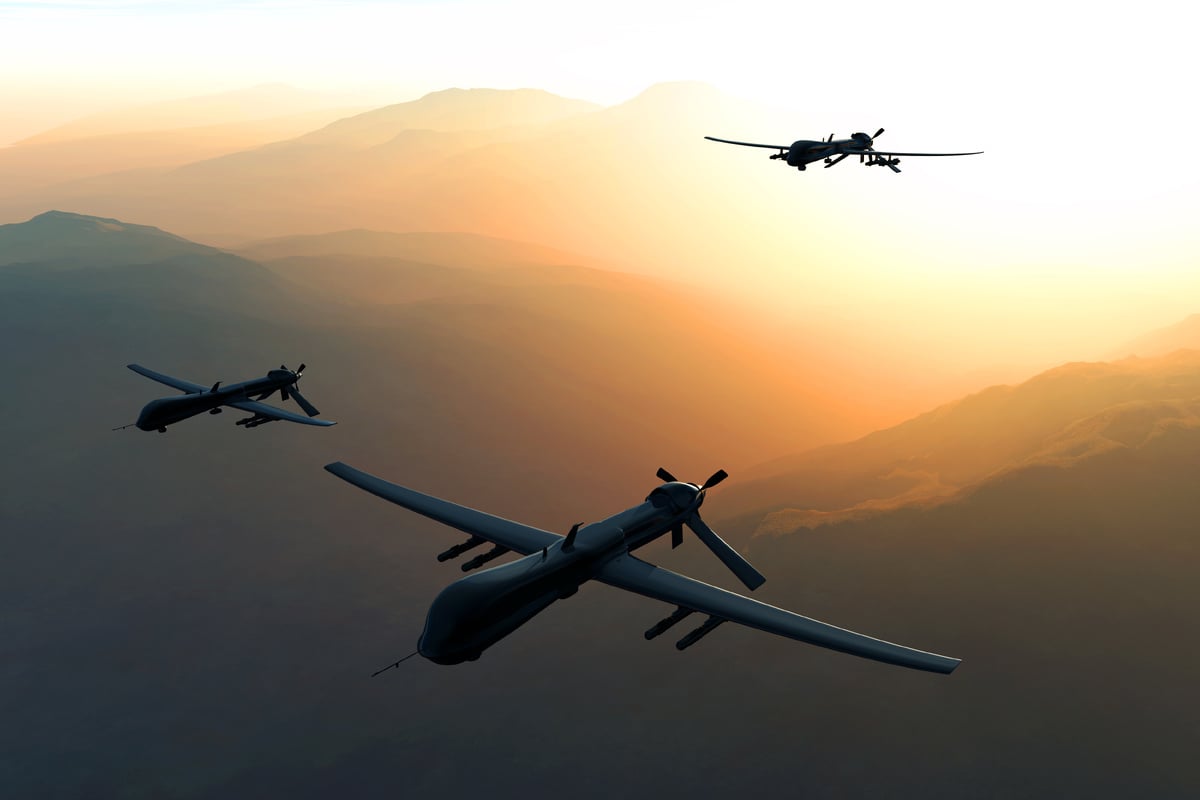
Applications in Drones and UAVs
In UAV construction, pultruded fiberglass profiles form essential structural elements:
- Airframes and Booms: Tubes and rectangular profiles serve as fuselage sections, wing spars, and tail booms, and landing gear supports. Their uniform properties ensure predictable performance in multirotor, fixed-wing, and VTOL designs.
- Antenna Housings and Fairings: Radar-transparent tubes enclose sensors and communication arrays without signal attenuation.
- Propeller Guards and Mounts: Impact-resistant channels protect rotors while contributing minimal weight.
- Internal Supports: Rods and angles provide bracing for batteries, avionics, and payloads, enhancing structural integrity during high-G maneuvers.
Commercial and military drone manufacturers leverage pultruded components for rapid prototyping and series production, achieving weight savings that extend endurance by 20–30% in some configurations.
Applications in Broader Military Equipment
Beyond drones, pultruded fiberglass supports diverse defense systems:
- Radomes and Antenna Masts: Large-diameter tubes and tapered profiles house radar and communication antennas on vehicles, ships, and ground stations, providing weather protection while preserving signal integrity.
- Portable Structures: Lightweight grates, ladders, and shelters for field operations provide rapid deployment and a corrosion-free service life.
- Vehicle Components: Frames for unmanned ground vehicles (UGVs), missile launch tubes, and ballistic-resistant panels (when hybridized with aramid).
- Stealth and Electronic Warfare: Non-conductive profiles minimize radar cross-section in enclosures and supports.
| Application | Typical Pultruded Profiles | Primary Benefits |
|---|---|---|
| Drone Airframes/Booms | Tubes, Rectangular Sections | Weight reduction, vibration damping |
| Radomes/Antenna Enclosures | Cylindrical Tubes, Conical Shapes | RF transparency, weather resistance |
| Structural Supports | I-Beams, Channels, Angles | High stiffness-to-weight, fatigue life |
| Landing Gear/Guards | Rods, Custom Profiles | Impact toughness, low maintenance |
Challenges and Hybrid Solutions
Pure fiberglass may yield to carbon in ultimate stiffness for primary load paths in high-performance aircraft. However, hybrids—combining glass outer layers for impact protection with carbon cores for modulus—optimize cost and performance. Advancements in resin systems (e.g., toughened epoxies, vinyl esters) and surface veils further enhance UV stability and paint adhesion for military camouflage requirements.
Conclusion
Pultruded fiberglass composites deliver an optimal balance of performance, cost, and manufacturability for aerospace and defense structural components, particularly in drones and radar-dependent systems. Their radar transparency, strength-to-weight ratio, and environmental resilience make them indispensable for modern unmanned platforms and military hardware, enhancing operational effectiveness and reducing lifecycle costs.
As defense budgets emphasize unmanned systems and electronic warfare capabilities, demand for pultruded FRP profiles is projected to grow substantially through 2030. Engineers specifying materials for next-generation UAVs and equipment should consider pultruded fiberglass not as a compromise, but as a strategic enabler of superior mission performance. Collaboration with specialized pultruders ensures profiles meet exacting aerospace and MIL-spec requirements while leveraging the process's inherent efficiencies.