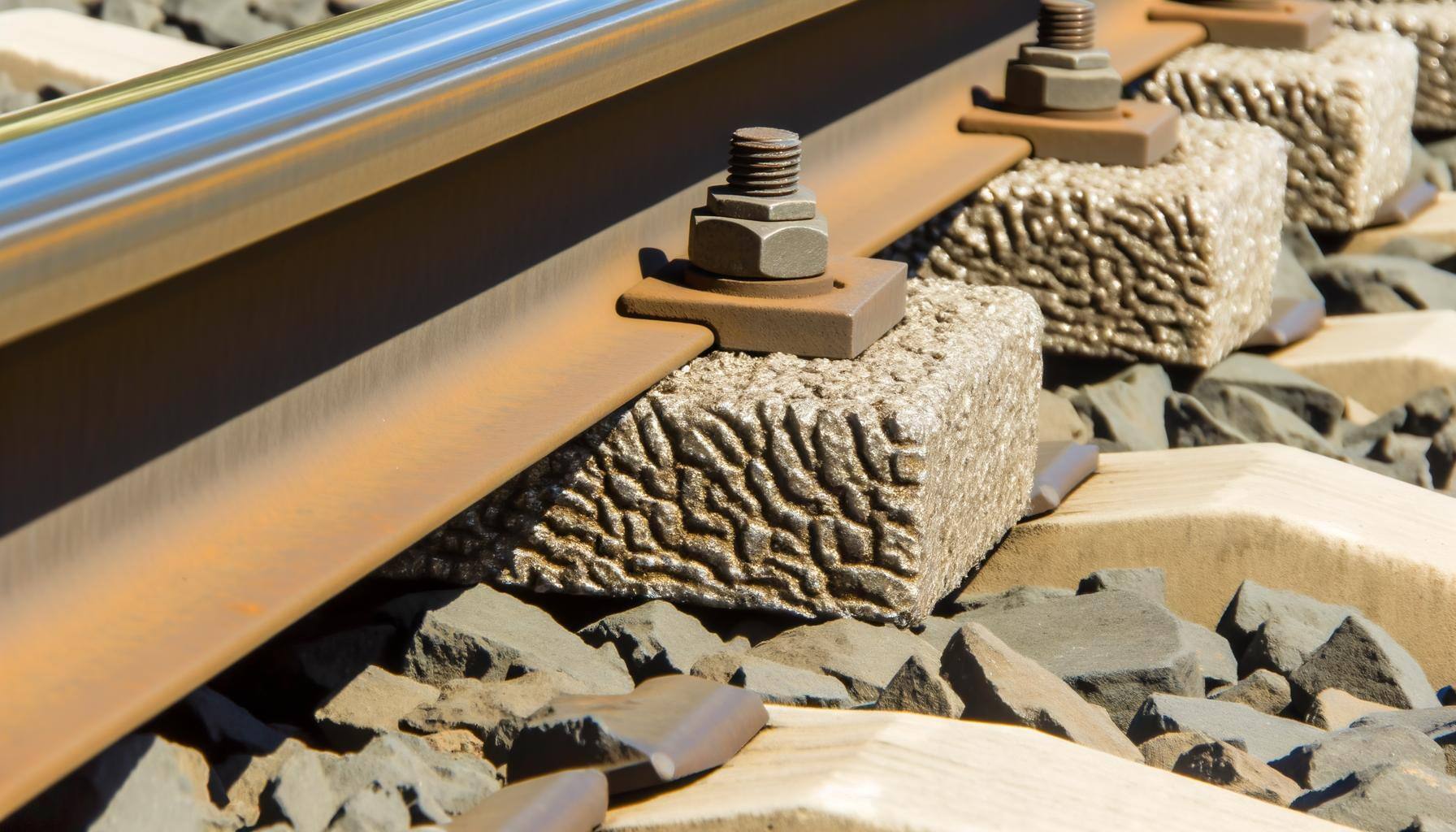
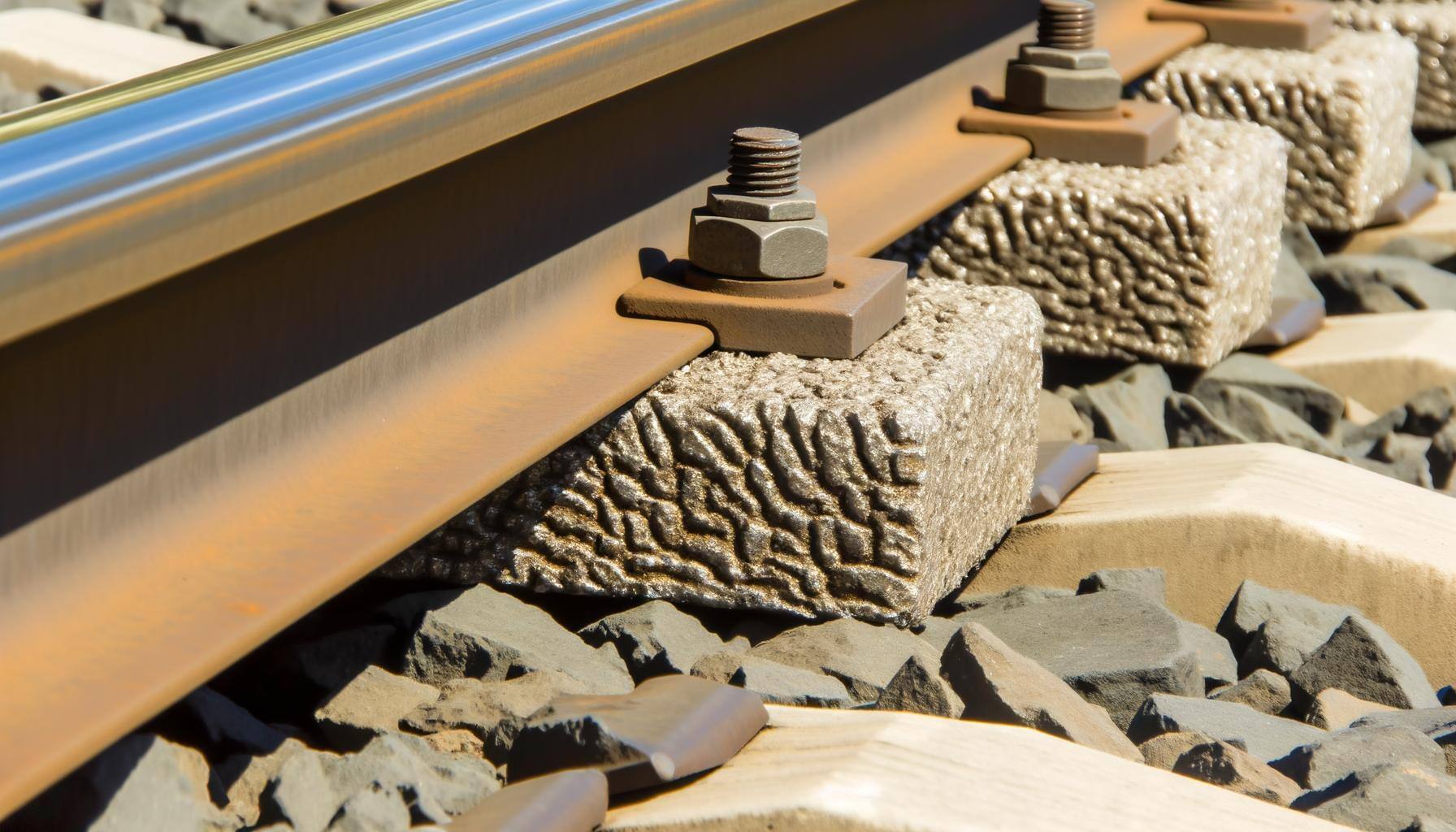
Railroad ties, also known as sleepers, are a critical component in railway track systems. They provide the foundation for rails by transferring loads from train wheels to the track ballast and subgrade below. Properly spaced ties act as a stabilizing system, keeping the rails at the correct gauge (distance between rails) while allowing for thermal expansion and contraction. Additionally, ties hold the rails upright and prevent them from moving laterally under train loading.

The selection of tie material and design is crucial for the performance, safety, and long-term durability of railway tracks. Ties must withstand extremely demanding conditions, including repetitive wheel loads exceeding 30 tons, abrasion from rail and wheel contact, temperature fluctuations due to weather exposure, moisture absorption that causes rot, and attacks from insects and fungi.
The ability to maintain gauge, prevent rail rollover, and provide lateral and longitudinal restraint of the rails depends significantly on the ties' mechanical properties and dimensional stability over decades of service. Optimizing these factors through material choice and engineering design is essential for reliable railroad operations.
This article will dive into the essential design and material considerations for railroad ties.
Design Considerations for Railroad Ties
Railroad ties must be engineered to withstand considerable forces and environmental stresses over many years of service. Important design factors include:
Load-bearing capacity and stress distribution
Ties must resist compressive loads from heavy axle weights without failing. Their size, shape, and material affect how wheel loads are transferred to the track structure.
Resistance to wear
The abrasion and pounding from wheel-rail contact cause mechanical wear. The surface hardness and durability influence longevity.
Durability against environmental factors
Ties experience moisture, sun, temperature fluctuations, and biological attack. Their water absorption, weathering behavior, and natural durability impact service life.
Track gauge maintenance
The tie spacing, plate interface, and rail fastening system must maintain the correct gauge over time and with changing rail temperatures.
Ease of installation & maintenance
Railway construction and maintenance requirements influence dimensions and lifting/handling considerations. Replaceability is also a factor.
The demanding railroad environment requires ties to be configured from durable, weather-resistant, and load-bearing materials that have specialized engineering for critical track support functions. Appropriate tie design is crucial for track stability and safe train operations over many years.
Key Material Properties Affecting Tie Performance
The materials used for railroad ties have a number of important physical and mechanical properties that determine their performance and service life, including:
Mechanical Properties
Ties must withstand high compressive loads and have adequate tensile strength to resist splitting. Impact resistance prevents cracking and sudden failures. The modulus of elasticity impacts load distribution and track stiffness.
Durability Factors
Resistance to weathering, such as UV, moisture, freeze-thaw cycles, and chemicals, extends service life. Limited water absorption prevents rotting and degradation. Bioresistance prevents insect or fungal damage.
Thermal & Electrical Properties
The coefficient of thermal expansion affects changes in rail gauge with temperature. Thermal conductivity also impacts rail temperature profiles and stability. Electrical resistivity helps minimize stray current corrosion problems.
The demanding railroad environment requires selecting tie materials that combine sufficient mechanical strength for load-bearing, environmental durability across a range of conditions, and engineering properties that provide proper track-constraint functions.
Materials can be further enhanced with protective treatments or modifications to optimize performance. Achieving the right balance of these properties ensures resilient, long-lasting, and safe railroad ties.
Fiberglass Reinforced Plastic Ties—A Promising Innovative Solution
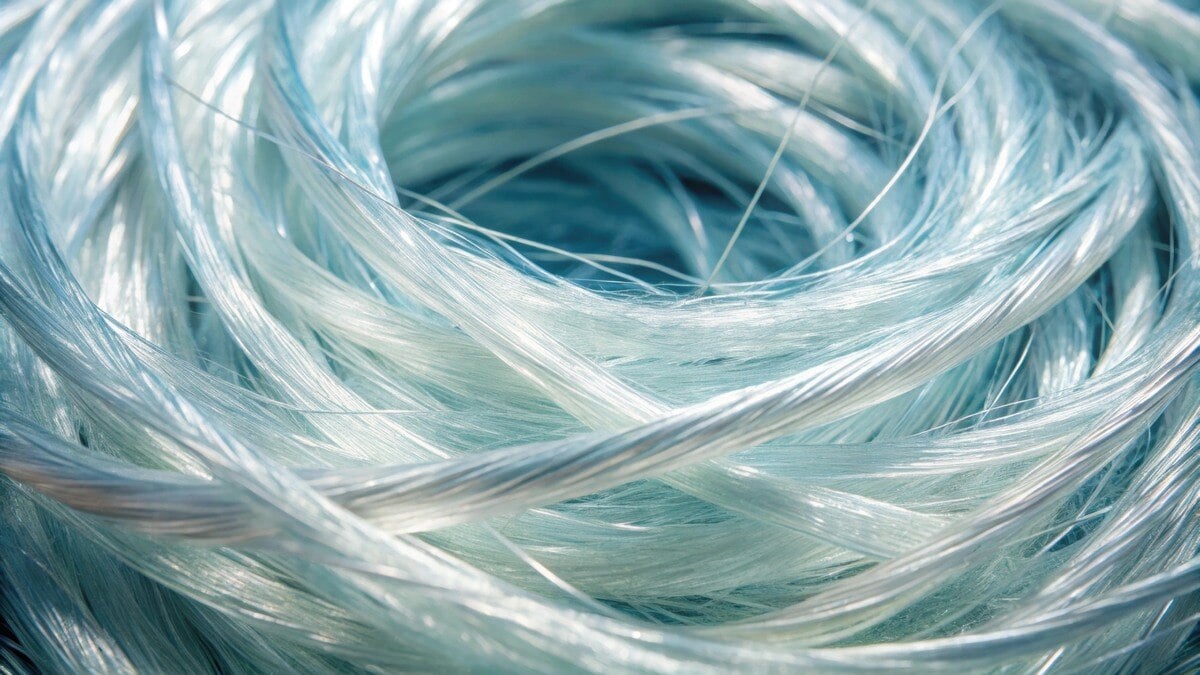
Fiberglass-reinforced plastic (FRP) is an emerging material now being used for railroad ties/sleepers in some applications. FRP ties offer numerous potential advantages over traditional wood or concrete tie designs:
Lightweight
Weighing up to 75% less than concrete ties, FRP ties are easier to handle, transport, and install while reducing load on the underlying track structure.
High Strength-to-Weight Ratio
Stronger per unit weight than wood or steel, improving load-bearing capacity while reducing substructure costs.
Excellent Corrosion Resistance
Glass fibers and polymeric resins provide excellent resistance to moisture, de-icing salts, chemicals, and electromagnetic corrosion.
Electrical and Thermal Insulation
Non-conductive FRP helps prevent stray-current electrical issues and provides thermal insulation to support track stability.
Customizable Geometry
Materials and reinforcement can be optimized for structural and durability needs with integral molded-in features.
Long Service Life
Predicted to provide significantly longer life than wood ties in terms of mechanical strength and environmental degradation resistance.
Specialty-engineered FRP railroad ties leverage composite material technology for improved performance, extended service intervals, reduced maintenance, and life cycle cost savings compared to conventional tie materials. Further research and testing are advancing the adoption of FRP ties as a sustainable best practice for railways.