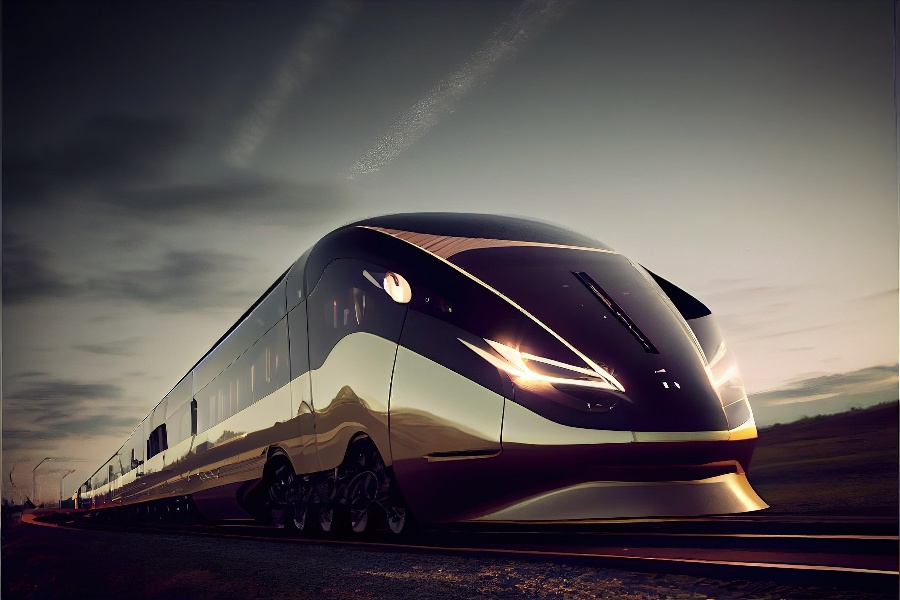
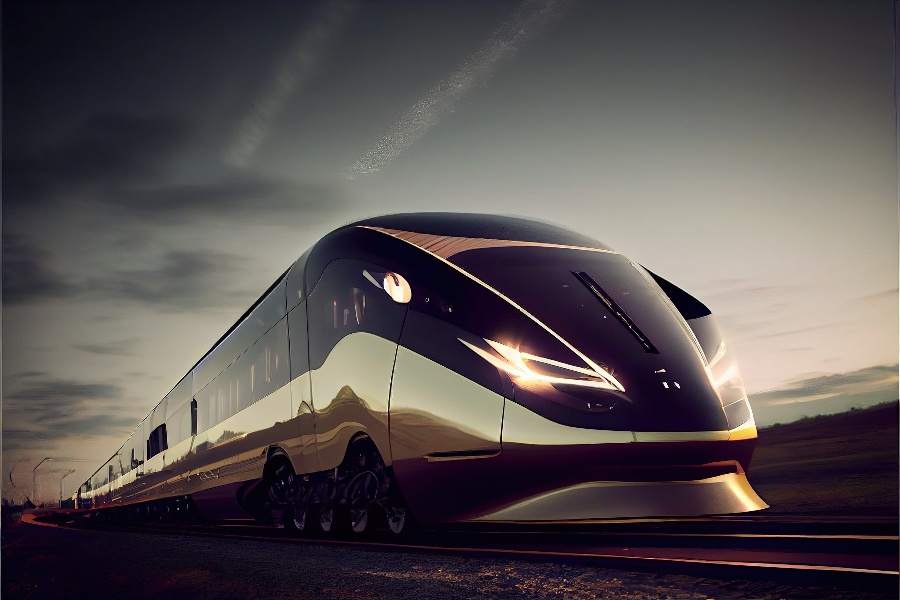
Advances in engineering over the last few decades have made train travel faster and more efficient than ever before. High-speed trains offer a unique form of transportation for passengers and goods, making them an invaluable tool in modern societies. They can reach speeds of up to 250 miles per hour, making them the fastest form of wheeled ground transport. High-speed trains represent the ultimate combination of efficiency, safety, and comfort, making them undeniably important.

Building a high-speed train requires extensive research and design considerations to ensure its performance meets customer expectations and that it operates safely and reliably.
Let's take a look at some design considerations for high-speed trains and how fiberglass-reinforced plastic (FRP) can be used in their design.
Why High-Speed Trains are Important
This mode of transportation offers a sustainable option for long-distance travel, reducing carbon emissions compared to air or car travel. They also allow towns to become more connected while generating less noise pollution than road and air transport. High-speed rail networks have been proven time and time again to promote economic growth in developing communities along their routes, allowing business owners access to larger markets and providing job opportunities for those living around railway stations.
High-speed trains are safer than any other form of transportation currently available. Their next-level engineering ensures much lower accident rates than planes or cars do. The state-of-the-art safety measures these trains include make them a top choice for both public and private sector organizations that want their valuables shipped quickly yet securely.
High-speed trains offer riders a comfortable traveling experience like never before. They come with improved interior design elements, such as seat spacing, as well as extra frills like controls that let you adjust the temperature within your seat's limits, ensuring passengers enjoy a trip without disruption from rough terrain or harsh weather conditions.
High-speed train technology is highly advantageous for individuals with tight schedules traveling long distances. They are also great for businesses wanting secure delivery services and communities hoping to see an economic boost from increased connectivity brought by fast rail links.
High-Speed Train Design Considerations
Engineers must consider vehicle dynamics when designing a high-speed train. A fast-moving train will experience intense aerodynamic forces that can affect its stability, steering, braking, and overall safety. To counteract this, an aerodynamically designed body with low wind resistance is required for optimal passenger comfort and safety.
Engineers must account for wear on rail components when designing a high-speed train. At higher speeds, there is often significant redistribution along long rail tracks, which can accelerate wear on sleepers and other rail components. Designers must ensure that vibrations generated by the train are sufficiently damped throughout its life cycle to avoid disturbing passengers or causing unnecessary wear on track components.
Power generation must be considered when building a high-speed railway system., High-speed trains need significantly more power than their slower counterparts and therefore require more powerful engines which deliver larger outputs at higher speeds effortlessly through an efficient driveline system that minimizes heat losses.
Weight plays a vital role in design aspects such as acceleration and braking times. Therefore, designers should opt for materials with higher strength-to-weight ratios while minimizing wasted space between individual cars, allowing additional optimizations through reduced total car weight. The demand for improved energy efficiency has led manufacturers to develop lightweight designs without compromising durability or safety standards.
Noise mitigation is paramount when designing a high-speed railway system. By using advanced soundproofing techniques, it is possible to greatly reduce vibration levels, allowing passengers to enjoy quiet, comfortable journeys. Additionally, regulators must ensure precise wheel geometry and carefully smoothed weights to prevent excessive wheel noise that could otherwise be disruptive.
These features ultimately work together toward primary objectives such as enhancing operational safety, passenger comfort, journey reliability, energy efficiency, and cost-effectiveness, all of which are essential for modern railway networks.
Material Choices for High-Speed Trains
Any high-speed train must be built with care and precision; this means the choice of materials is critical. The combination of materials used must result in a robust, reliable, and safe train. High-speed trains are usually made from specialized aluminum alloys, steel alloys, fiberglass components, and composite materials. Let's look at each material choice in more detail.
Aluminum alloys, considered the preferred option for most train manufacturers because of their lightweight properties, are a key component of high-speed trains due to their strength and durability against dynamic loadings at speed. Steel alloys add greater weight but provide greater structural support than aluminum alloys, and they also offer dynamic buckling resistance, which may improve safety at high speeds.
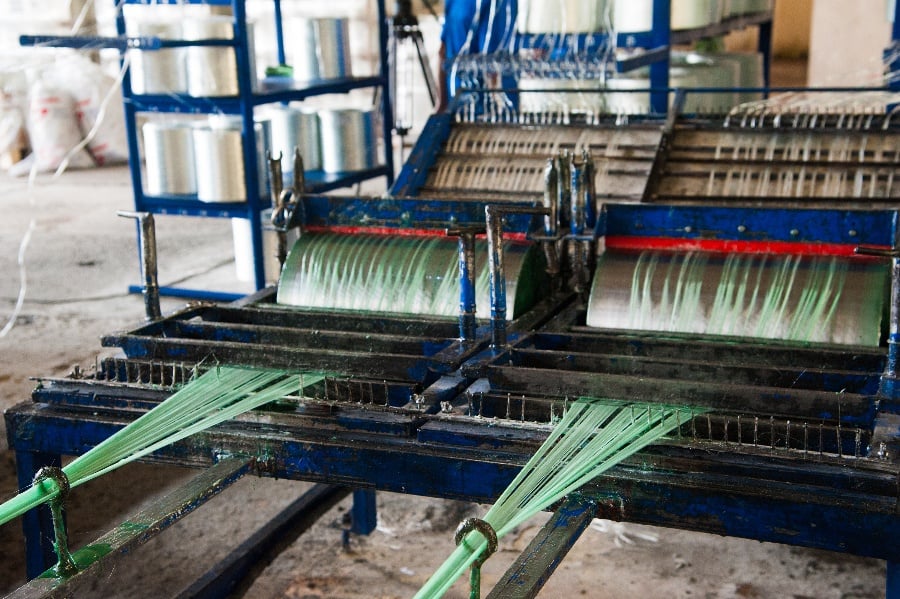
Fiberglass components may be used in the manufacture of both bodies and window frames due to their excellent insulation properties; they can provide the thermal insulation passengers need during long-distance journeys while remaining light enough not to put excessive strain on the train's axle system under tensile loads.
Finally, composite materials can serve as a useful alternative for heavy-duty structural parts, as they offer a good strength-to-weight ratio throughout operational life cycles, making them ideal for high-speed trains. One material that can be used is fiberglass-reinforced plastic.
Fiberglass-Reinforced Plastic for High-Speed Trains
High-speed trains rely on sturdy, lightweight materials to maintain efficiency and safety, and fiberglass-reinforced plastic is an ideal choice for this purpose. FRP provides a unique combination of durability, strength, and corrosion resistance—characteristics that are invaluable in any high-speed train application. With a variety of available construction options, it can be tailored to the specific requirements of each train line.
The strong yet lightweight nature of FRP makes it well-suited to achieving faster travel times with less energy while providing enhanced stability to the rail car and carriage. As speed is increased with high-speed rail services, so too must the strength of components such as columns and support beams. FRP's low weight also reduces wear on railcar axles during longer distance journeys as well as dampening vibrations caused by passing over switches and joints in rail lines.
FRP's superior corrosion resistance makes it an ideal material for rail applications that pass through marine air or areas exposed to moisture or increased salinity levels from nearby sources such as saltwater seaside rail activities and pooling water from flooded areas near rails. The chemical bonding properties of various resin systems provide additional protection against environmental corrosion factors prevalent along many railway networks worldwide.
Real-World Examples
Fiberglass-reinforced plastic is a key component in a wide range of British Railways rolling stock applications. From the cab of the high-speed train to passenger doors and seat shells, FRP offers structural strength and protection against missile impact that can't be matched by other materials. Examples from across the rail industry show that FRP is an excellent choice for providing safety and security while also meeting durability and performance requirements.
Talgo, a Spanish rolling stock manufacturer, has also used composites to improve rail transportation. A carbon fiber-reinforced polymer (CFRP) prototype of its radial bogies promises to drastically reduce weight, enabling additional passengers and reducing energy consumption by up to 50%. Not only does the new design free up weight for more passengers, but it also significantly reduces the strain on rail infrastructure.
This technology will allow train operators to reduce maintenance costs while still adhering to European standards for rail bogie construction and fire and smoke toxicity. Furthermore, it has passed both static and fatigue tests–with over 10 million load cycles–without sustaining any damage.
Are you looking for a reliable provider of high-quality fiberglass-reinforced plastic products? Look no further than Tencom! We offer an extensive selection of durable and long-lasting FRP with competitive pricing. Reach out today to learn more.